
Quick Reference
Jump to a section
Use the local section links to move through the essay on mobile or desktop.
Introduction
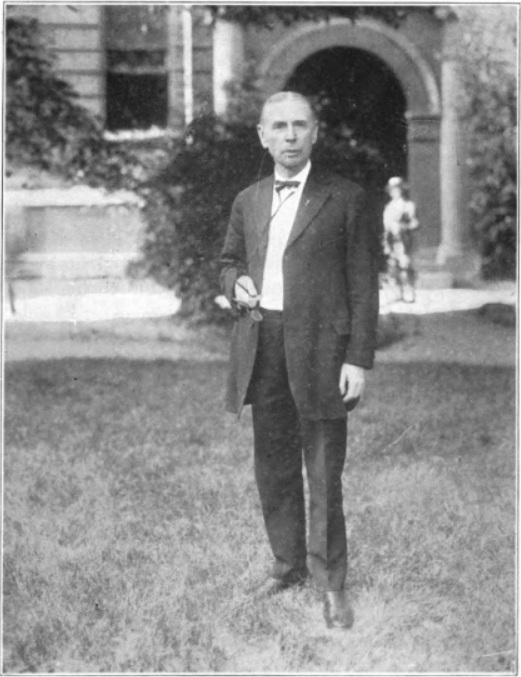
(Lectures before the Delegate Synod A. D. 1920 by F. Pieper).
At your request, venerable Fathers and Brothers, I submit to you a few brief lectures on Christianity as a religion of the hereafter. The expression "religion of the hereafter" has come into fairly general use in our time. We understand by it the kind of Christian religion known to every Christian, according to which the hope of Christians is not for this temporal life, but for a life after this life, for an eternal life in heaven. "Heaven is my Home." We understand this to be the kind of Christianity that the Holy Scriptures describe with the words: "We have no lasting city here, but we are looking for the one to come", Hebrews 13:14. The topic is prompted by the present. In Protestant Christianity, especially in our country, a powerful movement has begun that wants to either completely eliminate the hereafter, heaven and hell, from the Christian religion or at least push it out of the dead track. They want to turn the Christian Church into a reform school for this life, under the pretext that they are pressing for the very essence, “the essential feature, the main idea”, of Christianity and have the best interests of the church and humanity in mind. By transforming the gospel of Christ into a "social gospel", it is hoped that the whole world can be won over to Christianity in a short time. Perhaps we can usefully address this topic in the following five sections: 1. The description of the modern religion of this world in contrast to the Christian religion. 2. The Christian religion is essentially a religion of the hereafter; nevertheless, indeed precisely because of this, it exerts the greatest influence on life in this world.
3. The religion of the hereafter and the missionary activity of the Christian Church.
4. The religion of the hereafter and the administration of the public preaching ministry. 5. The maintenance of our connection between this world and the hereafter. I. Today we turn our attention to the first point. Let us visualize the actual form of the religion of this world, which so impetuously demands our recognition and wants to conquer the world in a short time. In its outward form it is initially quite different from other attacks on the Christian Church. The obvious unbelievers and mockers of all times have issued the slogan: "Away with the Christian Church from this world! The sooner, the better for mankind!" The pagans of Rome once shouted at the Christians: Non licet vos esse, you are not allowed to exist. A Voltaire wrote: "Ecrasez l'infame", get rid of the shameful thing, Christianity and the Christian Church, out of the world! A Vogt and an Ingersoll have openly declared their support for the same endeavors. But our American representatives of this world's religion speak quite differently. They praise the Christian Church. They pay it the greatest compliments. They call the Christian Church the greatest treasure in the world. The Christian religion alone can save mankind and make it happy. But the Church must give its activities a different goal than before. It should not emphasize the "hereafter", heaven and hell and the creeds that are connected with them, or at least leave them alone. The Christian Church must concentrate its activity on this world; it must allow the problems of civil, industrial, national and international life etc. to come to the fore and thereby create a heaven on earth for humanity. The fraudulent field cry is: "Deeds, not creeds." This is also called "practical" or "applied" Christianity, "applied Christianity", "the social gospel". There is also talk of "a broader conception of religion, an expansion of religion". Here is some evidence of this. A veritable flood of writings with this content has poured over our country. I quote from The Expansion of Religion, written by Winchester Donald, Rector of Trinity Church in the City of Boston, which appeared as early as 1896. Donald, too, does not want to eliminate the Christian Church from the world, but praises it highly. It is just that the Christian Church has not yet understood its task properly. Too much emphasis had been placed on Christian doctrine.
In particular, too much emphasis has been placed on the doctrine of justification, namely the doctrine that man is justified before God, not through his own righteousness, but through faith in Christ's substitutionary satisfaction. As a result, Christian faith was the main thing for the church. Of course, life on earth was also emphasized as important, but only as secondary. Heaven always came first. This had given the Christian Church too strong a focus on the hereafter. Donald literally says: "The Christian religion seemed concerned only with the life that is to come, and bent only on getting men through this world in any sort of fashion, because the other world is the only one of any importance." Because of this strong emphasis on the world to come, the masses of the people, whose desire and activity were known to be directed towards this world, kept themselves apart from the church. In order to gain influence over the masses of the people, the Christian religion would have to adopt a new definition of righteousness before God. The new definition must be that the righteousness of life is the only reason why a person is considered righteous before God. "Integrity of life is the only legitimate ground for believing that a man is justified before his God." If this definition of righteousness before God is accepted, namely that man must stand before God with his own righteousness, then the Christian religion automatically takes the right direction towards this life. The city of Boston would then appear as important as heaven, and the Christian religion would become attractive to the masses of the people. Literally, Donald says: "Because religion now considers Boston as important as the New Jerusalem, because it appropriates, almost literally, the vision of St. John, who saw the New Jerusalem coming down from heaven, … now religion has made itself attractive, attractive by its usefulness to civil life here on earth." He adds: "The old question whether religion should have anything to do with politics ceases to be a question; for politics is religion, and religion is politics, because both struggle for the same ideal of producing political justice and just politics." In recent times, the [John D.] Rockefeller Jr. in particular has sought to spread the same view of the task of the Christian Church in beautifully printed and freely distributed pamphlets throughout the country. Rockefeller also praises the Christian Church. He sees it as the only hope for mankind. But he also calls the Church silent about the hereafter, about heaven and hell, and gives it a merely
this-worldly goal. In his writing on the church as it should be in the future (The Christian Church; What of Its Future?), he declares all creeds to be non-essential. One should not even ask about faith when being accepted into the Christian Church. He calls interest in creeds and the "hereafter" worthless "theoretical religion". Instead, the church should focus on "its sympathetic interest in all the great problems of human life, in social and moral problems, those of industry and business, in civic and educational problems". [p. 12] Since the war, however, the movement to turn the Christian Church into an institute of this world and for this world has gained in scope and strength. Last year, a bishop of the Episcopal Church in this city (Detroit) criticized the church's intention to save souls. Christ himself was not really concerned with saving souls. Therefore, the actual task of the Christian Church was to establish the kingdom of heaven on earth, "to fight all injustice and sin, individual or social". Unfortunately, this religion of this world has also penetrated circles in our country that call themselves Lutheran. A pamphlet was published by the Merger Synods and on behalf of the National Lutheran Commission for Soldiers' and Sailors' Welfare, in which returning soldiers are encouraged to serve in the church, especially in the preaching ministry. Here, however, the hereafter is not so explicitly set aside. But just as little is it clearly stated here that the actual task of the Christian Church is to save souls from hell to heaven. Rather, it is said as if there has not yet been a kingdom of God on earth because the Church has not yet eliminated injustice and evil from civil, business and national life. It is not exactly said that all creeds are to be set aside as unessential, but such Unitarian phrases are used which set aside the redemption of mankind through the atoning blood of Christ and refer to a universal religion. It literally says: "Christianity seeks to recreate the human race and to weld it together into a universal brotherhood, united in the universal fatherhood of God." It is therefore not surprising that hundreds of Lutheran pastors, especially from the Merger Synods, have publicly declared their support for the "Interchurch World Movement". This movement has decisively removed all unity in Christian doctrine from its program and in its place has set itself the goal of spreading so-called Christian civilization. Thus the sad fact confronts us all too clearly that the majority of so-called Protestant Christianity is endeavoring
to turn the Christian religion into a religion of this world. Here we are confronted with an attack on the Christian Church which must be called satanic in the most eminent sense. Under the name of the Christian Church we are dealing with a complete reversal of Christianity. The Holy Scriptures admonish Christians not to forget that we have no lasting city here on earth, but that we are looking for the one to come. These people exhort to the contrary: Forget the city which is to come! Scripture calls out to Christians (Col. 3:2): "Set your affection on things above, not on things on the earth!" These people turn it around and say: "Seek the things that are on earth; leave the things that are above alone. Christ comforts Christians here on earth with heaven (John 14:1 ff.): "Let not your heart be troubled!" "In my Father's house are many mansions." "I am going to prepare a place for you. And if I go to prepare a place for you, I will come again and receive you to myself, that you may be where I am." These people say: Forget the dwellings in the Father's house; the New Jerusalem is here in this world, in Boston and in other places. Christ also makes a powerful reference to hell. He speaks warningly to us all (Matt. 16:26): "For what is a man profited, if he shall gain the whole world, and lose his own soul? or what shall a man give in exchange for his soul?" (namely from hell)? So that we may avoid hell and escape from it, he pronounces the admonition that penetrates through marrow and bone: "If your hand or your foot offends you, cut it off and throw it away. It is better for you to be lame or crippled for life than to have two hands or two feet and be thrown into the eternal fire. And if thine eye offend thee, pluck it out, and cast it from thee. It is better for you to enter life with one eye than to have two eyes and be thrown into the fire of hell," Matt. 18:8-9. And these people want to have the subject of hell cast aside as an obsolete one! Where is the basic harm? These people give the impression that they really mean what they say. Where are they lacking? Where do they get the really great idea of wanting to bring and reform the Christian Church so that it remains silent about heaven and hell? This is because they are still living in carnal security for themselves without true knowledge of sin. Their conscience has not yet awakened. They still lack the realization that they, like all people, have a guilt of sin before God, a guilt that automatically pushes them down to hell, to eternal damnation. They talk a lot about "sin". They say: "Sin is all about us and shames us." But by "sin" they think only of the harm that sin does here in this life: in civil life, that one takes away another's good name; in
business life, that one seeks to defraud another; in national and international life, that one people seeks to oppress another. But they lack, or rather they suppress in themselves, the realization that every sin we humans commit not only causes harm here in the world, but first and foremost registers a debt before God in heaven, a debt before God that mocks all human attempts at progress, which we humans are just as little, indeed even less, able to remove as we are able to move the Rocky Mountains or the Himalayas from their place. Because these people lack this realization, they also declare the "creeds" to be "non-essential", especially the belief that Christ is the Son of God and has closed hell and bought heaven through his merit. In short, the situation is this: Whoever is not yet seriously afraid of hell because of his sins does not care about heaven either. But he who has recognized his guilt of sin before God and is terrified of hell wants above all to have the question answered as to how he can escape hell and be saved, that is, how he can get to heaven. All the things of this life seem trivial to him in comparison. As long as the jailer of Philippi had not yet recognized his guilt of sin before God, the gospel, the dogma (creed) of the forgiveness of sins for the sake of Christ, was not only non-essential to him, but he also threw the preachers of the gospel into the innermost prison with obvious pleasure. But when he was terrified of God's wrath because of his sin — terrified of hell — the dogma of Christ became very "essential" to him. He fell at the feet of Paul and Silas and said: "Sirs, what must I do to be saved?" And when he had received the answer: "Believe on the Lord Jesus Christ, and thou shalt be saved, and thy house", and the Holy Spirit had worked faith in this answer in his heart, he did not throw the preachers of the dogma of the Savior of sinners back into the stocks, but led them into his house and set a table for them, rejoicing with his whole household that he had become a believer in God. In short, the knowledge of sin, namely the knowledge that sin is first and foremost guilt before God, saves us from the attempt to push the creeds of Christ's person and work and of heaven and hell into the background and to want to turn Christianity into a religion of this world. May God preserve our Synod and each of us in a twofold personal realization: 1. In the knowledge that every transgression of the divine law in thought, word or deed brings with it a guilt which, according to the clear verdict of the divine law, subjects us to the eternal wrath of God. 2. May He preserve in us the awareness that God will not condemn any sinner, but for Christ's sake desires to take all men and each of us to heaven, and that every
person who trusts in Christ's righteousness can and should speak in faith: Thanks be to God, I have a home in heaven through my dear Savior, "Heaven is my home," and there, there alone, is my mind, no matter where my earthly home is in the United States or anywhere else on earth. (To be continued.)
II. Christianity is essentially a religion of the hereafter; nevertheless, indeed precisely because of this, it exerts the greatest influence on life in this world. We begin with a confession. We confess a weakness that still clings to the Christian life here on earth. When asked whether our hope is directed towards this world or towards heaven, we answer without hesitation: "Towards heaven." At the same time, however, we know and do not hesitate to confess that in the practice of life our heavenly home easily and often recedes into the background. By nature, that is, by their innate sinful nature, all people are earthly-minded. And this mindset is also still constantly present in righteous Christians, provided they still have the old nature about them. If we were always and fully aware of our eternal heavenly home, the suffering of this time would make very little impression on us. Nor would we unduly value the good days and the goods of this world. But we do not always rejoice: "Jerusalem, you city built on high, would to God I were in you." In this respect, things are very miserable for us. We hear these strange words from Luther: "If we want to confess otherwise, we must confess, we seldom consider that we must ultimately leave this and this life behind and resign ourselves to it, knowing where we would like to stay." 1)
1) St. L. IX, 938, from Luther's powerful sermon "Of our blessed hope" on Titus 2:13.
But it does not help: all Christians must suppress and fight the worldly mindset that still stirs in them. They must, as Luther adds, learn daily "the Christian art and right masterpiece",
"to turn their backs on this present life, as that which is passing away, and to always keep that future life in view, to hope firmly and certainly from it, as that which remains eternal and to which we belong". Those who do not learn this and learn it anew every day are in danger of losing their knowledge of Christ and the articles of Christian doctrine. With regard to this point, Luther says: "Whoever does not direct and send his heart into that imperishable life and remains attached only to this temporal, transitory life does not understand what Baptism, the Gospel, Christ and faith are." There is no exaggeration in these words of Luther. Let us briefly visualize this in the main articles of Christian doctrine. The Person of our Savior already points to heaven. According to his Person, Christ is not merely of this earth. He is not merely a wise man like Socrates or Plato, for example. Socrates and Plato also gathered pupils and disciples around them from this earth. But their mastery and discipleship came to an end when they died. Christ is also not just a powerful earthly ruler like Alexander of Macedonia. Alexander lived 33 years in this world. Then he died and his empire came to an end. In contrast, Christ in his Person is both true man, born of the Virgin Mary, and true God, born of the Father in eternity. He is the eternal Son of God. He came down from heaven to this earth and also lived on this earth for 33 years. But he used these 33 years to prepare eternal dwellings in heaven for mankind. He then returned to heaven and will have all those who believe in him with him eternally in heaven. Furthermore, Christ's entire work is geared towards heaven. What did Christ do on earth? We know this very clearly from Scripture. He fulfilled the divine law in the place of man, which we humans have not kept and cannot keep. Then he allowed himself to be crucified. Why this action and suffering? Not — as Luther aptly puts it — to deliver us humans from earthly fire and earthly floods of water, but to save us from the eternal fire of hell and the eternal floods of God's wrath. This is how his wonderful high priestly work goes out into the hereafter. His royal work is also entirely focused on the hereafter. Of course, he now also reigns on earth. He rules the universe. He has seated himself at the right hand of God. But he rules heaven and earth for the purpose of gathering a church on earth for heaven through the preaching of the gospel. When the gathering is complete, he visibly returns to the Last Judgement, causes heaven and earth to pass away and takes his Church to himself in the eternal dwellings of heaven. The means of grace ordained by Christ are also designed for the hereafter: the
Word of the Gospel and the Sacraments of Holy Baptism and Holy Communion. The Gospel, which Christ himself preached and then commanded his Church to preach on earth, is not merely "social gospel", but the good news of the payment of our sin debt through the blood of Christ, the good news of the forgiveness of our sins and thus the good news of our eternal salvation. It is the same with our Baptism. As Peter says on the first day of Pentecost, it is "for the forgiveness of sins" (Acts 2:38) and thus for heaven. Luther says very correctly: "We are baptized for eternal life." "As soon as a child is lifted from baptism and put on the vest, it is from that very hour initiated into eternal life, that it may henceforth be only a pilgrim and sojourner in this world for the time of its life, and thus be prepared to leave this temporal life and hope and wait forever for that imperishable life." It is the same with Holy Communion. It is also designed for heaven. We celebrate it according to Christ's order here in this world until Christ returns on the Last Day. But we celebrate it for the assurance of the forgiveness of our sins and thus for the assurance of our entitlement to eternal life. For in Holy Communion we receive with the bread Christ's body, which was given for us, and with the wine Christ's blood, which was shed for us for the forgiveness of sins. But where there is forgiveness of sins, there is also life and salvation. Holy Communion is an image and model of the banquet of joy in eternal life, as Christ says: "I will drink no more of the fruit of the vine, until that day that I drink it new in the kingdom of God." (Mark 14:25) And just as the means of grace aim at heaven, so does the faith of Christians, which is one of the means of grace. The faith of Christians is definitely directed towards heaven, and not only after ten or twenty or thirty or even after sixty or seventy years, but from the very beginning, from the time it was formed in us. St. Paul wrote to the Corinthian Christians as soon as they had become believers in the gospel: "You only wait for the revelation of our Lord Jesus Christ, who will also keep you until the end, that you may be blameless until the day of our Lord Jesus Christ." (1 Cor. 1:8) On the basis of Scripture, Christians therefore see their life here on earth as nothing other than a journey, a journey that is directed day by day towards the eternal heavenly home. Here in Detroit during the Synod we are also on a journey to heaven, and if one of us who believe in Christ as our Savior from the guilt of sin should be called away from this life, the soul goes from Detroit directly to paradise. Therefore, the hope
of Christians definitely has the character of the future. It is true that Christians also have a promise for this life. They have the promise: "I am with you always, to the end of the age", Matt. 28:20, "I will never leave you nor forsake you", Heb. 13:5, but the anchor of their hope remains in the hereafter. They do not expect external glory here on earth, but the via dolorosa and via crucis, which their Savior walked here in this life. "We must enter the kingdom of God through much tribulation", Acts 14:22. Our — the Christians' — paradise is not on this earth, neither in America, nor in Europe, nor in Africa, nor in Asia, nor in Australia. Our paradise lies outside of geography, in heaven. It is the heavenly paradise, of which the earthly paradise before the Fall was only a weak model. With a constant view to our heavenly paradise, we also abstain from carnal lusts that fight against the soul, so that we do not miss out on the heavenly paradise. This is, in brief, the main points of the Christian religion as a religion of the hereafter. All those who want to either completely eliminate the hereafter or relegate it to the background are denying not only a part, but the whole of Christianity. The apostle Paul therefore says of those who deny the resurrection of the dead and thus the hereafter that they have lacked the truth and are shipwrecked in the faith (2 Tim. 2:17 ff.; 1 Tim. 1:19-20). The apostle, burning with holy wrath, also says how he would have treated the people who want to give Christianity an earthly goal under the name of Christianity. He says: "I have delivered them to Satan, that they may be chastened to blaspheme no more." Christians therefore also know what to think of the Interchurch World Movement. This movement wants to degrade the Christian Church into a moral reform school for this life. Someone from sectarian circles rightly gave this verdict on the World Movement: "Another Babylon, more portentous, more mysteriously potent for evil, more daring in blasphemy, more impotent of power to reach up into heaven, is looming large on the horizon, and the Church moves on to its predicted apostasy." In short, it is self-evident to every Christian that the Christian religion is essentially a religion of the hereafter. But despite this, indeed precisely because of this, it exerts the greatest influence on life in this world. The more certain a person is of his eternal home through faith in the crucified Savior, the more useful, reliable and faithful he is in his professional position here on earth. It is well known that the opposite has always been said. It has also recently been said again that whoever has his treasure in heaven here on earth neglects the duties of this life. But
this is so senseless and so contrary to all experience that a few months ago the following was even written in a political newspaper 2) [2) Quoted in L. u. W. 1920, p. 42 f.]: "There are people who say that we should openly give up the thought of a life after this life, that we should turn our eyes away from a distant future and divert our hearts from spiritual things. The argument is made that the present life has a right to all our thoughts, and that the cultivation of the consciousness of another world weakens our will-power for this world. We are told that those who travel through one country with their hearts set on another country that lies beyond the horizon — that these people make no effort to improve the condition of life in the country through which they are traveling, that if we give up the hope of another life, we give ourselves more to the purpose of making the present world a beautiful heaven. “The argument sounds plausible, but it is utterly baseless.” The plain fact is this, that the noblest work for this world is done by those whose hearts are set on another world. Strange as it may seem, the people who are most firmly convinced that there is another and better world are also the most diligent in making this world a decent place to live in." — What is said in these words is still in the realm of natural religion, more precisely, the natural belief in immortality. It becomes truth in the area of the Christian faith revealed in the Holy Scriptures, as St. Paul describes it with the words: "Our state is in heaven, from where we also await the Savior Jesus Christ, the Lord", Phil. 3:20. It says this: The Christian religion of the hereafter carries heavenly power and heavenly splendor into this earthly life and all earthly relationships, which are corrupted and disfigured by sin. Almost the entire world is talking at this time about “social, industrial, national and international problems” that are difficult to solve. The Christian religion solves all these problems precisely because it is the religion of the hereafter. Secular poets have expressed the thought in one form or another: "To the fatherland, to the dear one, attach yourself; there are the roots of your strength." This is true in the secular sphere. Cosmopolitans who do not want a fatherland of their own are intellectually and morally ignorant. The idea of the fatherland reaches its truest truth in the spiritual realm, namely among those who have found connection to the heavenly fatherland through the Gospel. Examples: Marriage is declared to be a difficult problem of our time. One side is not afraid to call marriage "a failure". But there is a solution
to this problem. Those husbands, who have their home in heaven, see it as divine order that they love, honor and nourish their spouse as their own flesh, and the wives, who have their home in heaven, see it as divine order that they in turn love, honor and be subject to their husbands. Everyone must admit that this solves the problem of marriage. And the problem of the relationship between parents and children! Parents who have their home in heaven regard their children as a precious gift from God; they bring them up in discipline and admonition of the Lord and also equip them with the necessary knowledge for this life. The children, who know their home is in heaven, honor and love their parents as God's representatives on earth and are subject to them in all things that are not contrary to God's Word. This solves the family problem and the problem of education! The citizens who have their home in heaven never make revolution, but recognize the existing authority, that is, the authority that actually has the power, as God's order and are subject to it for the sake of conscience in all things that are not contrary to God's Word. They also regard it as divine order that in all things they seek the best interests of the city and the state, where they enjoy civil rights and protection. This truly solves the “national problem”. The employers, who have their home in heaven, do not abuse their position to tyrannize over the workers and reduce their just wages, but provide for the welfare of the workers as well as for their own. And the workers who have their home in heaven do not abuse the power that lies in their greater numbers or numerical superiority to tyrannize and harm the employers, but have the welfare of the employers at heart as their own. Here the word of Scripture Eph. 6:7-8 applies: "Consider that you serve the Lord and not men, and know that whatever good thing each one does he will receive from the Lord, whether he is bond or free." This solves the problem of capital and labor, "the social and industrial problem". Someone may object: But we see that many of those who want to be Christians and have their home in heaven do not act in the way described, but in the opposite way. We reply: Unfortunately, that is true! But this only proves that those who act to the contrary are either hypocrites who do not believe in Christ as the Savior of sinners and therefore have no home in heaven, or, if they are still Christians, in some cases they do not display their true Christian attitude as they should because of the weakness that still clings to them. Thus the fact remains irrefutable: Christianity
is essentially a religion of the hereafter, but it is precisely as a religion of the hereafter that it exerts the most beneficial influence on this life. The more certain someone is of his home in heaven through faith in the Redeemer from the guilt of sin and death, the more reliable, faithful and diligent he is in the fulfillment of the duties that this earthly life entails. Good works, that is, works that are good not only before men but also before God, are, as Luther reminds us, "done out of heaven", namely out of gratitude for the fact that we have a home in heaven through Christ's vicarious life and death. Luther literally says: "You must have heaven and already be saved before you do good works. Works do not earn heaven, but again [on the contrary], heaven, given by pure grace, puts good works there, without request of merit, only for the benefit of your neighbor and to the glory of God. … Therefore all the life that an orthodox Christian leads after Baptism is no more than a waiting for the salvation that he already has [in faith]." (St. L. XII, 136) May God also grant us all the grace to prove our faith in our eternal heavenly home through great faithfulness and diligence in good works on earth to the glory of God our Savior!
(To be continued.)
III. Christians' home in heaven and their missionary activity on earth.
We have already seen that a Christian life here on earth necessarily includes the hope of eternal life. It is inconceivable without this hope. The apostle Paul says of all those who deny the resurrection of the dead to eternal life that they have fallen away from the Christian faith. The personal hope of heaven is a necessary component of personal Christianity. And we do not need this hope only at the hour of our death. We need it beforehand and on a daily basis so that we do not lose our hearts to this world again. It is written like this: The human heart must have something to cling to. If it is not attached to heaven, it is attached to the things of this world. The things of this world — the lust of the flesh, the lust of the eyes and the pride of life — only have an attraction for us and power over us to the extent that we lose sight of our heavenly inheritance. But it is not only for ourselves, that is, for our own spiritual life, that we need our heavenly hope. We also need it in order to carry out the work on others and for others, which is our actual Christian vocation here on earth. This is the proclamation of the Gospel in the world or — which is the same thing — missionary activity. When we ask: Why does Christ still leave his Christians on earth? Why, after they have believed in him, does he not immediately take them to himself in heaven, where they belong by virtue of their faith? Their Savior has a very definite, important work for them on earth.
They, who have their home in heaven, are to lead other people with them to heaven by proclaiming the gospel in the world. They, who have established their connection with heaven, are to convey the connection with heaven to other people through the proclamation of the gospel. May God grant us the grace that we may all recognize this as the real purpose of our life in this world and live our lives accordingly! It is indeed God's will and commandment that every Christian should also show all diligence and faithfulness in the civil profession in which God has placed him and serve in it as if he were serving God himself. No honest civil profession is to be underestimated. Christ also uses this world, the state and civil order, as an external scaffolding for the building of his church. But despite all the work on the outer scaffolding, every Christian should remain clearly aware of his most important and actual task in this world: My Savior has given me a home in heaven, so that by his grace I may take others from this world with me to heaven. By his grace, this is to be the precious spoil of my life on earth. An old Latin proverb says: Dic cur hic, tell me what you are here. Applied to the Christian and his Christian profession, the admonition is: Tell me, and tell yourself: Why are you still a citizen of heaven in this world? The Old Testament prophecy in Isaiah 40:9 says: "Zion, thou preacher" — and this refers to all Christians — "ascend a high mountain! Jerusalem, thou preacher" — and this again refers to all Christians — "lift up your voice with power, lift up and do not be afraid, tell the cities of Judah: Behold, here is your God!" Christ describes the same Christian vocation in the New Testament with the well-known words: "Go into all the world and teach all nations, baptizing them in the name of the Father and of the Son and of the Holy Spirit." [Matt. 28:19] And that not only the apostles but all Christians until the Last Day are addressed in these words can be seen from the words that the Lord immediately adds: "Lo, I am with you alway, even unto the end of the world." This is why Christ calls Christians the light of the world in Matt. 5:14 and compares them to a city set on a mountain. Yes, indeed! That is the real purpose of a Christian's life in this world. How unseemly it would be if we were to forget this! That would not correspond at all to the knowledge with which God has equipped us through His Word. We are certain of several facts. Firstly, we are certain that there is an "hereafter" for all people. To deny the hereafter or even to push it into the background is a satanic deception. Every human being who is born into this world never ceases to exist. He exists eternally
either in heaven or in hell. It is useless for a person to protest against his eternal existence and say: I don't want to know anything about heaven and hell. The protest does not change the fact. Even if a person takes his own life, he does not thereby escape existence in an eternal afterlife. Even if he has his body burned in the crematorium according to modern burial methods, he does not thereby cause his destruction for eternity. Even those who have done evil will be resurrected on the Last Day through Christ's omnipotent call. A modern Jew is reported to have shouted into a meeting in fervent hostility to Christ: "If Christ calls the dead out of their graves on the Last Day, then I will remain lying down." On the Last Day, no one will remain lying down, but all who are in the tombs will hear the voice of the Son of God, rise from the dead and then either be eternally blessed or eternally unblessed. This is the first fact that is immovably certain to all Christians from God's Word. Let us face this fact firmly! All people with whom we live together here on earth or with whom we meet while traveling — all of them never cease to exist, but remain for eternity either in blessed light or in utter darkness. The Lord says: "Two will lie on one bed; one will be accepted, the other will be abandoned. Two will grind together; one will be accepted, the other will be forsaken. Two will be in the field; one will be taken and the other left" (Luke 17:34-36). The second fact that is certain for us Christians is that not only some people, but all without exception, have been bought for a blessed eternity through the blood of Christ. There is not the slightest doubt about this either. Christ is the Lamb of God who bears the sin of the world, says the Scripture (John 1:29). And again: Christ is the propitiation for the sin of the whole world (1 John 2:2). And to this we immediately add the third fact, that Christ has ordained and appointed us who believe in his name to serve him — if you will permit the expression — as a "publicizing society" for this wonderful fact: "God so loved the world, that he gave his only begotten Son, that whosoever believeth in him should not perish, but have everlasting life. God did not send his Son into the world to condemn the world, but that the world might be saved through him" (John 3:16-17). This is something that has never entered the heart of man (1 Cor. 2:9). But let the world hear this from our mouths. The instruction is as clear and definite as possible: "Go into all the world and preach the gospel to every creature. He that believeth and is baptized shall be saved; but he that believeth not shall be damned" (Mark 16:15-16). "What you hear in the ear, preach on
the rooftops" (Matthew 10:27). The world should hear the gospel through us, because it is very close to the world. It is reported that in a university town at Christmas a small circle of believing theological students sat together to contemplate the Christmas message. They talked to each other about "peace on earth". They praised the fact of divine love and divine mercy, that God made his Son man in order to close hell for mankind and prepare a home for them in heaven. A law student was also present. At first he had listened in silence. But when he heard the theological students admiring and praising salvation in Christ, he jumped up in great excitement and said something like: "What, you believe that? And you sit here quietly and do not rush out into the world to proclaim happiness to the unhappy world?" Luther also repeatedly points out that witnessing to the Gospel — whether at home, in the immediate vicinity or far away — is a necessary characteristic of a righteous Christian faith. Luther is not lacking in stern warnings either. He declares the failure of Christians to testify to the Gospel to be nothing less than a contempt for the sweat and blood of their Savior, a contempt that God cannot leave unpunished and usually punishes with the early withdrawal of the Gospel. We take this to heart. To remind ourselves of our Christian vocation and to strengthen us in practicing it is precisely one of the reasons why we have formed a Synod. It says in our Synodical Constitution, Chapter 1, under "Reasons for the formation of a Synodical Association", § 3: "United expansion of the Kingdom of God, ... missionary work inside and outside the church." Our Concordia Publishing House also has the sole purpose of serving the publication of the Gospel. All other purposes are completely subordinate to this purpose. Of course, the Publishing House also has a business side. But the business is not only partly, but entirely in the service of the fact that we as Christians are called to proclaim the only saving Gospel. We do not print or distribute anything that does not serve this purpose or even hinders it. What serves this purpose, we distribute, even in cases where we cannot expect the publication to pay for itself commercially. Finally, we should not forget to remember one more fact in this context. We so-called Missourians are under a special obligation in our time. We cannot escape the perception that the gospel of Christ has become rare in the world, and especially in so-called Protestant Christianity here in the United States and
in other countries. The gospel of Christ, the Savior of sinners, has been widely replaced by the Unitarian doctrine that Christ is not the eternal Son of God and therefore not the Savior of men through his vicarious satisfaction (satisfactio vicaria). It is not faith in the vicarious satisfaction of Christ, not trust in the Lamb of God who bore the sins of the world, that makes a person a Christian, but his own virtue or morality inspired by Christ's example. And in recent times, as we have seen, people want to dispense with heaven and hell altogether and turn the Christian Church into merely a reform school for life on earth. Christianity is being transformed into civil morality, culture and civilization. This travesty of Christianity is also penetrating the missions. We recently read an article about the establishment of a missionary school in Natal, Africa. As a "strong feature" of the school to be established, it is emphasized that it intends to train a number of young Zulus as tailors, with the justification: "When the Zulu tribe passes from the state of unclothed savagery to the state of clothed civilization, then native tailors will be at hand to supply the savages with suitable garments." Now it is true that the efforts to provide mankind with suitable clothing are not to be despised. That, to, is an event in human life when a person puts off barbaric clothing and puts on the dress of civilization. But it is strange when the procurement of the garments of civilization is called "a strong feature" of a missionary school and the great main thing in the mission and in human life is not mentioned at all. Scripture says of the rich man that he was well clothed in this life. "He clothed himself in purple and fine linen." But after this life he was in hell and in torment. Therefore, it is and remains the most important event in human life that a person, whether he lives in America or Africa, becomes aware of his nakedness before God, that is, recognizes himself as a lost sinner before God, despairs of all his own righteousness before God and learns to say in faith: "Christ's blood and righteousness, that is my adornment and robe of honor, with which I will stand before God when I enter heaven." In other words: What the world, both civilized and uncivilized, needs above all else is the gospel of the vicarious satisfaction of Christ, through which the righteousness that is valid before God is acquired for all people. And God has given and preserved this gospel to us without our merit. The inheritance has come down to us from our fathers. And we rejoice in this inheritance. None of us in this assembly wants to be without the gospel of the Savior of sinners. Each of us is aware that his salvation and that of the world depends on it.
But the same situation arises that we presented to ourselves in an example from the student circle. Someone could also ask us and exclaim in astonishment: What? You believe this, and yet you are not fired up with the greatest zeal to speak the word of salvation entrusted to you to others near and far? What? You even have a shortage in the missionary funds, in the institutional funds, in the synodical funds and in other funds that serve the gospel, the gospel that the Son of God has prepared with his sweat and blood, through which you yourselves have an eternal home in heaven and through which you can and should lead others to heaven? Dear fathers and brothers! As a church, we cannot think of disarmament. If we were to undertake even a partial disarmament, as has been thought of here and there, God in his righteous wrath would soon disarm us completely. One thing we should be quite sure of: God's eye is presently on us in the whole world, especially on the Missouri Synod and on those who have the pure gospel with it. As surely as God has blessed us with the knowledge of the gospel, and as surely as the gospel is rare in the world, and as surely as God has left the world standing only for the sake of the preaching of the gospel, so surely God expects us to prove ourselves faithful and zealous preachers of the gospel to the world at this time. But that costs too much money! We must also be careful to save money. What? That costs too much money, on which the Son of God has shed his own blood, on which the eternal welfare of immortal human souls depends, for whose proclamation God leaves us in the world and for whose sake he gives us understanding, gifts and money? It has also been said here and there that perhaps God's judgments on us have already begun. Apparently the former zeal is no longer there. We are also reminded of Luther's words that the Gospel is like a moving rainstorm and usually does not stay in one place for more than an age. Let's stop the comparison with earlier times! That is a chapter in itself, and more could be said about it. But I know how we can escape every impending judgment of God, and you, dear fathers and brothers, know it too and even better than I do. We do this: We repent of all the laxity that has crept into our lives. We ask forgiveness for this for the sake of the blood of Christ and we hereby make a solemn promise before God that, by his grace, we will henceforth prove to be more faithful and diligent preachers of the gospel. We all make this promise, young and old, preachers and teachers and listeners, rich and wealthy and less fortunate. O Lord, help your people, bless your inheritance and let us not be put to shame! Amen.
IV. The home in heaven and the administration of the public preaching ministry.
We saw that all Christians must keep their eye on their home in heaven, or be oriented toward heaven, if they want to properly direct their Christian calling in this world. The same applies in particular to Christian preachers. At first, this topic sounds as if it should only be dealt with in pastoral conferences and not in a synodical assembly made up of pastors and lay people. But this topic is very close to all Christians, and Christians can and should do a great deal to ensure that God gives the Church the right preachers. We are therefore also dealing with this subject in this meeting and say: A preacher can only fulfill his ministry properly if he works in view of eternity. The ship of hope of a Christian preacher must be firmly anchored in heaven if it is not to be shipwrecked here on earth. The preacher must first of all be certain of his own heavenly home. Then he must constantly recognize and hold fast to the fact that the real task of the preaching ministry is to save souls purchased for heaven by Christ's blood through the public and special proclamation of the Word of God and to save them from the threat of damnation. This is why the apostle Paul, in his pastoral instructions, directs the preachers' gaze so emphatically towards heaven. He calls out to Timothy: "Remember Jesus Christ, who was risen from the dead!" 2 Timothy 2:8 and again: "Fight the good fight of faith, take hold of eternal life! I command you before God, who gives life to all things, and before Christ Jesus, who under Pontius Pilate made a good confession, that you keep the commandment without spot, blameless, until the appearing of our Lord Jesus Christ, who will appear in
His time, the Blessed and Only-begotten, the King of kings and Lord of lords." 1 Timothy 6:12-15. And our Savior describes a true preacher as a scribe "instructed unto the kingdom of heaven", Matt. 13:52. A preacher who is taught for the kingdom of heaven will firstly not falsify God's Word. On the one hand, he will not falsify God's Law. He will not preach as if God, according to His Law, were satisfied with a man's endeavoring to keep as much of God's Law as is in his power, as if "daring to do right" or "trying to keep the commandments" were the way to heaven. This reduction of the divine law is currently spreading like a plague through Protestant Christianity and especially through our country. No, a Christian preacher who has the salvation of souls in mind will proclaim God's Law in all its severity, as Christ expressly demands in Matt. 5, for example. Here Christ threatens that he will deprive any preacher of his share in the kingdom of heaven who allows himself to omit even the smallest letter or tittle of the divine law. The Christian preacher will therefore teach without wavering or yielding: Every man who wants to stand before God on the basis of his own condition and on the basis of his own actions must be completely holy and must have kept God's law perfectly all the days of his life in thought, word and deed. As the apostle Paul calls out in Galatians 3 to every person who thinks of being saved by the law: "Cursed is everyone who does not abide in all things written in the book of the law, that he may do them!" If the pastor preaches the law of God without falsification, he will, as much as is in him, convict all who hear him of the fact that they cannot stand before God with their own righteousness, but must throw themselves into the dust before God as poor sinners who are doomed to the wrath and curse of God, to hell. On the other hand, the preacher who wants to save souls to heaven will not falsify the Gospel, but will proclaim the Gospel taught in the Holy Scriptures in all its purity and sweetness, which is unconditioned by human works. His heart and mouth will overflow with the testimony of the wonderful fact of divine love and divine mercy, namely, the testimony of the fact that a Savior has come from heaven to this earth for mankind, a Savior who, in place of man, has taken both the fulfillment of the divine law and the curse of transgression of the divine law entirely out of himself, out of his own person, and that therefore the door of heaven is wide open for all men. No cherub with a smiting sword, that is, no demand of the law and no curse of the law, now stands at the door of the heavenly paradise. "Christ is the end of the law: he that believeth on him is righteous," Rom. 10:4. "So
then we hold that a man is justified without the works of the law, through faith alone," [Romans 3:28] namely, through faith in him who by his suffering and death closed hell for men and opened heaven wide, wide. On the other hand: If the Christian preacher holds firmly to the fact that it is the task of his ministry to save souls from this world to heaven, this will prevent him from indifference and unfaithfulness in the execution of his ministry. For what preacher could be undiligent and unfaithful if he remembers that his ministry is about saving heavenly goods purchased by Christ's blood from hell to heaven! The apostle Paul puts this point of view before the pastors of Ephesus when he exhorts them to diligence and faithfulness in their ministry (Acts 20:28): "Take heed therefore unto yourselves, and to all the flock, among the which the Holy Ghost hath made you bishops, to feed the church of God, which he hath purchased with his own blood." The apostle also brings this point of view to the attention of his beloved Timothy when he writes to him (2 Tim. 4:1-3): "I testify therefore before God and the Lord Jesus Christ, who is to come to judge the living and the dead by his appearing and his kingdom: Preach the word; be instant in season, out of season; reprove, rebuke, exhort with all long suffering and doctrine. For the time will come when they will not endure sound doctrine." Thirdly: In the knowledge that the preaching office is not merely to civilize souls, but to save them, the preacher will not allow his office to be made small and unimportant. It is well known that the world often speaks disrespectfully of the preaching ministry. It talks about the "poor preacher" and thinks it is quite all right if a preacher resigns from his office and chooses another, more prestigious position in life. And not only the world, but also Christians, when they give in to their flesh, speak disparagingly of the preaching ministry. Parents, relatives and friends discourage boys and young men from studying theology with disparaging words. And it also happens that they persuade preachers who are already in the ministry to leave it. The fact is that as Christians we hold all honorable professions in the world in high esteem. A Christian can and should also serve God in secular professions, as we have already remembered. But as far as importance for humanity is concerned, we should not place the preaching ministry below any other profession in the world. I repeat here before the Synod what I occasionally say to our theological students: Even put the case that a pastor could become mayor of a great city, governor of a state, or even president of the United States, he would have to reject this as a degradation
as far as the importance of the position of life is concerned. The reason is obvious to every Christian: all worldly public offices, even if properly administered, can only confer temporary benefits on mankind. The public preaching ministry instituted by Christ, properly administered, serves to save people from eternal destruction and to gain an eternal home in heaven. A preacher can and should therefore, even if in the deepest humility and with constant supplication for divine strength and help, constantly maintain that his ministry is the most important ministry that can be entrusted to a person here on earth. He will therefore not allow himself to be turned away from this office as long as he still possesses the ability to administer it. Fourthly, if the preacher keeps the hereafter in mind, this will also protect him personally from the sad career of Demas, who left the apostle Paul, resigned his office and moved to Thessalonica because he had become fond of the world again, 2 Tim. 4:10. Preachers are also exposed to this temptation, insofar as they still have the corrupt flesh in them. One example is the aforementioned Demas. Demas was an assistant to the apostle Paul. He was with the apostle Paul in Rome. As we learn from the letter to the Colossians (Col 4:14), he sent a greeting from Rome to the church in Colosse. But in the 2nd letter to Timothy (2 Tim. 4:10), the apostle reports: "Demas has left me and has come to love this world." Poor Demas! You knew, and you preached it to others, that this world is passing away with its lust. And now you yourself are becoming fond of this passing world again! How could this happen? It could only happen because you did not cultivate the connection with the hereafter. You have forgotten your eternal inheritance in heaven. That is why this world has exerted such a great attraction on you. Finally, a heart anchored in heaven is also so necessary for a preacher so that he does not quit the ministry because of supposed or real mistreatment. There is also supposed mistreatment that we teachers and preachers only imagine, or that we are wholly or partly to blame for. But nevertheless, there is still a lot of really bad and unworthy treatment, even on the part of Christians. On the other hand, let us remember a double fact: 1. the fact that we ourselves are by no means perfect in our ministry; 2. above all, this fact: as Christians in general, so Christian preachers in particular should not expect the due reward for their faithful ministry in this world. The preaching of the gospel in the world has always been a thankless business. And it will remain so. The apostles of Christ and Christ himself have not been treated according to their ministry in this world either. For all Christians, and especially for faithful Christian preachers, the proper
treatment comes only in the hereafter, in heaven. In Luther's time, too, gratitude for the Gospel very soon waned among many. Luther, however, says on behalf of all Christian preachers: "We shall also greatly reproach ourselves [in heaven] that we ever let a tear or a sigh escape us for the sake of the world's contempt and ingratitude. Why, we will say, have we not suffered worse things! If only I had never believed that there would be such great glory in eternal life, for otherwise I would not have been ashamed of it, even though I should have suffered much more. ... But all that we do in this world we do together for the glory of God, that many people may be converted and saved." (St. L. II, 1237.) But now: How are we to be helped by God, who gives us such heavenly-minded preachers who are firmly focused on the hereafter? It is not we men who make them, but only God the Holy Spirit. We can do that, and we should do that: We teach our theological students what and how they must teach in order to save souls to heaven. Following the example of Paul in 2 Timothy 4, we exhort and implore them not to lose sight of this aspect. And not only do we teach and exhort them, but we also continually engage in practical exercises with them on how to apply God's Word in public preaching and in private pastoral care. We take them by the hand and lead them through all the tasks involved in the preaching ministry. Nevertheless, we teachers remain aware that it is beyond all human power to form true preachers. Here, too, neither he who plants nor he who waters is anything, but God who gives the fruit, 1 Cor. 3:7. Hence Luther says: "Doctors of arts, of medicine, of law, of Sententiae [that is, the sayings of Roman teachers] may be made by the pope, emperors and universities; but only be sure that no one will make you a doctor of the Holy Scriptures, which includes preachers, professors and Christian school teachers, except the Holy Spirit from heaven alone, as Christ says in John 6: 'They must all be taught by God Himself'." (St. L. X, 840 [?]) True Christian preachers and teachers are a free gift of God, a gift which God gives by grace to the Church through the prayer of Christians. That is why our Lutheran fathers included the words in the Sunday church prayer: "Bless in grace the education and instruction of our youth, that they may grow up in your fear, to the praise of your name. In particular, bless the orthodox educational institutions to equip faithful laborers in your vineyard." Let us rely on prayer, as Luther so often reminds Christians, which is also so excellently explained in a preface to the first volumes of Lehre und Wehre. Let us not rely on our own wisdom! Even if in the external administration of our Synod and
especially of our teaching institutions we do not always do the right and best thing — and this has never happened as long as our Synod has existed — let us rely on prayer! First of all, let us ask God for the right teachers for our teaching institutions. These are teachers in whose hearts, as Luther says, the article of justification prevails, and whose entire teaching activity is permeated by this article. Otherwise, even the most zealous teaching will only keep students from becoming true Christian teachers and preachers. On the other hand, let us ask God for the right students, that is, for pious students and pupils, for students and pupils who have personal experience of sin and grace. Otherwise Lutheran, that is, Christian theology as habitus practicus ΰεόσδοτος, as God-given ability, will not stick. Christ himself invites us to this prayer in the well-known words: "Ask the Lord of the harvest to send laborers into his harvest!" Matt. 9:38: O Lord, help us, let it prosper!
V. The Connection of the Christian Church on Earth with Heaven.
All Christians, as we have seen, have their proper home in heaven from the moment they became members of the Christian Church on earth through faith in the Gospel. But God leaves most of them, after they have become Christians, for a time on earth, in a foreign land. During this time of sojourn in a foreign land, it is important to maintain the connection with heaven. We focus our attention on three things: 1. We truly need a secure and strong connection. 2. There is such a connection made and maintained by God Himself. 3. It is therefore important that we do not lose sight of the connection ordered by God. First of all, we need a secure connection with heaven here on earth. For we are faced with the fact that here on earth our spiritual and eternal treasures, namely our state of grace and our inheritance in heaven, are hidden from our natural eyes. Just as we do not see our Savior here on earth with our physical eyes, so we do not see with our physical eyes the grace that He has earned for us, and therefore we do not see the heaven that grace has prepared for us. Rather, we see the opposite. We see the punishments and judgments with which God visits the sins of mankind: floods, pestilences, famine, wars and other divine judgments of wrath, also come upon Christians. And what lies before our natural eye, we see confirmed in Scripture. Scripture not only says of the wicked that he has many plagues, but also adds with regard to Christians that God's judgments and chastisements begin here on earth at the house of God, at the Christian Church, at Christians. Indeed, Scripture goes even further. It says that the
children of God have more plagues here on earth than other people. In addition, their own conscience accuses them. Their conscience accuses them of having partaken of the sins of the world around them, of disregarding and despising the gospel, the earthly mind and evil works. Thus Christians perceive God's wrath around them in the course of time and within themselves in the accusations of their own conscience. Under these circumstances, the certainty of God's grace fades. But with the certainty of grace, the certainty of their inheritance in heaven also disappears. Their connection with the gracious God in heaven does not seem to exist, or at least no longer exists, if they judge by what they see with their bodily eyes and feel in their natural hearts and consciences. This is truly great distress! In addition, the king of terrors, death, also stands before the natural eye of Christians. And it presents itself to the natural eye and sensibility as the opposite of life. It is true that all members of the Christian Church carry within them a new life borne by the Holy Spirit, a life that matures into eternal life, indeed, is already the beginning of eternal life. As Christ says in John 5:24: "Truly, truly, I say to you: Whoever hears my word and believes him who sent me has eternal life and will not come into judgment, but has passed from death to life." But this life is likewise hidden from our physical sight. It is hidden with Christ in God, says the Scripture (Col. 3:3). So it remains the case that what we see before us with our bodily eyes is not life, but death. Death inexorably announces itself to us through its many harbingers: Diminishing strength, infirmity and pain. If we do not experience the Last Day, so that in an instant and painlessly this mortal is transformed into the immortal, then we must die. And the death of Christians looks, on the surface, exactly like the death of unbelievers. Luther often expresses this somewhat crudely: 'The corpse of a Christian smells no better than the corpse of an unbeliever, a Jew or a Turk. Where does that leave our life, our eternal life in heaven? Christians' connection with the hereafter, their connection with their heavenly home, does not seem to exist! In this distress we ask: Is there nothing here on earth that we can hold on to so that we can stay in touch with God's grace and our heavenly home? Yes, by God's grace there is a connection that God himself has established. There is a ladder to heaven for us humans here on earth. God himself has lowered it from heaven to this earth. There is a bridge that God himself has built between heaven and earth. And it is a strong bridge that does not collapse or waver, even though waves move with fierce recklessness, even though the sea rages
and rolls and the mountains fall in from its impetuosity. It is a ladder to heaven, a bridge from which no one has yet perished who has stepped on it and stayed on it. What kind of connection is that? But first let us consider the false connections through which people want to link the hereafter with this world. Some believe that this must happen through spirits, through the souls of the deceased. This is spiritualism. Spiritism has become particularly fashionable in our time and also in our country. But spiritism is a great deception. It offers not a real, but an imaginary connection between this world and the hereafter. The rich man in hell asks that the deceased Lazarus return to this earth and report on the conditions of the hereafter. The request is denied. In addition, we have the express prohibition of God in Scripture: "Lest anyone be found among you asking questions of the dead!" Deuteronomy 18:11. Spiritism is a pagan abomination, a service of the devil forbidden by God. Luther says: "No soul has ever appeared from the beginning of the world; God does not want it either. For here you see in the Gospel (Luke 16) that Abraham will not allow the rich man to have a dead man teach the living.… And even if it were possible for it to be a soul or a good spirit, you should not learn anything from it or ask anything about it, because God has forbidden it." (St. L. XI, 1207 f.) Others believe that the only sure connection between heaven and earth is a secret, immediate effect of the Holy Spirit, i.e. an effect that is detached from all external means. They claim: "Saving grace acts immediately." As is well known, this is the official teaching of Reformed church fellowships. Zwingli and Calvin already taught that the Holy Spirit does not need a "chariot" for his revelation and work on earth and therefore does not actually make use of a chariot, i.e. does not use external means such as God's Word and the sacraments for the revelation and communication of saving grace. But even this "direct" connection is an imaginary one, devised by men. Scripture knows nothing of it. Luther says crudely but correctly: "You will gape at heaven in vain", namely after this immediate revelation and effect. He adds: "The enthusiasts tear away the bridge and the footbridge on which the Holy Spirit comes to us humans with his revelation and effect of grace. What is thought to be a direct revelation and effect of the Holy Spirit is in fact a human product, man-made. If the error really prevails, it all comes down to man's own preparation and works. Which is why Luther rightly judged: "Papists and enthusiasts are one thing." But one's own
preparation and works establish no connection with heaven and are no way to the heavenly home, but on the contrary exclude one from it. The Scripture says: "For as many as are of the works of the law are under the curse", Gal. 3:10, What then is the right connection, established by God himself, between earth and heaven, which we can hold on to in faith and remain certain of God's grace and our heavenly home, even though we see God's wrathful judgments around us and death before us with our physical eyes? These are the means of grace ordained by God for the time of life here on earth, namely God's own Word and the sacred acts instituted by God, Holy Baptism and Holy Communion. Do we really and truly have God's own Word here on earth? Yes, thank God! The Holy Scripture, which Christ gave us through his prophets and apostles, is not the word of men, but God's own Word, for the holy men of God have spoken, driven by the Holy Spirit. And this word is a word of grace. The core and star of Holy Scripture is not Moses with his law, but Christ with his fulfillment of the law and with his bearing the curse of the law in our place. The core and star of Holy Scripture is the word of the gospel. The word of the gospel promises forgiveness of sins without the works of the law solely for the sake of the perfect merit of Christ, and every poor sinner should believe it, regardless of what is going on around him and in him. This is truly a sure connection with heaven! For where there is forgiveness of sins, there is also life and salvation. Furthermore, Christ has given holy Baptism in addition to the word of the gospel. Baptism takes place here on earth, but not from the earth. It is not merely an ecclesiastical ordinance, which the Christians of the first century would have arrived at through their own reflection and on the basis of pagan and Jewish purification ceremonies (as more recent theologians claim), but Holy Baptism is a very clearly defined divine ordinance. Christ commanded his church to baptize in the name of the triune God and "for the remission of sins" (Matt. 28:19; Acts 2:38). Holy Baptism, which promises forgiveness of sins to every baptized person, is also a sure connection with heaven. Christ's words are: "He who believes and is baptized will be saved", Mark 16:16. But Christ has strengthened the connection with heaven even further. In Holy Communion, Christ gives us here on this earth his body, which was given for us, and his blood, which was shed for us for the forgiveness of sin. In this wonderful gift of Holy Communion, Christ promises each individual communicant the fruit of his atoning death, the forgiveness of sins, and thus a
home in heaven. It is therefore certain that in the means of grace ordained by God, that is, in the promise of the Gospel, which we have in the Word of the Gospel, in Holy Baptism and in Holy Communion, we have the ladder to heaven, we have the footbridge and the bridge that forms the secure connection between this world and the blessed hereafter. No one has ever lacked heaven who has kept the promise of the Gospel in faith. Christ's word of promise is truly a secure position, indeed, the only fixed thing that exists in this world. Christ teaches us about this with the words: "Heaven and earth will pass away, but my words will not pass away." (Luke 21:33) Christ's word of promise, grasped in faith, also carries us safely through death. "Verily, verily, I say unto you, If a man keep my saying, he shall never see death" (John 8:51). And now we have to make sure that we don't let the bridge between heaven and earth be taken away from us. This involves two things. Firstly, we must hold fast to the doctrine of the inspiration of Holy Scripture, that is, we must hold fast to the fact that Holy Scripture is not the word of man, but the infallible word of God, the word on which one can safely rely in life and death, as Christ says: "The Scripture cannot be broken", John 10:35. We live in an exceedingly evil time. Just as the Christian Church is to be deprived of its heavenly goal and turned into a reform school for the state and human society on earth, the Bible is also to be made earthly. It should no longer be the infallible word of God, but the erroneous word of man. We so-called Missourians and those with us who hold the Holy Scriptures to be God's infallible word are regarded in wide circles as backward eccentrics. But let us not be misled! Our position on the Holy Scriptures is the position of our Savior Himself, because, as we have just heard, He says: "The Scriptures cannot be broken." And let us consider what this means! If we hold fast to the truth that Scripture is God's own Word, then we are certain that we will hear God speaking to us from heaven every time we hear the Word of Scripture on earth. And when we read the Scriptures here on earth with our fellow household members or for ourselves, we read what God has to say to us and to our fellow household members. What a wonderful and secure connection between this world and heaven! We can be imprisoned and cut off from the connection with people: if we have a Bible with us or if we have the Bible in our memory and heart, then we remain in secure contact with our Savior and our heavenly home. But if we allowed ourselves to become suspicious of the Holy Scriptures, as if they were not God's infallible Word, then the
secure connection between this world and the hereafter would be broken for us. Then the path here on earth would be dark, bleak and eerily cold. God preserve our Synod in the belief and confession that Holy Scripture is God's own infallible Word! But there is a second aspect to the actual practical preservation of the connection with heaven. It can happen that someone confesses the inspiration of Scripture, even zeal for it, and yet his connection with the hereafter actually withers or even breaks off completely. This happens when we listen to, read and contemplate God's Word for our person without diligence. So may God grant and promote this realization in our Synod: Every Christian belongs in the church as often as God's Word is preached there, unless God himself, through the commandment of love, tells him to stay at home. Furthermore: In every Christian home belongs the home service. — And only in this way can the connection between the home here on earth and the home in heaven be maintained in practice. Let us also make diligent use of the special connection that God has established with us personally through Holy Baptism for the entire time of our life on earth through the promise of forgiveness of sins in our name! Our Baptism is a testimony issued by God himself that we have a right to heaven. Luther rightly reminds us, as we have heard, that we are not baptized for this earthly life, but for eternal life. The baptismal certificate, also used as a room decoration, is a powerful memorandum of the fact that we belong to heaven through faith in Christ. And as far as Holy Communion is concerned, we recognize from it in a particularly vivid way how much our dear Savior is concerned that our connection with heaven be maintained and continually strengthened. Let us use it diligently! God has truly provided abundantly for our secure connection with the blessed hereafter. May he grant by grace for Christ's sake, through the action of the Holy Spirit, that all of us gathered here at the Synod may also arrive safely in the heavenly home to praise his wonderful grace for eternity with all the angels and the elect!
Continue Reading
Keep exploring Pieper's works
Return to the Pieper collection or browse the full library by title.