
Introduction
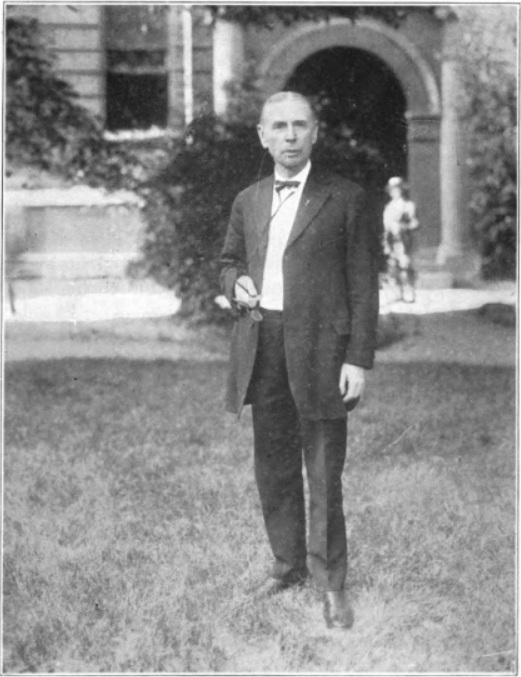
[Das Wesen des Christentums.] (Lecture delivered by Prof. F. Pieper.) During the last two years the essence of Christianity has been discussed in almost the whole of external Christendom. That is to say, the question has been discussed as to what Christianity actually consists of and how it differs from all other religions. These discussions were prompted by the lectures of the Berlin professor Harnack on this subject. What Harnack said and had printed soon afterwards, however, does not deserve the general attention it attracted. The Berlin professor merely repeated old, long-known assertions. Harnack's doctrine is briefly this: Christ is not God, but a uniquely wise and virtuous man. Christ therefore did not keep the divine law in place of man and bear the punishment for breaking the law.
Christianity therefore does not consist in faith in Christ, but in man's own morality, to which man is to be inspired and led by the unique personality of Christ. This teaching is, as I said, nothing new. The Unitarians and rationalists of all times, that is, the deniers of the Holy Trinity and the so-called rationalists of all times, have taught it. But the fact is that the appearance of Harnack has led to discussions on the essence of Christianity being conducted almost all over the world. And the result? The result is by no means a consensus among those who call themselves Christians. We are faced with the fact that those who call themselves Christians do not agree on what Christianity is. One might ask in bewilderment: How? Christianity has been in existence for almost two thousand years, indeed since the proclamation of the first promise of Christ, i.e. for almost six thousand years — and there is still disagreement in Christendom about the essence of Christianity? Are people still arguing about what Christianity actually consists of? The answer is: Christianity is completely united with regard to the essence of Christianity. All members of the Christian Church actually believe that they have forgiveness of sins and salvation through faith in Christ, the Savior of sinners, without the merit of their works. Through this faith, and through nothing else, they are members of the Christian Church. Whoever has this faith belongs to the Christian Church; whoever does not have this faith does not belong to the Christian Church. Even the souls who belong to the Christian Church in the papacy and among the souls find the faith that they have forgiveness of sins not through their works or their own "morality", but through Christ. This is the one faith that the apostle Paul says of the Christian Church when he writes: "One Lord, one faith", Eph. 4:5. This is the "one mind" that the Holy Spirit has worked and maintains in all of Christendom, as we sing of the Holy Spirit: "All Christendom on earth holds to one mind." The faith and mind of all Christians is expressed in the words of Scripture: "The blood of Jesus Christ, the Son of God, cleanses us from all sin", 1 John 1:7, and: "Therefore we hold that a man is justified without the works of the law, through faith alone", Romans 3:28, as well as in the children's verse: Christ’s precious blood and righteousness My glory are, my beauteous dress; So clothed, before my God I’ll stand When I shall reach the heavenly land. Dissenting opinions regarding the essence of Christianity are only found among the group that calls itself Christian, but is not
Christian. Of those people who want to come to God through their morality or through their works, who therefore place the essence of Christianity in morality, the Scripture says Gal. 5:4: "You, whosoever of you are justified by the law; ye are fallen from grace," and Gal. 3:10: "For as many as are of the works of the law are under the curse." So these people do not belong to the Christian Church. It cannot be said of the Christian Church: "Many minds, many senses." The Christian Church is really one mind. The Christian Church is the congregation of believers, that is, the congregation of those who believe that they have forgiveness of sins through Christ. Luther writes: "There is no more than one church or people of God on earth, which has one faith, one Baptism, one confession of God the Father and of Christ, etc., and which holds and remains united in this. Everyone who wants to be saved and come to God must find himself in this church and be incorporated into it, and no one apart from it will be saved." *) [*) Erl. edition, 9, p. 285 f.; St. L. Ed. 12, 898] This already answers the question of the essence of Christianity both positively and negatively. The importance of holding fast to the essence of Christianity has also already been pointed out. However, it might be helpful to delve into the matter a little further. I'll explain it in more detail: I. The essence of Christianity consists in faith in Christ, not in man's own morality. II. The Christian Church must hold fast to this essence of Christianity if it is to fulfill its task in the world. I. Let us deal with the essence of Christianity in more detail. By the essence of a thing we mean that which makes a thing what it is, or: by which a thing is what it is, by which therefore a thing differs from other things. Thus, for example, we speak of the essence of man in distinction from animals, and we find the essence of man in the fact that he has a rational soul in distinction from animals. In the same way we understand the essence of Christianity to be that which makes Christianity Christian and distinguishes Christianity from all other religions. What is that? What is it in or about a person that makes him a Christian? Not that he wears a certain garment, as Luther often reminds us. Nor is it that he has body and soul, and indeed a
rational soul; nor is it that he is man or woman, young or old; nor is it that he is educated or a natural man, that he is white or black or yellow, etc.; nor is it that he is an American or German or Englishman; nor is it that he believes in a God and strives to live honorably according to his conscience and abide by the laws of the land. No, only one thing in man makes him a Christian: faith in Christ, that man, who is a sinner, relies on Christ to obtain God's grace and salvation. This distinguishes Christianity from all other religions that still exist in the world. All other religions are religions of works, that is, religions that give people instructions on how they — the people — can bring about God's favor through their own goodness, their own efforts, their own works. All non-Christian and supposedly Christian religions agree on this. Only the type of works they prescribe is different in the various religions. Christianity, however, is not a religion of works, but a religion of faith, the religion of faith in Christ. A Christian is a person who does not want to enter heaven through his own goodness and works, but through Christ's righteousness and works. Where does this come from? Where does this essence of Christianity come from? Where does this essence of Christianity come from? Where does this difference between Christianity and paganism come from? It comes from this: the Christian religion has a Savior, all other religions do not. The pagan religions have mere teachers, teachers who give people moral precepts, by following which people are to bring themselves to heaven. Christ, the incarnate Son of God, approached the matter differently. He did not preach a new law, but he gave himself in place of men under the old, eternally binding law, kept it in place of men and paid the penalty for the transgression of the law in place of men by dying and shedding his blood. As the Scriptures testify of Christ: "When the fulness of the time was come, God sent forth His Son, made of a woman, made under the Law, to redeem them that were under the Law", Gal. 4:4-5. And again: "Behold the Lamb of God, which taketh away the sin of the world", John 1:29. "Surely He hath borne our griefs and carried our sorrows;.... He was wounded for our transgressions, He was bruised for our iniquities, the chastisement of our peace was upon Him, and with His stripes we are healed." Isaiah 53:4-5. In short, because God's Son became man, kept God's law in the place of men, and paid the penalty for the transgression of the law, and thus became the Savior of all men, the essence of Christianity does not consist in the fact that a man tries to keep God's commandments, but in the fact that a man
believes in him who has kept the law for him and for all men. That is why Christianity is not a religion of works, but a religion of faith. That is why the essence of Christianity consists solely in faith in Christ. Luther used to say: A person is white from whiteness and black from blackness. A Christian is someone of Christ, that is, because he relies on Christ's deeds and suffering before God. Of course, Christianity also teaches morality and good works. We will see later that only in Christianity can true morality and good works before God be found. But a Christian does not want to be saved half or fourth or even a thousandth part through his own virtue and works, but only through Christ's righteousness and works. This essence of Christianity is already expressed in the children's saying: "God so loved the world, that he gave his only begotten Son, that whosoever believeth in him should not perish, but have everlasting life", John 3:16. The well-known linguist Max Müller also aptly pointed out this essence of Christianity in contrast to all other religions when he gave a lecture on the Bible, the religious book of Christianity, to a Bible society. The famous orientalist said, among other things: "I may say that for forty years, in the discharge of my duties as Professor of Sanskrit in the University of Oxford, I have devoted as much time to the study of the sacred books of the East as any man in the world. And I venture to tell this assembly what I have found to be the one keynote of all these so-called holy books; the one keynote, the one chord that runs through them all, is salvation by works. They all teach that salvation must be purchased. Our own Bible — our holy book from the East — is a protest against this teaching from beginning to end. Good works are indeed also demanded in this holy book of the East; but they are only the outflow of a grateful heart — they are only a sacrifice of thanksgiving, the fruits of our faith. They are never the ransom of the true disciples of Christ. Let us not shut our eyes to what is noble and true; but let us teach the Hindus, Buddhists, and Mohammedans that there is only One Holy Book of the East which can be their comfort in that solemn hour when they must pass over into the unseen world all alone." Thus we have seen that, and why, faith in Christ is Christianity. Let us now take a closer look at the opposing opinion, the opinion that Christianity consists in man's own goodness and righteousness. So we say: in one respect we have respect for the — admittedly rare — people who sincerely endeavor to keep God's commandments in order to be saved in this way. The apostle Paul also
testifies to the Jews, who sought to establish their own righteousness, that they had “a zeal of God,” Romans 10:2. Such people are in one respect preferable to us than the coarse slaves of vice who live unashamedly according to their lusts. The righteousness of works, the justitia operum, has great value for the state and civil life, as our confession repeatedly emphasizes. In the state we live more freely in the company of honorable people than of vicious people. God also rewards natural respectability with earthly goods. But what is wrong is when someone wants to assert before God what is of value in the state and in civil life and thereby become righteous and saved before God. The apostle Paul, as we have heard, gives the Jews, who sought to establish their own righteousness before God, the testimony that they are zealous for God, but adds: "with ignorance", Rom. 10:2. They are zealous as those who do not understand the matter, who are spiritually blind. Accordingly, we say: whoever, with Professor Harnack, places the essence of Christianity in man's own morality instead of in faith in Christ, is not yet spiritually right in the head, is still blind, blind as a bat, has no idea of the essence of Christianity, still confuses paganism and Christianity, is still stuck in the religion of the flesh. Scripture expressly declares this. The flesh expresses itself in relation to religion in two ways. In one part of mankind it says: There is no God, no heaven and no hell. All religion is foolishness. Let us eat and drink. That is the materialistic flesh. In another part the flesh of men speaks: There is a God, and to come to God one must avoid sin and do good. This is the religious flesh. But it is flesh nonetheless. When someone wants to come to God through his own morality, through his own works, this is what Scripture calls the flesh. When the Galatians, seduced by Jewish false teachers, had fallen from the gospel to the law, when they wanted to be justified before God by their own works instead of by faith in Christ, the apostle Paul calls out to them Gal 3:1, 3: "O foolish Galatians, who hath bewitched you that ye should not obey the truth? . . . Having begun in the Spirit, are ye now made perfect by the flesh?" So it is called being carnally minded and walking according to the flesh if someone wants to come to God by his own doing. God's judgment here is different from man's judgment. It impresses us humans or, to use Luther's words, it "opens people's mouths" when someone makes an honest effort, or at least seems to make an honest effort, to earn heaven through an outwardly righteous life according to the precepts of the law, also with watchfulness, fasting, mortification and other special
works. We humans are inclined to call this "spiritual". But according to Scripture, this is vain carnality. If someone, in the opinion of earning God's grace, gave all his possessions to the poor, fasted almost to death, scourged himself with blood, even tore the flesh from his body piece by piece, that would still be flesh. Luther writes on Gal. 3:3 ("Having begun in the Spirit, will you now complete it in the flesh?"): "Paul does not call flesh here lust, animal passions or sensual desires. ... Flesh (here) is nothing other than righteousness, the wisdom of the flesh and the thoughts of reason, which endeavors to be justified by the law." *) [*) St. L. edition, IX, 288 f.; AE 26, 216] In short, to be justified by one's own works is the characteristic of blind paganism; to be saved by faith in Christ without one's own works is the characteristic of Christianity. It is also connected with this that the essence of Christianity is a deeply hidden secret to all people. Harnack, of course, believes that what John the Baptist and Christ himself taught was already essentially known to mankind. He says: "What could have been ‘new’ after mankind had lived so long before Jesus Christ and had experienced so much spirit and knowledge?" **) [**) Das Wesen des Christenthums. Third edition, p. 30] Harnack's opinion is based on his false view that Christ only taught morality or the law of God. The law, however, is nothing new to mankind. The Gentiles also know about God's law, as Scripture often and explicitly testifies. The Gentiles not only believe that there is one God, Rom. 1:19, but they also believe in "the righteousness of God", Rom. 1:32. The work of the law is written in their hearts, as their conscience testifies, Rom. 2:15. When missionaries preach the law to the Gentiles, they are not preaching anything new to them. The writing of the divine law is somewhat blurred in the hearts of fallen men, but not completely erased. That is why we also find among the pagans, as Luther says, excellent summaries of the law, compilations in which not only evil works but also evil thoughts and desires are declared to be sinful. In short, Christianity has the law in common with the pagan religions, even though Christianity has the divine law in its original and perfect purity in the word of divine revelation. But one thing is completely unknown to the pagans. They are completely unaware that there is someone who has kept the law for them. They are completely unaware that God sent his Son into the world to make satisfaction to the divine law in the place of men, and that men are now saved without works of their own, through faith in
Christ. Paul calls this gospel of Christ in 1 Cor. 2[:7-8] "the secret, hidden wisdom of God", "which none of the rulers of this world have known". He describes this gospel of Christ as something "which no eye has seen and no ear has heard and which has not entered the heart of man". And the apostle describes this gospel of Christ as the actual content of all Christian doctrine when he says in the same passage: "I determined not to know anything among you save Jesus Christ and Him crucified." [1 Cor. 2:2] The Gentile world, which sits in darkness and in the shadow of death, will only see the light when the gospel of Christ is preached to it, when the message is brought to it: "You are reconciled to God through Christ; without your works there is grace, full grace for you through Christ; believe this, and you have a gracious God." This is the essence of Christianity. II. And the Christian Church must hold fast to this essence of Christianity if it wants to fulfill the task assigned to it in this world, if it wants to accomplish that for which it was placed in the world by God and for which it is sustained by God. What is the purpose of the Christian church in the world? 1. First and foremost, to save people. Through the state, people are to be kept outwardly in order. The Church, on the other hand, is to bring salvation. That is the task of the Church in the world. All those who still want to be Christians readily admit this purpose of the Christian Church. But how does the church achieve this purpose? Only by preaching the gospel of Christ crucified. It must preach: God made him who knew no sin to be sin for us, so that in him we might become the righteousness that is before God. This gospel of Christ is a power of God that saves all who believe in it. No flesh is justified before God by its own morality, by its own works. On the contrary, those who walk in the works of the law are under the curse. As certain as it is that all those who believe in Christ have a gracious God, it is also certain that God is ungracious to all those who come before him with their own morality. What would happen, therefore, if the church wanted to place the essence of Christianity not in the gospel of Christ but in man's own morality, if instead of God's grace in Christ it wanted to make man's virtue and
works the basis of salvation? This would happen: it would not lead people to salvation, but to eternal damnation. With this preaching the church would become the greatest deceiver there is in the world. There is much deception in the world. In trade and commerce, things are continually presented differently than they are, and as a result, people are harmed, or seek to harm, in their earthly possessions. But the greatest deception in the world is a church that preaches human works instead of Christ crucified as the reason for salvation. It deprives people of their salvation, for no flesh is justified by the works of the law, says the apostle Gal 2:16. The Papacy is therefore a deception of the world and of man. The papacy seeks to lure all people to itself with the promise that it will lead people safely to salvation. It claims to be the only church that can bring salvation. And when people, lured by this promise and by this claim, enter the fold of the papacy, they are led to trust in their own works and the works of the saints instead of in Christ the Crucified alone, and thus, as far as the papacy is concerned, are led en masse to hell. If people are saved under the papacy — and there are such people — it is because they do not believe the papist doctrine of works, but in need of sin and death embrace Christ as their only Savior. The papacy, with its doctrine of works cloaked in the appearance of ecclesiasticism, is the greatest deception in the world. The lodges with their religion are also a deception of the world and of men. For the lodges also have the religion of works. They are annoyed by the fact that Christ crucified is the one through whom all people must come to God. They want to lead people to a better hereafter on the basis of their own perfection. All sectarian preachers who speak as if Christianity consisted in following the "Golden Rule" and describe the conversion of man as an attempt to lead a better life are deceivers of mankind. We would also be deceiving humanity if we followed the Berlin professor and wanted to place the essence of Christianity in human morality. As far as our teaching is concerned, we would then not be able to lead anyone to salvation. All our preaching would be in vain. All our monetary offerings would be in vain. All our synodical meetings would be in vain. If the essence of Christianity consisted in our own morality instead of faith in the gospel of the forgiveness of sins for Christ's sake, if we had to be saved by our own works, then I would suggest that we adjourn immediately and go home. We would then be of no use as a church in the world, we would not be able to lead anyone to salvation, because no flesh is justified before God by the works of the law. I would not know what
else we could do but cry woe on the whole world and on ourselves. Therefore we must remain unconvinced by the old and constantly rehashed error that the essence of Christianity consists in the morality of man. No, no! Christianity consists in faith in the Gospel, in faith in the forgiveness of sins which Christ has purchased for mankind. By preaching this, we save people and thus achieve the purpose of the Christian Church. 2. On the other hand, the Christian Church should give people a clear conscience before God and thus the highest happiness that exists for people here on earth. Through the ministry of the Christian Church, a person should be able to speak, and indeed be able to speak in all situations in life — even in sickness, poverty and in the midst of death: "I know I have a gracious God; God is not angry with me, but God loves me as a father loves his child." If a church, as much as there is in it, does not do this, it is of no use in the world. Christ's testament is: "Peace I leave with you; my peace I give to you", John 14:27. The church must fulfill this testament of the Lord. But how does this happen? By what alone does the Church give peace to consciences? By what alone can it work confidence in the hearts of men: we have forgiveness of sins, a gracious God? Only through the Gospel, only through faith in Christ, the Savior of sinners. "Therefore being justified by faith, we have peace with God through our Lord Jesus Christ, through whom also we have access by faith into this grace wherein we stand, and rejoice in hope of the glory to come, which God shall give." Rom. 5:1-2. The doctrine of works, the trust in one's own morality, always leaves the conscience restless under the accusation of the divine law. God's law is a mighty greatness. It is a divine greatness. God's law, as it is written in Scripture and also as it is written in our own hearts, does not cease to condemn us and make us feel evil as long as there is still sinfulness in us. This condemning divine judgment of the law cannot be abolished by human thoughts and deeds, but only by another divine judgment, by the divine judgment of the gospel, by which God himself absolves sinners of their guilt of sin for the sake of Christ. The evil conscience in man gives way to only one treatment: the blood of Jesus Christ, the Son of God, must be applied to the heart through faith. Professor Harnack, of course, believes that consciences can be quenched without the blood of Christ. He instructs people that they should
only imagine God as Father according to the example of Christ. Everything that has a human face should only raise its head confidently and call God its Father, without including Christ's person and work in the gospel, that is, without believing in Christ crucified. But Harnack may speak of confidence and call for confidence as much as he likes. Confidence remains, to paraphrase Luther, only in words and in the mouth and never enters the heart. And if the whole of humanity were to join hands and cry out for ten years, indeed for a lifetime: We do not believe in Christ's blood shed for us, but we imagine God to be merciful, they would still be condemned by their own hearts and consciences. People would go to the pit with an evil conscience. It says this: God is recognized as gracious, as Father, grasped, experienced only in Christ, not bypassing Christ. The Jews also wanted to call God their Father bypassing Christ. Like Harnack, they refused to include Christ's person and work in the gospel. But Christ reproaches them: "If you do not believe that I am" — namely your Savior and Redeemer of sins — "you will die in your sins", John 8:24. No creature can bring a conscience to rest, to peace; this is not the work of man, but the work of God. God the Holy Spirit must write a sentence of pardon into the conscience in place of the sentence of condemnation. But the Holy Spirit is a Spirit who glorifies Christ. By transfiguring Christ in the heart as the Lamb of God who bore the sin of the world, he wipes out the divine judgment of condemnation in the conscience and replaces it with the judgment of pardon and thus the confidence: "I have a gracious God." Teachers of works who place the essence of Christianity in man's own morality can temporarily put a conscience to sleep, but they cannot satisfy it. They are not bringers of peace to mankind, but tormentors of it. In his explanation of Isaiah 52:7, Luther calls teachers of works, such as the papists and Harnack, "sad night owls" who "frighten with their howling". But of the messengers who bring people the gospel of Christ crucified, he says: "They have lovely feet, for they bring with them the most cheerful word for troubled consciences. Those whose consciences have once been in danger know this." *) [*) St. L. Ed., VI, 611; cf. AE 17, 210 f.] And on Isa. 40:2 Luther remarks: "The forgiveness of sins does not stand in the work [of man], nor in teaching and doing the law, but in the gracious remission (of sins). And this saying must be carefully observed. For if
our consciences, shocked by the sight of sins and by the judgment of God, feel the law [that is, the judgment of the law], we should not take refuge in our deeds and works. For sin cannot be overcome by our works. ... A higher power, a greater power is required to overcome sin. Therefore the sorrowful souls must be so instructed that they first ... throw away all hope of their merit; then that they look to this Word: 'Your iniquity is forgiven,' and cast themselves on Christ, who became a curse for us, that he might redeem us from the curse, who therefore suffered and was crucified, that we, having overcome our sins, might live righteously by faith, as those who are reconciled to the Father through the blood of the Son and justified by faith in the Son. This is our doctrine, which we know to be powerful for the uplifting of consciences." *) [*) op. cit., 473 f.; cf. AE 17, 5 f..] We too must hold fast to this doctrine and remain unconfused with Harnack and all the teachers of works if we want to satisfy consciences in any other way. 3. The Christian Church is to lead people back to the service of God, to make them rich in good works. To use a modern expression: The Christian Church is to cultivate "Christian morality". This is also a purpose of the redemption that came through Christ. St. Paul writes of Christ in Titus 2:14: "Who gave himself for us, that he might redeem us from all iniquity, and purify unto himself a people for his own possession, zealous of good works." The good works of men are not sufficient to attain salvation. Only Christ's perfect works are sufficient to attain salvation. But this does not mean that the good works of Christians should be disregarded. They are extremely precious. They are worth more than the whole world. For the world and everything in it will burn up on the Last Day. But the good works of Christians do not burn up, but follow them into eternity; they are crowned by God with a glorious reward of grace. Good works are an eternal treasure that Christians should gather for themselves here on earth. One of the duties of a Christian preacher is to ensure that all members of the congregation become rich in good works. But how do good works come about? Only through faith in the gospel; only when salvation is not taught by the works of man, but by faith in Christ crucified. Whoever places the essence of Christianity in human morality,
in the works of man, loses good works along with salvation. No man has ever done a single good work until he has first believed that, without his works, he has a gracious God through faith in Christ. Why? If a work is to be good, it must be done unto God, so there must be love for God in the heart of the doer. Now, after the fall into sin, love for God comes into a human heart in only one way, namely when it recognizes, believes and thus experiences: God has had mercy on me in Christ; God has saved me from eternal damnation through Christ and has given me heaven. Therefore, when the apostle Paul exhorts Christians to "Christian morality", he says in Romans 12:1: "I urge you by the mercies of God to present your bodies a living sacrifice, holy and acceptable to God." "By the mercy of God," that is, by remembering the fact that God did not spare even his own Son, but gave him up for you all. Doing good works is an art that is limited to a very specific class of people, which only those who believe in Christ as their sin-redeemer can do. Luther says: "Christ must be ours and ours for all things before we have recourse to works." *) [*) St. L. Ed. XI, 128; AE 75, 216] And in another passage: "You must have heaven and already be saved" (namely through faith in Christ) "before you do good works. Works do not merit heaven, but again (the other way around), heaven, given by pure grace, does good works without any request for merit." **) [**) St. L. Ed. XII, 136; AE 75, 236]. Above all and first of all, Christian morality includes a heavenly mindedness, a mind that despises the vain things of this world and strives for what is above. This attitude, however, is not instilled in a person either by flattery nor by coercion, neither by moral instruction nor by culture and learning, but solely by giving him the heaven acquired through Christ. This happens solely through the gospel and faith in it. Everyone who does not have his treasure in heaven through faith in Christ enjoys the tears of this world in some way. Nothing else is possible. Whoever therefore takes away from the Christian Church the doctrine that we have a gracious God and salvation through faith in Christ without our works, also takes away the good works of the Christian Church. And yet, since the time of the Apostle Paul, there have been many people who call themselves Christians and who have argued that, if "morality" and good works are to be right, faith in
Christ must be set aside and the works of man placed in the foreground. This is proof that when people follow their own thoughts instead of God's Word in matters of religion, they are ignorant, blind, foolish, mad and furious. They are as nonsensical as if someone who wants to have fruit wanted to achieve his purpose by destroying the tree that produces the fruit. No, there is an immutable order between faith in Christ and good works. Faith in Christ comes first, and good works come second. Whoever wants to put works first destroys good works. Good works must remain in second place, or they are not there at all. Apart from faith in Christ there is an external, civil, natural morality, which has its value for civil life, but no Christian morality, no good works, because apart from faith in Christ there is no Holy Spirit, no attitude directed towards God, no love for God. Apart from Christ, one can speak of love for God. The pagans have also done this. The papists, the Unitarians, the lodges, etc., also do so. But the talk remains mere talk. After the fall, love for God and neighbor is implanted in the human heart in only one way: through faith in Christ, the Savior of sinners. Therefore all those who, with Harnack and all the teachers of works, want to place the essence of Christianity in human morality instead of faith in Christ, are enemies and destroyers of all good works. The Christian Church must remain unaligned with them. 4. The Christian Church should make men wise and understanding, so wise and understanding that they can clearly and surely distinguish between truth and error in religious matters. "You will know the truth," says the Lord Christ of those who belong to His church, John 8:32. But when and how does spiritual understanding enter a person? St. Paul writes in 1 Cor. 2:15: "The spiritual man judges all things, and is judged by no one." Who is the "spiritual man" here? According to the context of the text, this is not the pastor or some specially gifted person in the church, but every Christian, that is, every person who has recognized and accepted the gospel of Christ by faith, who knows that it is not by one's own works, but by faith in Christ the crucified One, that one has a gracious God and salvation. This is what the apostle Paul preached at Corinth and everywhere, as he reports in the same passage, 1 Cor. 2:2: "I determined not to know anything among you
save Jesus Christ and Him crucified." The apostle calls being saved through Christ crucified "the secret, hidden wisdom of God", which even the rulers of this world have not recognized, but which God has revealed through the Holy Spirit in the gospel of Christ. And whoever believes this wisdom, whoever believes this gospel of Christ, is spiritually wise, spiritually understanding. Here at this point is the dividing line between wisdom and foolishness among men. He who has recognized that man is saved through faith in Christ without works of his own is spiritually wise. He who still thinks that the essence of the Christian religion consists in man's own morality is still spiritually unwise, not merely somewhat, but completely blind, even if he otherwise united in himself all the knowledge that exists in the world. Christ, the Savior of sinners, who reconciled the world with God, is the only spiritual light for mankind. Whoever has not excluded this light within himself, that is, whoever does not trust in Christ's deeds and suffering before God, but still seeks to establish his own righteousness before God, still dwells in thick darkness. He understands nothing of the Old Testament, for the content of the Old Testament is Christ, the Savior of sinners, as Peter Acts 10:43: "To this" (namely Christ) "all the prophets testify that through his name all who believe in him shall receive forgiveness of sins." He understands nothing of the New Testament, for the content of the New Testament is also Christ, the Savior of sinners, as St. Paul testifies of his New Testament preaching: "I determined not to know anything among you save Jesus Christ and Him crucified," 1 Cor. 2:2. To him the whole of Holy Scripture is a completely incomprehensible book closed with seven seals, even if he knew the whole of Scripture word for word by heart. Despite all the talk of Christ, of Christian morality, of love for God and neighbor, etc., he does not understand the slightest thing about Christianity. He still thinks that a whole dozen roads lead to heaven, and he can become a Turk, a Jew, a Buddhist, a Papist, a Unitarian, a member of a lodge or anything else, depending on the circumstances and the individual. There is a saying: "All cats are gray in the night." But in the night, in pitch-dark night, are all those who believe that one can and must enter heaven through one's own morality. They therefore consider all religions to be essentially the same. But as soon as the light of the gospel of Christ, the Savior of sinners, has dawned on someone, the time of error in spiritual matters ceases. Now he knows that not a dozen ways lead to heaven, but only one way: trust in Jesus Christ the Crucified. He clearly and surely recognizes and rejects as false all religions that seek to make human activity the basis of God's grace
and salvation. He remains unconvinced by Turks, Jews, Buddhists, Papists, Unitarians and lodges and all false religions. Thus we have seen why it is so important to maintain, under all circumstances and in the face of all error, that Christianity consists in faith in Christ crucified. Only in this way can we make people 1. saved, 2. certain of God's grace, 3. diligent in good works and 4. spiritually understanding. May God, by grace, keep us in the truth of the Gospel for Christ's sake!
Text extracted by BackToLuther from Lehre und Wehre vol. 69 (1923), pgs 225-240. An English translation by J.T. Mueller published among other convention essays in the book What Is Christianity and other Essays. The main advantages of this translation are 1) its free, and 2) emphasis of words is retained. Last edit: 2025-10-02. = = = = = = = = = = = = = = = = = = = =
Continue Reading
Keep exploring Pieper's works
Return to the Pieper collection or browse the full library by title.