
Introduction
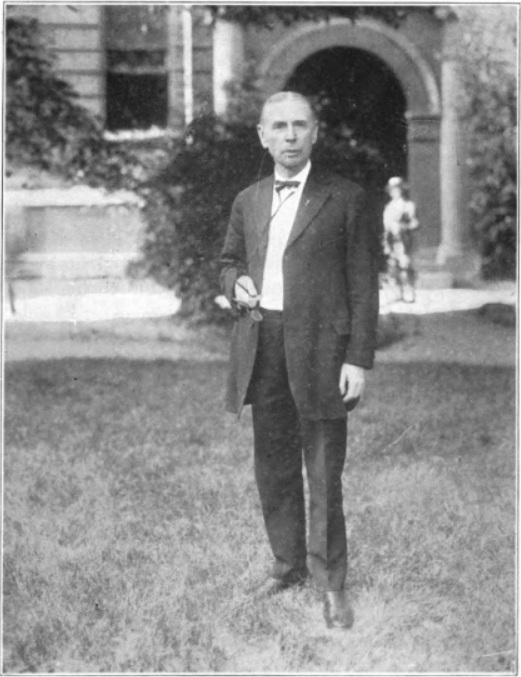
*) In response to several requests, we are reprinting this paper by Dr. Pieper, first published in the Synodical Report of the Southern Illinois District in 1916, in Lehre und Wehre with several deletions and additions made by the speaker himself. In today's official Christianity, it is well known that the basic Christian truth dealt with here, which alone makes and sustains Christians and without which there would be no Christian Church at all, is almost universally concealed, indeed, in many cases openly and deliberately denied. This, however, is a warning to all true Christians to stand up for it all the more zealously, often, decisively and loudly, as is done in a skillful and effective way in this and the following articles by Dr. Pieper. May God bless the reading of them! F. B. [F. Bente, Editor]
Reconciled with God! These words express the greatest happiness that a person can enjoy here on earth. Since the fall of man, human life in this world has been a life full of sorrow and misery. So says the Scripture, and people come to realize this through experience. But for those who know they are reconciled with God through faith in the gospel of Christ, there is actually no more misery in this world. He has overcome the world with its sorrow and misery. Everything that is terrible in the world has lost its horror for him. In the dark night of affliction, he sees the heavens open. Poverty, pain, illness, perhaps lifelong illness, are truly no child's play; but those who know that they are reconciled with God in the process still gain the strength to say: "Whom have I in heaven but Thee? And there is none upon earth that I desire beside Thee. My flesh and my heart faileth, but God is the Strength of my heart and my Portion forever,." Psalm 73:25-26. Even death is no child's play. The whole world is bankrupt in the face of death, even the so-called great spirits. [Friedrich] Schiller confesses in a letter to [Alexander von] Humboldt that he knows of no consolation against death. But whoever knows himself to be reconciled with God is also confident in death and says: "Death, where is your sting?" 1 Cor. 15:55. It is no
small matter to be stoned to death, to have one's head cut off or to be burnt. Nevertheless, Stephen is confident even under stoning, because he saw heaven open (Acts 7:55), and John Hus, in the flames of the stake at Kostnitz, confidently commits his soul into his Savior's hands and still has strength to pray even for his blinded accusers. Luther, when speaking of this subject, says: "He who knows that God is gracious to him, walks through this life, especially in tribulation, on nothing but roses, and the land flows to him with milk and honey and nothing but precious wine. (St. L. II, 1988, § 201-205 [AE 8, 254]) Now it is God's will that all men should enjoy the happiness of reconciliation with God. God has reconciled the whole world to Himself through Christ, and those who accept this in faith enjoy reconciliation with God, Rom. 5:1-3. But the arch-enemy of men, the devil, does not grant men this happiness. He is busy tempting people so that they either despise the reconciliation brought about by Christ as unnecessary or seek to establish their own reconciliation alongside it and thus lose out on reconciliation through Christ. So God must come upon the world with terrible plagues, with war, floods, earthquakes and other great calamities, in order to remind people of what the world still stands for, namely for the purpose that people repent and embrace in faith the reconciliation with God brought about by Christ. God grant that none of us may be among those who despise the reconciliation that God has brought about at such a high price, namely through the actions and suffering of his incarnate Son! First of all, we see: Man is in need of reconciliation with God. That man needs reconciliation with God, or — what amounts to the same thing — that there is a wrath of God over the sins of men, is testified to by a whole army of preachers. This wrath of God is revealed in the realm of nature, in the conscience of man, but especially in the Word of God. We see disruption and disorder in the realm of nature and in human society. There is a battle of all against all. The irrational creature fights against people, and people fight against each other. But all this disorder and disruption is a revelation of God's wrath against human sin. This is what the Holy Scriptures of the Old and New Testaments teach. From Genesis 3:17-19 we learn that the thorns and thistles in the field and everything that hinders and harms and takes away man's food is a consequence and punishment of sin. The apostle teaches us in Romans 8:19-23 that the corruption that has invaded nature is caused by man's sin. And the death of man,
this terrible fact that body and soul are torn apart, that man, who is created for life, dies: this does not come from matter or from a necessary metabolism, as foolish philosophers fantasize, but from sin and from God's wrath against sin, as is so clearly and movingly described in Psalm 90:7-8: "This is your wrath that we should perish, and your anger that we should perish so suddenly. For you set our iniquity before you, our unrecognized sin in the light of your countenance." That there are wars, that fire, water and storms rage against man and his possessions, that the earth trembles, that pestilence and famine afflict mankind, these are all revelations of God's wrath against man's sin. And all these things should bring home to us the fact that we need reconciliation with God. That is why we should not pass by these things thoughtlessly, but heed them as proclaimers of God's wrath against our sins. Luther does this forcefully throughout his writings. Just read, for example, what Luther says about Genesis 3:16-17 (St. L. I, 249 ff., 255; AE 1, 204, 208) [Luther quotes are missing in Mueller’s translation:]: "The philosophers have wondered where this disorder in nature would come from. ... After all, all creatures are directed against us and almost prepared for our destruction. How many of them perish by fire and water? How dangerous are wild and poisonous animals, which not only harm our bodies, but also that which is grown for our food! Not to mention that we ourselves also fall on each other and strangle [each other], as if there were no other pestilence and misfortune creeping after us. And what is the whole of life but a daily quarrel, deceit, robbery and murder, if you look at the nobility and trade of the people among themselves.... Therefore we live knowingly and with seeing eyes in a more than Egyptian darkness. And although we are reminded everywhere and by all creatures of God's wrath and it stings our eyes, we pay no attention to it, but love this temporal life and cling to it as if it were our only pleasure." Concerning Genesis 3:18, Luther summarizes what has been said before in this way (St. L. I, 255 f.; AE 1, 209): "Here again we are told that the earth of things bears none of itself, but for the sake of Adam's sin; as he has plainly said above: 'for your sake'. Whenever, therefore, we see thistles and thorns, weeds and the like in the fields and gardens, we should remember, as from certain signs, the sins and wrath of God. And so it is not only in the Church that we hear from God's Word that we are sinners, but the whole land, indeed the whole of creation, is full of such preachers who reproach us with our sins and the wrath of God aroused by our sins. Therefore we should diligently pray that God would remove such a great hardening from our eyes, minds and hearts
that after so many reminders of our sins, we would at least once lay aside our security and live in the fear of God. For this is why we are pressed down and burdened in so many ways with the malediction." We live in "the age of newspapers". [Now the Internet.] We read daily of misfortunes, of war and bloodshed, of robbery and murder. We Christians should not read such things thoughtlessly and merely from the point of view of news, but we should pause while reading, fold our hands and consider what a tremendous revelation of God's wrath against the sin of mankind confronts us from the newspaper reports. Our reading of the newspaper will then take place with sighs and supplications to God and with heartfelt pleas and intercession: "O God, have mercy on us and all sinners!" Here we must point out a trick of the devil, whereby he wants to lead us to cultivate self-righteousness instead of repentance on the occasion of the plagues in nature and in human life. He succeeds in this trick with us if we want to think that the misfortune that comes upon individuals, regions and countries is not a sermon of repentance for us and all people. Our Savior gives us a clear lesson on this point in Luke 13:1-5, following two events of the day. Galileans had been killed by Pilate at the sacrifice, and eighteen persons had been slain by the falling tower of Siloam. On this occasion the Lord warns against the judgment of self-righteousness, as if these people had been sinners before others and had therefore been punished before others. Rather, the Lord adds the instruction that misfortunes bring to light what all people deserve because of their sins. He says: "Unless you amend your ways, you will all likewise perish." We should also bear this in mind in the war that raged in the world. [World War I] Of course, this war was a terrible punishment, initially for the peoples concerned. But we should not play the self-righteous Pharisee and consider ourselves better than those affected by the misery of war. Rather, we should consider that we are in the same debt before God and that the same punishments would also have to be inflicted on us if God wanted to deal with us according to our merits. However, in Germany, the land of the Reformation, the contempt for the Word of God is great. It receives the punishment of its sins. But what about us? Our country is the land of lodges that deny the crucified Christ. In our country the pope is spreading, who sits in the temple of God as a god and pretends to be God. In our country, those who call themselves Lutherans call the pure Lutheran doctrine "the disturbing element". And what about us so-called Missourians? We certainly have an excellent church system. We have God's Word as abundant, pure and loud as
in the apostles' time. But have we cherished the Word, heard and read it diligently, and spread it with real zeal? Oh, how much indifference, indolence and complacency that provokes God's wrath can be found among us! The disruption and disorder in nature and in human society are preachers of God's wrath from outside. But people have a much, much clearer and more terrible preacher of wrath against sin within themselves. This is the conscience, or more precisely: the evil conscience. The evil conscience is the awareness of the terrible fact that God, the great, majestic God, is angry with the sinner. Luther says in his commentary on Isaiah: "Sin is immediately followed by an evil conscience." (Erlangen Ed. 22, 41) Man is wonderfully made by God. The sin that man commits automatically registers itself within him. It registers in the heart and conscience of man as guilt before God, as recognition of God's wrath against sin, in short, as an evil conscience. We can call this process automatic because it is an effect of sin that we cannot prevent. Just as a so-called cash register registers the sum received, so the conscience registers the sin committed as guilt before God. This is what Luther means when he says: "Sin is immediately followed by an evil conscience." You can argue against this with words, you can resolve: I want to forget my sin, put it aside. But that doesn't help; the evil conscience remains. Prof. Ritschl of Göttingen and his followers have said that there is no wrath of God over human sin. Others have said that the evil conscience, the consciousness of guilt, is an acquired prejudice. But these people have not eliminated the evil conscience either in themselves or in others with such talk. This is shown by Ritschl's own example, as we shall see later. — The rationalists of all times have said that although God does not like sin, he is not so angry with people that he condemns them eternally. But even the rationalists have not put a single conscience to rest with their speeches. The consciousness of guilt in man does not give way to human demonstrations. — American sectarian preachers of our time often speak of a "fatherhood" of God and a "brotherhood of all men". They want to say that all people can raise their eyes to God with peace of mind and expect that God will show himself to them as Father without the reconciliation brought about by the blood of Christ. But these are just sayings that do not remove the evil conscience from the world. The human conscience is an incorruptible bookkeeper of people's sins. Suppose the creature were silent, and suppose there were no law of God revealed in Scripture: if we
look only to ourselves, our conscience cries out to us: "You are guilty before God, God is angry with you!" So it was with Adam. When Adam sinned, the fact registered in his conscience. Involuntarily, he tried to hide from God. It is the same with all people. It is still the same with us Christians. The sin we commit also registers in our conscience as guilt before God. Thank God — to anticipate this — thank God that we know about the precious blood of Christ, the only means of quenching the evil conscience! Therefore we dare not go to bed with an evil conscience, but we pray [according to the German]: Have I done wrong today, Dear God, don't look at it! Your grace and Christ's blood Makes up for all the damage. The evil conscience remains even in those who confess with their mouth that they deny God. [I.e. “God is dead”] There are atheists only in word, but not in deed, as our old theologians say. The conscience, that preacher within oneself, can be partially and for a time muzzled. One can, as St. Paul says, "endure the truth through unrighteousness". But in the end, if the person is not suddenly carried away in his artificial blindness, this inner preacher breaks through all the barriers that have been artificially drawn for him and pronounces judgment with a voice of thunder: You are a debtor before God, you are damned! We have examples of this in people like Voltaire, *) [*) Weseloh, "Gottes Wort eine Gotteskraft", p. 34] [Heinrich] Heine †) [†) A. a. O., p. 37] and others. These mockers and blasphemers of all things holy silenced the inner preacher for a time, especially through a life of sin and shame. But at the hour of their death, the evil conscience asserted itself. It is moving to read the exclamations of anguish and despair with which Voltaire died. Even the doctors withdrew in horror. Heine, a gifted but godless German writer, recanted and cursed his earlier godlessness on his deathbed. However, it remains questionable whether he died a Christian. The heathen have also always heard this voice of the inner preacher. God's clear word testifies to this. The apostle Paul describes the Gentiles in Romans 1:32 as people "who know the righteousness of God, that those who practice these things" (namely sin) "are worthy of death". Furthermore, Romans 2:15 states that the Gentiles "prove that the work of the law is written in their hearts, as their conscience testifies, and also their thoughts, which accuse or excuse one another". Heathen writers also testify to this with words.
Plutarch, for example, has a sick pagan exclaim: "Let me, O man, the accursed, the gods and demons hated, suffer my punishment!" (Luthardt, Apol. II, 213.) The pagans also testify to this with their works, namely with their attempts to reconcile God through sacrifices and services. The pagans are very serious about these attempts. For the purpose of satisfying their evil conscience, we find extreme self-torture, the sacrifice of their children, the sacrifice of their own person through suicide. So much for conscience as a preacher of the fact that we need reconciliation with God. But above all, God proclaims in his revealed Word his wrath against the sin of men. Scripture proclaims a wrath of God over sin that we cannot even imagine, a wrath that, as the hymn says, "makes my heart tremble with fear and my tongue stick to the roof of my mouth"; a wrath so terrible that we would die instantly if we could feel it fully, as Luther reminds us. Let us think of the divine revelation of wrath in the Flood, in the overthrow of Sodom and Gomorrah, in the destruction of Jerusalem. God, the holy and majestic God, and sinful man are the greatest opposites; they go together even less than fire and water. Luther explains: As long as sin is in man, God cannot have fellowship with man; the whole of divine holiness and righteousness sets itself against it. But how does this relate to the situation we see before us in the world? When we see the injustice spreading in the world and the Church, we might well come up with thoughts like these: God can't be that serious about sin, otherwise he would strike with thunder and lightning. But let us remember that the world is still under the sign of divine sparing. Because Christ has atoned for the sins of the whole world, and he still wants to gather a church out of the world, he is still holding back his judgment. But we should not think that God condones sin because he has not yet struck. It remains true: "For thou art not a God that hath pleasure in wickedness: neither shall evil dwell with thee", Psalm 5:4, and: "The face of the Lord is against them that do evil", Psalm 34:16. The curse in Deuteronomy chapters 27 and 28 are also still read with benefit as an expression of God's wrath against sin. We also read the same judgment of God upon sin in the New Testament. Regardless of whether a person sins consciously or unconsciously, Galatians 3:10 says: "Cursed is every one that continueth not in all things which are written in the Book of the Law to do them." The Savior says that even a useless word is subject to God's judgment, Matt. 12:36. The Savior also expressly points out that this curse does not only have an effect here on earth. He speaks of an
eternal place of punishment for sin, where there is weeping and gnashing of teeth, Matt. 8:12, where its worm does not die and its fire does not go out, Mark 9:44. This is the terrible revelation of God's wrath against sin in His Word. But the most powerful revelation of God's wrath against sin is that God gives His only begotten Son, to whom He imputed the sin of the whole world, to death. Truly, we humans are in need of reconciliation with God! Man cannot bring about reconciliation with God on his own. Although people strive for reconciliation with God, they cannot bring it about themselves. We see a general endeavor among people to reconcile with God, even among pagans. The essence of paganism is not atheism, but the striving to reconcile God through one's own actions. (Apology of the Augsburg Confession, Art. III, § 85 ff.; Triglotta, p. 176 f.) The pagan believes in a God, he knows God's will of the law (Rom. 1 and 2), and the pagan, because he has an evil conscience as a result of the knowledge of the will of the law, lets it cost him something to bring about his reconciliation with God. Cicero says: "No people is so wild that it does not know of a God and does not have a worship service." Luther also often refers to the same fact. Of course, the pagans, like the Romans, in their striving for self-reconciliation with God, not only came up with great things, but also with ridiculous things, with childish things. Even in paganism there were prayer machines. The Egyptians believed, says Luther, that they also had to worship cats and mice and honor garlic and onions. (Cf. St. L. II, 1829 [AE 8, 135]) That is childishness. But we must not forget that in many cases the pagans were very serious in their attempts to reconcile God. Let us think of the pagan religious practices in India. To propitiate the deity, the penitents walk hundreds of miles with sharp nails in their shoes, look at the sun until they go blind, let themselves be crushed by the idol chariot. Think of the huge sums of money spent on building temples. There are said to be pagan temples in China that cost 50 million dollars. Let us look at external Christianity, if it has forgotten the gospel. Let us look at monks who, like Luther, take the monastic life seriously. Luther did not go to the monastery to have good days, but to satisfy his awakened conscience through a "holy life" and self-torture, in short, to reconcile himself with God. Monastic life and monastic works still make a great impression on people, even on those who are indifferent in matters of religion. Naturally, people admire those who give the impression of religious seriousness. The world does not despise the religion of works. Only the religion of grace of the Gospel of the crucified Christ is an offense to the Jews and foolishness to the Greeks.
But what about the result of the religion of works, that is, of human efforts to reconcile God? The result is in every case a complete zero. This is what the Scripture says in Romans 3:20: "By the works of the law no flesh will be justified before God." The conclusion with regard to all Gentiles is drawn from Eph. 2:12: They have no hope and live without God in the world. It is said, especially in our time, that God is pleased with the worship of the heathen; he sees the good will; he cannot possibly reject the sincere worship of the heathen. Scripture teaches otherwise in 1 Cor. 10:20: "What the heathen sacrifice, they sacrifice to devils and not to God." Those who seek reconciliation with God through their own actions in external Christianity are just as unsuccessful. The Scripture says Galatians 3:10: "Those who practice the works of the law are under the curse." We have an example of this in Luther. He was truly serious about satisfying his conscience through works; and yet he confesses: "I only fell deeper and deeper into it." God sees only one sacrifice for sin: the sacrifice of Christ. (To be continued.)
(Continued) God has reconciled the world to Himself through Christ. There is a reconciliation of all people with God. Admittedly, this is a reconciliation that no human being has thought of. Even the great spirits among men, the rulers of this world, have not recognized it, as St. Paul says in 1 Cor. 2:8. We only know about this reconciliation through God's revealed Word. From God's Word we learn: God made his eternal, only-begotten Son become man and reconciled the whole world to himself through his actions and suffering. Scripture clearly testifies to this fact. This fact is the actual content of the whole of Holy Scripture. Thus we read 2 Cor. 5:19-21: "God was in Christ, reconciling the world unto himself, not imputing their trespasses unto them; and hath committed unto us the word of reconciliation. Now then we are ambassadors for Christ, as though God did beseech you by us: we pray you in Christ's stead, be ye reconciled to God. For he hath made him to be sin for us, who knew no sin; that we might be made the righteousness of God in him." Let us visualize what is said in these words. It says: "God was in Christ and reconciled the world to himself." God is the agent here, not people. It was not people who were reconciled to God, but God reconciled people to Himself without people asking him to do so or even knowing about it. A wonderful act of God's love confronts us here. Because people were in need of reconciliation, but could not bring about this reconciliation, God, in his divine love for us lost sinners and in his divine mercy for us poor people, took reconciliation into his own hands and brought it about. But how did God
do this? Through a quite miraculous event. It says: "God was in Christ and reconciled the world to himself." In Christ, God accomplished the reconciliation of the world with himself. God sent his Son into the world by allowing him to become man from the Virgin Mary. Through Him he fulfilled his law given to mankind and had Him pay the penalty that mankind had earned through their transgression of the law. In this wonderful way, God reconciled the world to himself in Christ. Thus we read Gal. 4:4-5: "God sent his Son, born of a woman and put under the law, to redeem those who were under the law, so that we might receive adoption as children." Romans 5:10: "We are reconciled to God through the death of his Son." Gal 3:13: "Christ has redeemed us from the curse of the law by becoming a curse for us." And 2 Cor. 5:19 goes on to say what this reconciliation consists of. It does not consist in the fact that people have changed their attitude towards God, as the words have been wrongly interpreted. People knew nothing of this reconciliation. No, reconciliation consists in the fact that God in Christ or for the sake of Christ has changed his attitude towards mankind. It says: "Not imputing their trespasses unto them [men]." Men had sinned and thus deserved God's wrath, and men could not avert this wrath with all that they were and did. But for the sake of Christ, God does not impute their sins to them, that is, he forgives their sins and looks at them as if they had not sinned at all. God has erased people's sins from his record of guilt and has replaced wrath with mercy in his heart. The objection raised against this, that there can be no change of heart in the eternal, unchanging God, is human cleverness. Of course, God is the eternal and unchanging one (Ps. 102:28). But it is also true that we humans cannot have any idea of the eternal and unchanging God, because we humans are bound in our ideas to the succession and coexistence in time and space. That is why God has condescended to our human imagination and in his Word sets apart for us that which is completely one with him in his divine majesty. Scripture leads us to think of God's wrath and grace in this way: God began to be angry when people sinned, and God let go of his wrath against sinners and did not impute their sins to them when Christ lived, suffered and died for mankind (Romans 5:18, 10). And this reconciliation is a perfect one. First of all, it refers to everything that is sin. It says: "He did not impute their sins to them." So everything that is sin, transgression of the
law of God: our attitude turned away from God, our evil state, the evil thoughts, desires and impulses of our heart, our evil words, our evil works — everything God did not impute to the world, to men; he regarded it as if it had not happened, and struck it out of his register of guilt. The papist doctrine that Christ only paid enough for original sin, but did not also pay in full for real sin, is contrary to Scripture. But the atonement is also perfect in another respect. It says: "God did not impute their sins to them." "To them", that is, to the world, to the whole human world. Reconciliation is perfect when we look at the mind of God: in God's heart, forgiveness of sin has taken the place of imputation of sin, and grace has taken the place of wrath. But reconciliation is also complete when we look at its outward extension. It extends to the whole human world. The Calvinist doctrine that God has reconciled only a part of mankind to himself is contrary to Scripture. We have no right to restrict the term "world" and understand it to mean only the "elect". Moreover, 1 John 2:2 explicitly states: "Christ is the propitiation not only for our sins, but also for the sins of the whole world." But there is another very important fact. This reconciliation is behind us, it has happened, it is an accomplished fact. "God was in Christ, reconciling the world to himself." These words refer to the time when the Son of God lived and died on earth. At the time when Christ lived, suffered and died on earth, almost 1900 [now 2000] years ago, God reconciled the world to Himself. At that time, when God raised Christ from the dead, he absolved the world of its guilt of sin, he declared that he no longer had anything against the world of sinners. For this is how the apostle Romans 4:25 juxtaposes the death and resurrection of Christ: "Who was delivered for our offenses and was raised again for our justification." And further: This wonderful fact, that God reconciled the world to Himself, God did not keep to Himself, locked away in His heart, but God now reveals this fact to the world through the word of reconciliation, through the gospel. This continues in the words: "And hath committed unto us the Word of Reconciliation", of the reconciliation that is not only to happen in the future, when people change, repent and believe, but which has happened. According to Scripture, we call this message of reconciliation that has happened the gospel, the good news. That is why Acts 20:24 calls the gospel "the gospel of the grace of God", Eph. 6:15 "the gospel of peace", and that is why the preachers of the gospel are called people who have lovely feet, who proclaim peace, Rom. 10:15. Just as the angels sang the words at Christmas: "Peace on
earth!" — The word of reconciliation is grossly distorted not only by the papists, but also by most of the so-called Protestants of our time. They present the matter as if people first had to reconcile God completely through their repentance or faith. No! God is reconciled with the world, and the world is reconciled with God before any change that takes place in men, before any inner transformation, even before repentance and faith. — Of course, the Christian church also has to reveal the wrath of God over the sin of men by preaching the law in order to convince people of their guilt. But the real message that the Christian church has to bring to the world is that through Christ God's wrath against sin has been abolished. The Christian church is to proclaim this fact to the world and to call, provoke and entice people to believe in it, as it goes on to say: "Now, then, we are ambassadors for Christ, as though God did beseech you by us; we pray you in Christ’s stead, Be ye reconciled to God!" There is no longer any room for the teaching that people still have to make amends for their sins before God through their own actions. The apostle concludes 2 Cor 5:21 thus: "For He hath made Him to be sin for us who knew no sin that we might be made the righteousness of God in Him." The fact of the reconciliation of the whole world through Christ is also taught in all Scripture passages in which it is said that Christ offered Himself as an atoning sacrifice for the world. Eph. 5:2: "Christ loved us and gave himself for us as a gift and sacrifice, a sweet savor to God." According to Heb 7:27, Christ offered a sacrifice to God for the people's sin, but "he did this once when he offered himself". Heb. 9:12: "Christ entered once into the holy place by his own blood, having obtained eternal redemption." The passage in Hebrews distinguishes between Christ and the priests of the Old Testament. The priests of the Old Testament, because they themselves were sinners, offered animals prescribed by God as sacrifices. But Christ differs from the priests of the Old Testament in that he does not offer animals, but himself, in his own blood, as a sacrifice to God for the sins of the whole world. Everything is summarized in John 1:29: "Behold the Lamb of God, which taketh away the sin of the world." This is the fact of the reconciliation of the whole world of mankind through Christ! On the basis of this fact, every person in the whole world, including each one of us, can and should be certain that he is already reconciled with God through Christ. There are many lies in the world, and occasionally the question has been raised as to which is the greatest lie. The greatest lie that is and can be uttered here on earth
is when someone tells me that I am not reconciled to God through Christ's blood. It is sad enough that the devil has led us into sin and brought God's judgment of wrath upon us. But now we do not want to do the devil the favor of believing the lie that we are not reconciled to God through Christ. The Romans [Catholic Church] in particular come here with a whole series of objections. They are very interested in the fact that no one believes that he is reconciled to God through Christ. That would spoil the whole fair for them. They call it "impertinence" if someone thinks that God is completely gracious to him for the sake of Christ. They object: 1) "Your name is not in the Bible. You would have to have a special revelation from God if you wanted to be sure that you are reconciled to God." Answer: In Scripture we have the necessary revelation from God. The word "world" is divine revelation. This revelation is more sure and certain than if my name were in the Bible. If it depended on my name being mentioned in Scripture, then I would first have to search for my name among many names; and since many people have the same name, I could not be sure in the end whether I or a namesake was meant. Luther says on John 1:29: You are a part of the world, therefore you are reconciled to God, because Christ is the Lamb of God who bore the sin of the world. — The Romans interject 2): "You do not know whether your repentance is deep enough." To this it must be said: Where is it written that God forgives sin for the sake of human repentance? God is already completely reconciled with us before our repentance for the sake of Christ. Of course, repentance must precede faith. But the forgiveness of sins is not based on our repentance, but solely on Christ's perfect work of reconciliation. — What the Romans still teach about a necessary confession before the "priest" and about satisfactions that the priest determines, is contrary to God's Word, in the interest of priestly rule, devised to enslave souls and dishonor Christ. All necessary satisfaction for sin has been made by Christ once and for all. A more detailed description of the divine method of reconciliation. In the Christian church, the term "vicarious satisfaction" (satisfactio vicaria) was also used to describe the way in which the reconciliation of the world with God came about. Luther also used this expression. In his "Christian Questions", the answer to the question: "Why should we remember and proclaim Christ's death?" is: "That we may learn to believe that no creature can make satisfaction for our sins except Christ, true God and man."
And the following question is: "What then moved Christ to die for your sins and to make satisfaction for them?" This "vicarious satisfaction" is particularly unacceptable in our time. War has been declared on this expression. [E.g. by Gerhard O. Forde.] Of course, the expression is not found in Scripture. But the thing designated by the expression is the teaching of Holy Scripture. The meaning of the expression is that Christ, in the place of mankind, has substituted for God, who was angry at the sins of mankind, that by which God's wrath against mankind is transformed into grace towards mankind. All these thoughts are clearly expressed in Scripture. We must hold on the basis of Scripture: 1. There is in God an inviolable holiness and justice, according to which he requires of all men and of every individual man a perfect conformity to his law, and is angry with transgressors to the extent that he eternally rejects them from his presence, that is, eternally condemns them. God has prescribed to all his creatures the paths in which they must move. The sun, moon and stars do not move in arbitrary orbits, but in the orbits that God has prescribed for them. If a star is thrown out of its orbit, it perishes. Man is a very special creature of God. He is a rational creature, a personality or a moral being. Man has thoughts, words and works. So God has also given man a special law to abide by. Man cannot think, speak or do as he pleases. Rather, God has prescribed to him how his heart should relate to God and how his thoughts, words and works should be. Christ summarizes the sum of the law given to man in Matt. 22:37-40: "Thou shalt love the Lord, thy God, with all thy heart and with all thy soul and with all thy mind . . . and thy neighbor as thyself." If a person does not do this, it is terrible. If a star is thrown out of its orbit and has to perish, this is a moderate pity, because the whole edifice of the world will collapse on Judgment Day anyway. But man is created for eternity, and if he is thrown out of his orbit, that is, if he does not fully abide by God's law, then he lives on, but as one eternally cast out from God's presence. And that is a state of the greatest torment for him. Man can only be blessed in fellowship with his God, his Creator. If he has to live banished from God's presence, he is outside his element of life, in a state like a fish that, pulled out of the water and thrown onto land, writhes in convulsions. In Gal. 3:10 the Holy Spirit speaks through the apostle Paul the terrible word: "Cursed is every one that continueth not in all things which are written in the Book of the Law to do them!" This results in a
terrible situation for people, because they have all become transgressors: they are called children of wrath (Eph. 2:3), all the world is guilty before God (Rom. 3:19). And this terrible situation extends, as we have already seen, into eternity. Christ speaks in Mark 9:46 of the worm that does not die and of the fire that does not go out, and in Matt. 8:12 of the utter darkness where there is weeping and gnashing of teeth. Yes, this is how the Son of God Himself speaks of the demanding and punishing holiness and justice of God. What is to become of us now? Is this how the whole human race is to end? No! Now comes salvation, and in a way that no man has thought of or could think of. And that is the second thought contained in the expression "vicarious satisfaction". 2. How does salvation come to people? Not in such a way that God simply drew a line under the demands of his justice and his judgment. No, not in this way! Salvation comes in such a way that God has made his incarnate Son our, human, substitute before his forum. Christ does what we should have done and suffers what we should have suffered. This is written in many passages of Scripture. Gal. 4:4-5: "God sent his Son, born of a woman and put under the law." Gal 3:13: "Christ has redeemed us from the curse of the law by becoming a curse for us." 1 Cor. 15:3: "Christ died for our sins." 2 Cor. 5:14: One died for all. 1 Pet. 3:18: Christ suffered for our sins, the righteous for the unrighteous. — Christians speak of their "dear Savior". And truly, their Savior is a "dear Savior"! Let us compare our Savior with other so-called founders of religions who have beguiled and continue to beguile people. Confucius, Buddha, Mohammed, the Pope, the Unitarians and all the teachers of works impose burdens on people. They all instruct man that he must reconcile God through his own actions. They impose a burden on people that neither they themselves nor any human being can bear. Christ, on the other hand, approached the matter differently: he does not place the slightest burden on people, does not make the slightest demands for the attainment of salvation, but has taken the whole burden from people and placed it on his own shoulders. He took upon himself the law given to man in order to fulfill it in man's place in a life of thirty-three years. He took upon himself the full force of divine wrath, the punishment that men had forfeited by breaking the law, in order to pay for it through his own suffering and death. 3. The fact that Christ took the place of man with His actions and suffering means that the whole world of mankind is reconciled with God. God is satisfied through Christ's work. God's holiness and justice have been satisfied. God no longer imputes man's sins to him. God has lifted his
judgment of condemnation on mankind. He pronounces them righteous for the sake of Christ's work, as if they had fulfilled the whole law and never transgressed a commandment. The gospel is preached in the world for the forgiveness of sins. This is also the meaning of baptism; it is for the remission of sins, Acts 2:38. And what is the purpose of Holy Communion but that we are assured by the offering of the body and blood of our Saviour: The debt is paid in full? Thus also are the clear and precious words of God in Romans 5:18: "Through one" — namely Christ's — "righteousness the justification of life has come upon all men." Rom. 5:10: "We are reconciled to God through the death of his Son." Romans 4:25: "Christ was delivered up for our sins and raised for our justification." This is the scriptural doctrine of reconciliation through the vicarious satisfaction of Christ. The concept of vicarious satisfaction, as Luther and our theologians use it, is fully grounded in Scripture. The human criticism of the divine method of reconciliation. We now come to an extremely sad chapter, the saddest chapter in the history of mankind. People need reconciliation with God, but cannot achieve it themselves. Out of grace and mercy, God has reconciled mankind with himself through the actions and suffering of his Son (satisfactio vicaria). And now people are not satisfied with this reconciliation! They criticize the divine method of reconciliation in many different ways. They call it unnecessary, unworthy of God, contradictory, completely unjust, inadequate or not covering the matter, too external or too legalistic. This criticism is appalling, blasphemous, even insane. But it has always been practiced and is still practiced today, not only by outspoken Unitarians like Dr. Eliot (Harvard), but also by so-called positive theologians and even within communities that call themselves Lutheran. Thus the Independent (L. u. W. 1916, p. 181) wrote: "The great majority of Christian teachers have abandoned this view" (namely the doctrine of reconciliation through Christ's satisfaction). “A generation of Christians is growing up who have never heard that Christ's death was an atoning sacrifice. Christianity does not require us to view Christ's death as if he had reconciled the Father, whose love needs no revival or encouragement. No atoning sacrifice is necessary. God is perfectly able to forgive out of the store of his love." — This is not only the position of those communities that explicitly call themselves Unitarian. In a conversation about the statistics of the various church communities in the United States, a Unitarian said: "Don't think that
we only have half a million members! We have our members in other Protestant churches." That is unfortunately true. Probably the majority of Congregationalist, Baptist, Episcopalian, and even Presbyterian preachers are Unitarians, that is, they reject the doctrine of reconciliation through Christ's satisfaction. They see the essence of Christianity not in the belief in Christ crucified for the sins of the world, but in the endeavor to keep the commandments of God. They have the religion of the lodges. The lodges think they can set aside Christ crucified as the only Savior and reconcile God through their own supposed virtue. And we must not think that our church members will not also be affected by this poisonous atmosphere. Lest we also be deceived, let us examine the main objections that have been raised against reconciliation through Christ's satisfaction and judge them according to Scripture. First objection: Reconciliation through Christ's actions and suffering is completely unnecessary. God, as supreme judge, can forgive sin and be merciful by virtue of his divine power even without Christ's satisfaction. We answer: It is futile and foolish to want to argue about whether God can do something when God has revealed to us in his Word what he wants to do and actually does. Now God says in his Word that he forgives sin "through the redemption that is by Christ Jesus", Rom. 3:24; that we are "reconciled to God through the death of his Son", Rom. 5:10; that we are "redeemed by the precious blood of Christ", 1 Pet. 1:18; that Christ is "the one mediator between God and men", because he "gave himself for all to redeem", 1 Tim. 2:6; that "Christ has redeemed us from the curse of the law, having become a curse for us", Gal. 3:13. Thus the question of whether God is gracious to mankind even without Christ's satisfaction is settled once and for all, removed from discussion, "it is not an open question, but a closed question". God points all the world to Christ. God is a gracious Father to those who accept Him in faith. Whoever does not accept the crucified Christ as his Savior, God the Father does not want to know anything about him either. "Whoever denies the Son does not have the Father either," 1 John 2:23. Luther says, "Now God wants to give it to you through the humanity of Christ," that is, for the sake of Christ's deeds and suffering, "who are you, arrogant, ungrateful devil, to ask why he does not do it in another way and without the way? Wilt thou set and choose his ways and measures? Thou shouldst leap for joy that he will do it in whatever way he pleases, only that thou mayest obtain it." (St. L. XX, 882 f.) All who wish to set aside Christ's atoning sacrifice are outside the Christian Church. Their faith is like the faith of the Turks, Jews and heathen. Luther says (St. L. XI, 1085): "I have often said before that
faith alone is not enough for God, but the cost" — the vicarious satisfaction — "must also be there. The Turk and the Jew also believe in God, but without means and without cost." "So what is the cost? That is what the Gospel indicates. … Christ teaches here that we are not lost, but have eternal life, that is, that God loved us, so that he made it cost his own dearest child, whom he put into our misery, hell and death, and let him drink it up. This is the way to be saved." Chemnitz (Harm. Ev., c. 28, p. 152): "Apart from Christ there is no grace and mercy of God towards sinners, and grace must not and cannot be thought of apart from Christ." We must also keep this in mind in the fight against the lodges. The lodges have many sinful things about them. But the main harm is that they set aside Christ as the only Savior of sinners. They say that every man can be saved in his own way, through his faith. Therefore no Christian community can make peace with the lodges. Insofar as lodges practice religion, it is this: People can be saved without Christ. Second objection: It is an unworthy conception of God to portray him as so angry with sinners that he could only be reconciled through the vicarious suffering and death of his Son. To this we say: It is nonsensical and blasphemous arrogance for us humans to presume to determine what is worthy or unworthy of God. We humans can only learn what worthy or unworthy ideas of God are from God's revealed word. But God's revelation in His Word is first of all that God is angry with sinners. "God's wrath from heaven is revealed against all ungodliness and unrighteousness of men", Rom. 1:18. "Cursed be everyone", Gal. 3:10. Secondly, God's revelation in his Word is: "We are reconciled to God through the death of his Son", Rom. 5:10. "Christ has redeemed us from the curse of the law, having become a curse for us", Gal. 3:13. These are the right thoughts of God. He tells us two things in his word: 1. I am angry with the sin of men; 2. I am reconciled to sinners through the blood of my Son. Thank God that we are allowed to have these ideas of God! Third objection: In the mission of his Son and especially in the death of his Son, God revealed his love for mankind. Therefore, there can be no question of reconciling God's wrath through the death of Christ. Answer: According to Scripture, both the love and the wrath of God are revealed in the mission and death of Christ. When Scripture says that we were reconciled to God through the death of his Son while we were still enemies (Rom. 5:10), it is saying that through Christ's death
the wrath of God against the world of sinners has ceased or been satisfied. In the same fact the love of God is revealed, because his great love moved God to do for his righteousness through the death of his Son what was impossible for us humans. "In this is love, ... that God loved us and sent his Son to be the propitiation for our sins", 1 John 4:10. Fourth objection: It would be unjust of God to allow the innocent Christ to be cursed and punished instead of guilty people. Answer: Everything that God does is just. But what God has done in this case, he tells us clearly in His Word. And this is twofold: on the one hand, God has imputed our, man's, guilt to Christ, 2 Cor. 5:21: "God made him who knew no sin to be sin for us"; and on the other hand, God made the innocent Christ suffer for us guilty people, 1 Pet. 3:18: "Christ also hath once suffered for sins, the Just for the unjust." We can therefore be completely reassured about the justice of the divine process. The criticism practiced measures the great God by human standards. Here a warning against rational proofs of the justice of the divine procedure is in order. It must, of course, be admitted that the idea of substitution is not unheard of in civil life either. Ancient teachers have already pointed to some examples, e.g. to Codrus, the last king of Athens, who, in order to save his people, gave himself up to death in the war with the Spartans; also to the two Deciuses, father and son, Roman consuls, who voluntarily consecrated themselves to death in order to save their fatherland; finally to Zaleucus, legislator of the Locrians in southern Italy, who had an eye put out in place of his son. But it is not necessary to use such examples to prove the justice of the divine procedure in Christ's punitive suffering. The only convincing proof is: "It is written." Human reason will always raise new objections if the vicarious suffering of Christ is subjected to its judgment. This also applies to the reason that Christ voluntarily suffered death in man's place. Some of our old dogmatists also place too much weight on this argument. However, Christ was not forced, but voluntarily took the place of man. This is expressly testified to in John 10:17: "Therefore my Father loves me, that I lay down my life, that I might take it again. No one takes it from me, but I lay it down of myself." The Unitarians immediately have the objection ready that we declare unjust any earthly judge who, in place of a criminal sentenced to death, would declare an innocent person who voluntarily offers himself guilty and punish him with death. In the administration of civil justice, we allow representation
in cases of monetary guilt, but not in cases of moral guilt. We only keep solid ground under our feet if we refer to God's Word alone for the justice of divine action in the substitution of Christ. Thank God that we are allowed to do this! And instead of accusing God of injustice, we should reverently worship God and thank Him for this love, that He did not spare His own innocent Son in order to save us who are guilty. Let us also learn here that a Christian's faith should be based solely on God's Word. Fifth objection: Christ actually did not suffer what men should have suffered, and therefore one cannot speak of a vicarious satisfaction. Prof. Luthardt says that Christ's satisfaction should not be referred to as "mutual reckoning". Prof. Frank of Erlangen judges that it was an "aberration" of the old theologians when they taught that Christ endured the punishment that people should have suffered. Answer: According to Scripture, Christ endured the punishment that mankind should have suffered. According to Gal. 4:4-5, Christ fulfilled the law given to man; Gal. 3:10, God pronounces a curse on every man who does not keep the law; but v. 13 says: Christ became a curse for us. The calculation is therefore completely correct according to divine reckoning. — The further objection has been raised that Christ did not suffer eternally, but only for a time. Even if Christ suffered for thirty-three years, thirty-three years is still not eternity. That is of course correct. But the Scriptures take another factor into account in the calculation: the high person of the sufferer. The blood of Jesus Christ is not the blood of a mere man, but the blood of the Son of God, 1 John 1:7; God's own blood, Acts 20:28. If He who is the Son of God suffers only for a time and was forsaken by God only for a short time, then this weighs as much and even more than if all men had suffered for eternity. Thus, according to divine arithmetic, the calculation is really quite exact. God looks at the high person. "His blood, the noble sap, has such strength and power" etc. (Hymn 230, v. 9.) Sixth objection: The whole process of thinking God reconciled through Christ's vicarious satisfaction is too "juridical" and not "ethical" (moral) enough. This is also the view of the so-called "positives" among recent theologians. When the Erlangen theologian von Hofmann raised this objection to the Christian doctrine of reconciliation and denied the vicarious penal suffering of Christ, Theodosius Harnack replied very correctly: "If it [the doctrine of reconciliation of the Lutheran confession] should be reproached for having allowed a legalistic
approach to world reconciliation with the concept of satisfaction, then this reproach, insofar as it is justified, falls back on Scripture. ... The representation of our symbols can therefore only be removed after the concepts of the righteousness and holiness of God, the law and conscience, guilt, punishment and judgment, the mediator, the ransom, and imputation have first been removed from Scripture." (Das Bekenntnis d. luth. K. v. d. Versöhnung etc. Erl. 1857, p. 139.) So it really is. According to Holy Scripture, the reconciliation of the world took place in a thoroughly juridical way. Its prerequisite is juridical, namely the demand of the law upon men (Matt. 22:37): "Thou shalt love God thy Lord") and the curse of the law that befalls the transgressors (Gal. 3:10). The subjection of Christ to the law given to man is legal, because Christ was the Lord of the law for His person (Matt. 12:8). Juridical is the transfer of our guilt and punishment to Christ, because Christ knew of no sin (2 Cor. 5:21). The execution of punishment is legal because the righteous suffered for the unrighteous (1 Peter 3:18). Thank God that up to now everything has been purely juridical, for now it continues purely juridically. Now God does not impute the sins of the whole world of mankind purely juridically (2 Cor. 5:19), but declares them righteous (Rom. 5:18; 4:25), and so we are justified before God purely juridically by faith without works of the law (Rom. 3:28). Whoever wants to push aside the purely "juridical" character of reconciliation and justification and instead mix the so-called "ethical character", that is, human morality, human improvement, into reconciliation with God, is thereby overturning the whole of Christianity and not allowing people to come to reconciliation with God. All critics of the reconciliation that took place through Christ refute themselves. If a person criticizes God, he can be sure that he — the critic — is a great fool. Thus the criticism of the divine method of reconciliation also proves to be foolish if we look at the success of human substitutes. All substitutes that are used for the redemption that took place through Christ are practically useless and do not bring peace to a single conscience. The consciousness of guilt in the human heart is a terrible reality. It is an indictment written by God in the heart, behind which stands the full force of divine holiness and justice; 1 Peter 1:16: "You shall be holy, for I am holy." The Rocky Mountains have their existence through the divine omnipotence, the consciousness of guilt of sinful people through the force of divine holiness and justice. The consciousness of guilt is not dependent on the will of man. Admittedly, man's conscience is clouded after the fall into sin.
Only on the Last Day will the sense of guilt be complete, when the cry is heard: Ye mountains, fall on us; and ye hills, cover us, and hide us from the face of him that sitteth on the throne, and from the wrath of the Lamb! (Luke 23; Revelation 6; Hos. 10.) But the handwriting of guilt is already written by God's hand in the heart of man in this life, and it remains there until God Himself, through the effect of faith in the blood of Christ, blots out this guilt. God must remove his judgment of condemnation from our conscience by substituting his judgment of justification for the judgment of condemnation through the effect of faith in Christ. That all critics are put to shame by their human substitutes for divine reconciliation, let us consider a few examples. We see that such people, who throughout their lives denied and fought against the vicarious satisfaction of Christ, finally at the hour of death, when their conscience awoke, took refuge solely in the blood of Christ, that is, in the vicarious satisfaction of Christ. The Arminian [Hugo] Grotius († 1645), who in his life denied the doctrine that Christ had done enough for divine justice in the place of men, and wanted Christ's death to be regarded only as an example of punishment and a means of deterrence (Governmental Theory), died on the Lutheran, that is, on the scriptural doctrine of reconciliation under the pastoral care of the Lutheran theologian Joh. Quistorp sen. († 1648). This is reported by Trench in The Parables of Our Lord on Luke 18:9-14 [p. 506]. Horace Bushnell († 1876), representative of the "Moral Influence Theory", dies with the words: "O Lord Jesus, I trust for mercy only in the shed blood that Thou didst offer on Calvary." Ritschl († 1889), who in his life had criticized Paul Gerhardt's hymn "O Haupt voll Blut und Wunden" [“O Sacred Head Now Wounded”; TLH 172, vv. 9-10] as unworthy of God, had his son read the last two verses of this hymn to him on his deathbed: "Wenn ich einmal soll scheiden" etc., and: "Erscheine mir zum Schilde" etc. Cf. Strong, Syst. Theol., p. 739 sq. Duke George of Saxony († 1539), a furious enemy of the Reformation and fighter against Luther, liked to speak of the "Wittenberg heresy pit". But his confession on his deathbed reads: "O help me, O faithful Savior, Jesus Christ, have mercy on me and save me through your bitter suffering and death!" Thus it is: everything that is put in the place of vicarious satisfaction is practically useless. Only this one thing is practically usable: Jesus, Thy blood and righteousness My beauty are, my glorious dress; So clothed, before my God I’ll stand When I shall reach the heavenly land. [Cp. TLH 371, v 1] Everything else does not comfort, but ultimately drives to despair. All human activity and all human argumentation is in vain
in the face of the fact of God's wrath. We are reconciled with God solely through what Christ did and suffered in our place. God grant by grace that we may hold to it in simple faith! We pray with our fathers (Hymn 90:8): At last, when the horror of death All knowledge from me drives, So let my eyes behold This consolation that endures forever: Jesus' suffering, cross and agony Shall be my last knowledge. (Conclusion follows.)
Man becomes a partaker of reconciliation with God when he believes the reconciliation brought about by Christ. The reconciliation of the human world through Christ is a perfect reconciliation. It is, to use an ecclesiastical expression, an objective reconciliation. The expression briefly summarizes the scriptural truths that the whole human world is reconciled with God through Christ's work of reconciliation, namely through Christ's vicarious fulfilment of the law and through Christ's vicarious suffering of punishment. Christ has done and paid for everything that God demands of man in his law. There is nothing more to be paid by mankind. For the sake of the payment that Christ made in man's place almost nineteen hundred [now 2000] years ago, God has absolved the world of man all guilt in his heart. To use a business expression, God, to use a business term, is not only partially reconciled to us men through Christ, but one hundred per cent. But after the apostle Paul said in 2 Cor. 5:19: "God was in Christ, reconciling the world unto himself, not imputing their trespasses unto them", he adds: "and hath committed unto us the word of reconciliation". From this it is clear that God has ordained that the word of reconciliation, which is established through Christ, should be proclaimed to people and believed by them. However, faith on the part of man is necessary. Mark 16:16 not only says: "Preach the gospel to every creature", but also adds: "He who believes and is baptized will be saved." Only those who believe the gospel will share in the salvation acquired by Christ. Scripture does not reveal anything else to us. The fact that faith is necessary on the part of man in order to partake of the grace and salvation acquired by Christ is also expressed
in the special missionary command that the apostle Paul received through the appearance of Christ (Acts 26:15-18) [from Luther’s German]: "Arise and stand on your feet. For to this end have I appeared unto thee, that I should ordain thee a minister and a witness of those things which thou hast seen, and which I will yet make to appear unto thee. And I will deliver you from the people and from the Gentiles, among whom I am sending you now to open their eyes, so that they may turn from darkness to light and from the power of Satan to God, to receive forgiveness of sins and an inheritance together with those who are being sanctified through faith in me." The necessity of faith has always been the subject of human thought. Even in our own time it has been taught that because the world has been reconciled to God through Christ, we may well assume that God will accept such pagans who have lived virtuously without faith in the gospel. Modern Lutheran theologians have also expressed this idea of man, 1) [1) For example, von Hofmann, Schriftbeweis (2) I, 568 f.] At the time of the Reformation, it was the so-called humanists, the admirers of pagan education, who granted salvation to pagans on the basis of their wisdom and virtue, without faith in Christ. Zwingli also did this, and even Luther was rumored to approve of Zwingli's teaching in this piece. Luther protested against this with the following words: "Zwingli recently wrote that Numa Pompilius, Hector, Scipio and Hercules will also rejoice with Peter and Paul and the other saints in paradise of eternal bliss. Which is nothing else than that they publicly confess that there is no faith and Christianity. For if Scipio and Numa Pompilius, who were idolaters, were saved, why did Christ have to suffer and die? Or what need is there for Christians to be baptized, or for much to be preached about Christ and for people to be pointed to him alone? So dreadfully do the enthusiasts fall away when they abandon and lose God's Word, and know nothing of faith, but hold and teach the same as has been taught in the papacy: "If a man does what is in him, he is thereby saved." 2) [2) St. L. II, 1828 [AE 8, 134]] Because, according to God's order, faith in the reconciliation brought about by Christ is necessary, therefore the preachers of this reconciliation in God's and Christ's stead should exhort and entreat their listeners: "Be reconciled to God!" that is, they should call upon, implore and entice their listeners to believe. Faith in the gospel is necessary. But only faith is necessary. Nothing else, no work of man! Because our reconciliation and that of the whole world has come about through what our Savior did and suffered in our place, and this reconciliation is proclaimed in the
word of reconciliation, in the gospel, so that it may be accepted or believed by us, we in turn are fully partakers of reconciliation as soon as faith lights up in our hearts. In the means of grace, in the word of the gospel, in baptism and in the Lord's Supper, God extends his hand of peace to us. Faith, which the Holy Spirit works through the same means, is for our part the hand with which we grasp God's hand of peace. To put it another way: faith in our hearts is the affirmation of the promise of the gospel. Thus it is by faith and by nothing other than faith — that is, by faith alone, sola fide — that we humans become partakers of the reconciliation brought about by Christ. All those who teach that man's own works are still necessary to attain reconciliation with God teach contrary to Scripture, rob Christ of the doctrine of salvation, that he is the propitiation for the sin of the world, and, as much as is in them, cause men not to become partakers of reconciliation. They teach contrary to Scripture, for Romans 4:5 says: "To him that worketh not, but believeth on him that justifieth the ungodly, his faith is counted for righteousness." They rob Christ of the honor of salvation, for according to 1 John 2:2, Christ and no other and nothing else is the propitiation for the sins of the whole world. And they do not allow people to be reconciled, because the Scripture says in Galatians 5:4: "You who would be justified by the law have lost Christ and have fallen from grace." Our confession also bears witness to this. Thus it says in the Apology (p. 144): "Faith reconciles and makes us righteous before God, when and at what time we receive the promise by faith." The Augsburg Confession (Art. XX) confesses according to Scripture "that our works cannot reconcile us to God and obtain grace, but this is done by faith alone, if we believe that our sins are forgiven for Christ's sake, who alone is the mediator to reconcile the Father, I Tim. 2:5. Whoever therefore supposes to accomplish this by works and to merit grace, despises Christ and seeks his own way to God against the gospel." (S. 44, 9. 10.) This doctrine of faith, that faith is the only means by which we can be reconciled with God, is what the Augsburg Confession calls in the same passage "the chief part" of Christian doctrine. The papacy not only denies this main article, but curses it (Session VI of Council of Trent). But this article is nowadays also generally denied in Protestant Christendom, and the Romans rejoice in it. The recently published Catholic Encyclopedia [Cf. this blog post], on which Catholic theologians from all over the world have worked, rejoices that only the Missourians and the Saxon Free Church still hold to "the strict orthodoxy of the Old Lutherans".
(Joseph Pohle Cath. Encycl. VIII, 576.) Unfortunately, the Catholics are right, if one looks at the people who are nowadays mainly regarded as representatives of Protestantism. Even so-called positive theologians deny that faith alone is necessary to attain reconciliation with God. Kirn in Leipzig, Luthardt's successor, taught the so-called guarantee theory (Bürgschaftstheorie). 3) [3) Ev. Dogmatik 3, p. 118 Kirn's successor, Ihmels, also criticized Christ's satisfactio vicaria. Zentralfragen 3, pp. 104-130]. According to this, Christ's work of reconciliation is supposed to have the meaning that in it Christ gave his heavenly Father the guarantee that people would transform their lives and keep to the divine law. Only through the transformation of life would the reconciliation of man with God be complete. But the Catholic Dr. Pohle is not right when he writes that only in the Missouri Synod and in the Saxon Free Church is justification taught and believed solely through faith in the reconciliation brought about by Christ. This is also still taught and believed outside the Missouri Synod and the Saxon Free Church. All Christians, even those in the heterodox fellowships, believe this doctrine of reconciliation through Christ. Whoever has this faith is a Christian, and vice versa: whoever does not have it is not a Christian. As Luther reminds us, there are also believing Christians in the papacy who outwardly participate in the Mass, but who do not place their trust in the Mass, but in Christ's merit alone. Thus there are still some among the sect preachers who preach Christ crucified, and among their listeners those who carry faith in Christ crucified in their hearts through the work of the Holy Spirit. From the war over there came news that of course many regimental pastors denied Christ, the Savior of sinners. But laymen, Christian soldiers and officers, preached reconciliation through the blood of Christ. The newspapers carried the following note: "A Dr. Asmussen from the König regiment in Flensburg was shot to death with many, many others during the storming of a steep French hilltop position. There he crawled from one dying man to another, himself bleeding from many wounds, with the New Testament in his hand, to remind them once again of the One who died for all." Thus God ensures that the word of the crucified Savior is proclaimed and believed even in such church camps where otherwise unbelief prevails. How does a person come to believe in the gospel of reconciliation? Faith in the reconciliation brought about by Christ is a plant that does not grow in the field of the natural human heart, but a plant that God plants with his grace and omnipotence.
"the natural man receiveth not the things of the Spirit of God", 1 Cor. 2:14. "No man can come to me, except the Father which hath sent me draw him", John 6:44. "We believe according to the working of his mighty power", Eph. 1:19. The matter stands thus: man can do much outwardly by nature, many great and difficult works, in the opinion that he is thereby reconciled to God. For in all men, as the Apology says, there is the opinio legis, that is, the opinion that they can and must reconcile God with their own works. This is why we find people naturally inclined to reconcile themselves with God through their own works. Man can scourge himself, starve, give away millions, jump into the fire, kill himself, sacrifice his children to Moloch — in the belief that he is reconciling God. But there is one thing that man cannot do by nature: he cannot believe in the reconciliation that has taken place through Christ. This is beyond his power; he has neither understanding nor desire for it (1 Cor. 2:14). Luther therefore says: "Faith is a work as great as when God creates heaven and earth again." But how does a person come to believe in the gospel of Christ crucified? The gospel has a very strange characteristic. It creates its own recognition among people, that is, it itself produces the faith that it demands. "Faith cometh by hearing", Romans 10:17, referring to the preaching of the gospel. There is a great difference between the law and the gospel. The law is powerless to enforce itself on people; it mobilizes sin instead of killing it. If a pastor has preached only the law for fifty years, then in the fifty years he has not made a single soul fulfill half a commandment. Through the law does not come fulfillment of the law, but knowledge of the transgression of the law (Rom. 3:20). — But the gospel is different: it enforces itself and works the faith it demands. This is why we correctly distinguish between the giving and the working power of the gospel. The gospel offers us the grace that Christ has acquired, and at the same time it works faith in grace. It itself draws faith out of man. How does this happen? The Holy Scriptures give us more information about this. Wherever the Gospel is preached or read, the Holy Spirit is at work through the Gospel. This is, so to speak, the actual business of the Holy Spirit on earth until the Last Day. Christ says of the Holy Spirit in John 16:14: "He shall glorify me." This is what happened in Corinth when the apostle Paul preached Christ crucified there. He reports in 1 Cor 2:2, 4-5: "For I determined not to know any thing among you, save Jesus Christ, and him crucified. ... And my speech and my
preaching was not with enticing words of man's wisdom, but in demonstration of the Spirit and of power: That your faith should not stand in the wisdom of men, but in the power of God." We must continue to preach two things: 1. the Law: all men are indebted to God; 2. the Gospel: all men are reconciled through Christ. The Holy Spirit ensures the success of the sermon. Moody is reported as saying: "Give the Gospel a chance. The Gospel takes care of itself." And faith in the gospel is there as soon as there is only a desire for this grace that the gospel promises for Christ's sake in a human heart that has been crushed by the law through the action of the Holy Spirit. The task of the Christian church in this world. The gospel of reconciliation through Christ is the message of the Christian Church to the world. The world still stands by this proclamation. The real message that the Christian church has to bring to the world is not the message that there is a God — the Gentiles know that too, Romans 1:19 —; nor the message that God created and rules the world — the Gentiles are not unaware of this either, Rom. 1:20 —; nor the message that God demands goodness and morality from people and punishes evil with death and damnation — the Gentiles know this too, Rom. 1:32; 2:14; nor the message that Christ is true God and man — the devils also know this, Matt. 8:29 — but the message of the gospel is about the result of Christ's work on earth, namely the reconciliation that Christ, true God and man, has brought about, the forgiveness of sins, the grace of God that is present through Christ. Yes, that is our message to the world. And the world is still waiting for this message to be proclaimed. World history revolves around the reconciliation of mankind with God through Christ. We divide the time of the world into the time before and after Christ. The four thousand years before Christ were given to the world because of the reconciliation that took place when the time was fulfilled. The years after Christ were given to the world because of the reconciliation that took place through Christ nineteen hundred years ago. God has established among men the word of the reconciliation that has taken place. This is to resound throughout the world through the church. The Savior says Matt. 24:14: "This gospel of the kingdom shall be preached in all the world for a witness unto all nations; and then shall the end come." The world that still exists is only the scaffolding for the building of the Christian church. The fact that there are states, cities and countries is only for the purpose of preaching the gospel. Sun, moon and stars shine only for the sake of the gospel. Everything
that goes on in heaven and on earth does not go on for its own sake, but only for the sake of the Gospel. Everything, including war, must serve the preaching of the gospel, so that people come to the knowledge of sin and to faith. This is the clear teaching of Holy Scripture, and only if we have this worldview do we have the Christian worldview. That is why we should not feel so sorry for the low position we occupy in the world. The world sees us Christians as a minor matter, but basically we, who believe the gospel and have to proclaim it, are the center of the universe. Heaven and earth, air and wind — everything is governed in the interests of the church. For "all things must work together for the good of those who love God", Romans 8:28. Let us therefore use the time that God has given to the world for the preaching of the Gospel and for faith in the Gospel! Let us all be diligent in our capacity as spiritual priests, according to 1 Peter 2:9: "You are the chosen generation" etc.! As spiritual priests, let us proclaim the reconciliation that has taken place through Christ to our children and household members, our neighbors and all those with whom God brings us together in civil life! Let us be diligent in the training of Christian teachers and preachers, so that through their witness in church and school the precious blood of Christ may bear fruit! Let us also be diligent in giving earthly goods for the preaching of the Gospel in the world! Cursed be all avarice that hinders us! But blessed be all diligence, temporal and eternal, with which we serve our Savior in his kingdom! O Lord, help us! send now prosperity! [Ps. 118:25] F. Pieper.
Proceedings of the Southern Illinois District (4th)
(Speaker: Dr. F. Pieper.)
Continue Reading
Keep exploring Pieper's works
Return to the Pieper collection or browse the full library by title.