
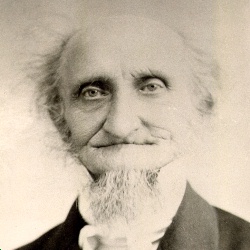
1879 Western District Essay
Election of Grace II
Doctrinal Proceedings.
The sixth of the theses on which the doctrinal negotiations were based at the last Synodal District Assembly was still available for discussion, on the subject: "Also with its doctrine of Election by Grace, the Evangelical Lutheran Church gives All Glory to God alone" *) [*) See Synodal Report of the Western District etc. of 1877, p. 23], which deals with the use of this doctrine. The speaker, Dr. Walther, had developed this one thesis further, namely in five theses, which all highlight the main points in this matter from the Formula of Concord. They are as follows:
Thesis I.
"Because all Scripture is inspired of God, not for security and impenitence, but for punishment, correction, and amendment, 2 Tim. 3:16; again, because all things in the Word of God are therefore ordained for us, not that we should be driven thereby into despair, but that we through patience and comfort of the Scriptures might have hope, Rom. 15:4: so without all doubt in no way is this the sound mind or right use of the doctrine of the eternal providence of God, that either impenitence or despair should be caused or strengthened thereby." (Repetition. Art. XI. Müller, p. 707 [FC SD XI 12])
Thesis II.
"This also belongs to the further explanation and salutary use of the doctrine of the predestination of God for salvation (de divinapraedestinationeelectorum ad salutem): because only the elect are saved, whose names are written in the book of life, how one can know, from which and whereby one can recognize which are the elect, who can and should accept this doctrine for consolation. And of this we are not to judge according to our reason, nor according to the law, nor from some outward appearance." (Ibid, p. 709.) (FC SD XI 25-26)
Thesis III.
"Nor should we presume to search the secret, hidden abyss of divine providence, but rather pay attention to the revealed will of God." (Ibid, p. 709.) (FC SD XI 26)
Thesis IV.
"Therefore, whoever wishes to be saved should not burden or trouble himself with thoughts of the secret counsel of God, whether he is also chosen and ordained to eternal life, so that the wretched Satan is wont to tempt pious hearts.
But they are to hear Christ, who is the book of life and of God's eternal election to eternal life for all God's children. He testifies to all men without distinction that God wills all men to come to him, weighed down and burdened with sin, that they may be refreshed and saved. According to this teaching of his, they should forsake their sins, repent, believe his promise and rely on him completely, and because we are not able to do this on our own, the Holy Spirit wants to work this, namely repentance and faith, in us through the Word and the sacraments. And that we may accomplish this, persevere in it and remain constant, we should call upon God for his grace, which he has promised us in holy baptism, and not doubt that he will impart it to us by means of his promise." (Ibid, p. 718 f.)
Thesis V.
"Since the Holy Spirit dwells in the elect who have believed, as in his temple, who is not idle in them, but impels the children of God to obedience to the commandments of God: in the same way, believers should not be idle, much less resist the promptings of the Spirit of God, but should practice all Christian virtues, godliness, modesty, temperance, patience, brotherly love, and make every effort to make their calling and election firm, so that the more they have the Spirit's power and strength within them, the less they will doubt it." (Ibid, p. 719.) (FC SD XI 72)
The Synod gladly took these theses as a basis for its further discussion of this subject, firmly convinced that it was absolutely necessary to treat it in detail and thoroughly.
The speaker made the following introductory remarks in justification of his behavior:
When we dealt with the doctrine of election of grace two years ago [1877], we were very sorry that we could not also discuss the last thesis, which deals with the use of this doctrine. For my part, I am now firmly convinced that it was God's gracious government that we had to leave it. In the first place, we could have treated it only very superficially, although it was one of the most important, if not the most important, of the theses. Secondly, it was not our intention to present the doctrine of election by grace in its entirety, but we only wanted to speak about those parts of it which show that our dear Lutheran Church gives all glory to God alone in the presentation of this doctrine. We left everything else aside. With this incomplete presentation, it could very easily happen that a reader who was not present at
our discussion would find some of it obscure and inexplicable, even offensive. I hope to God that in a thorough discussion of the doctrine of the right use of this mystery of God's election of grace to eternal life, what remained dark will become light and what seemed to be offensive will really appear to be in the most beautiful harmony with the whole holy Christian faith. May God give us abundantly his Holy Spirit in these days, that He may enlighten us through His holy word, so that we may not fall into error, but rather be mightily strengthened in our faith, our love and our hope through contemplation of this subject, and finally be ever better prepared for a blessed departure from this valley of misery. Yes, God grant that this comforting teaching may also be preserved and passed on to our dear children through our ministry, and preserved for our entire orthodox Evangelical Lutheran Church of America!
The meeting then proceeded to the discussion of
Thesis I.
This reads:
"Because all Scripture is inspired by God, not for security and impenitence, but for reproof, for correction, and for training in righteousness, 2 Tim. 3:16; again, because all things in God's Word are therefore prescribed for us, not that we should be driven thereby into despair, but that we through patience and comfort of the Scriptures might have hope, Rom. 15:4: so without all doubt in no way is this the sound mind or right use of the doctrine of the eternal providence of God, that thereby either impenitence or despair be caused or strengthened." (FC SD XI 12)
It has been said in advance that all the theses are taken literally from the Formula of Concord, because it is primarily a matter of explaining what the doctrine of our Evangelical Lutheran Church actually is; although of course this is also our faith and confession, since we are Lutherans.
It was further remarked: Here our Formula of Concord gives a general rule by which every doctrine which is claimed to be a doctrine of the divine word is to be judged; and with it at the same time a mark of what is certainly not a biblical doctrine, a touchstone by which the test can be made. If an allegedly biblical doctrine does not stand this test, it is certainly not taken from Scripture, even if it may always seem so. No matter how much ingenuity, even with a hundred Bible verses, someone may want to prove that a doctrine is in Scripture, but what he teaches does not agree with this
general rule, every Christian can say to him: "Your doctrine is false, it was devised by the devil and your sinful flesh, which is subject to error. For the Holy Spirit himself has given this rule." This is of the utmost importance, for according to it even the most simple-minded Christian, indeed, we would say, every child, can judge the most difficult doctrine as to whether it is a divine doctrine or not. Thus St. Paul writes in 2 Timothy 3:16: "All scripture is given by inspiration of God, and is profitable for doctrine, for reproof, for correction, for instruction in righteousness"; and Romans 15:4: "But whatever things were written before were written for our learning, that we through patience and comfort of the Scriptures might have hope." Hereby the apostle testifies that every divine teaching must be of such a nature that it does not make man secure in his sins; but just as little must it plunge the poor sinner who desires to be saved into despair. God is a holy God, therefore the teaching that reinforces sin and makes it safe cannot come from him. But God is also love, abounding in grace and mercy; therefore it is impossible for a doctrine to come from him which does not give comfort to the poor man who is troubled by his sin, but on the contrary plunges him into despair.
The Formula of Concord therefore also writes: "Whoever teaches the doctrine of God's gracious choice in such a way that the afflicted Christians cannot be comforted by it, but are thereby caused to despair, while the impenitent are strengthened in their courage: then it is undoubtedly certain and true that this doctrine is not practiced according to the word and will of God, but according to the reason and instigation of the wicked devil. For, as the apostle testifies: 'All things that are written are written for our learning, that we through patience and comfort of the Scriptures may have hope. But since such comfort and hope are weakened or even taken away from us by the Scriptures, it is certain that they are understood and interpreted contrary to the will and opinion of the Holy Spirit." (Repetition. Art. XI, p. 724.)
As important as the golden rule is, which Paul gives in the words: "If any man have prophecy, let it be according to faith" (Rom. 12:7), since it preserves all those who search the Scriptures from error, likewise every doctrine has its touchstone in it, whether it serves for correction and comfort or not. It is by this that we must now also test the doctrine which our Lutheran church sets forth as the biblical doctrine of election by grace; not as if we first wanted to become certain of the truth — oh no, we are certain — but so that we may be strengthened more and more in this Lutheran faith of ours from the Scriptures; for the Lutheran church is the true Bible church.
Olearius writes about this passage: "The following rules are to be noted from the
Formula of Concord: 1. it is certain that the whole of Holy Scripture is not presented to us to nourish security or impenitence, but to punish, to instruct to righteousness and improvement of life. This is shown in 2 Timothy 3:16: 'All scripture is profitable for doctrine,' etc., from which it is evident that the article revealed by God concerning the election of grace is not to be presented in such a way as to produce security in sin, but rather to improve the hearer. 2. It is certain that everything that is presented to us in the Scriptures was not revealed to drive us to despair, but that we might have hope through the patience and comfort of the Scriptures. This is proved from Romans 15:4, where it is shown that the purpose of divine revelation is not despair but consolation. Thus a doctrine of election which causes either impenitence or despair cannot be a true and sound one." (J. B. Carpzovii Isagoge in libb. symb. Opus posthum. a J. Oleario ed. p. 16 sq.).
If I have to say to a troubled person: this doctrine is not for you, I will hold up a completely different one for you, so that you will not fall into despair, this is proof that my doctrine is useless; likewise, if I have to say to a person who is living godlessly: this doctrine is not for you, it only makes you more godless, it is obvious that my doctrine is false. For it must be such that the godless can hear it just as well as the pious, without harming anyone.
Of course, a person can also fall into impenitence or despair through the right teaching, if he abuses it, as we shall see later; but this is not the issue here.
Evidently our General Rule has been placed at the head of the Formula of Concord for the sake of the Calvinists. As is well known, they teach an absolute, i.e. unconditional, election, not only to salvation, but also to damnation. They say that from eternity God has made a choice among the people he wanted to create, without any consideration, and has determined that some will go to heaven and be saved, while others will go to hell and be damned. With the latter he will do whatever will bring them to heaven, but the latter must go to hell, they may do as they please. God has decided for them: I will send them my Son, who will save them; I will also give them my Holy Spirit through the word, who will compel them to believe. I will even keep them in the faith by compulsion, that they should and must be saved, they may do as they please. Even if they live ungodly lives, I will not hold this against them, but will ensure that a little bit of faith always remains in them.
On the other hand, God has decided about the others: I will not send my Son into the world to them, he shall not redeem them; when the word is preached to them, I will not give them my Holy Spirit, for they shall not be brought to faith through the word. I offer them my grace outwardly, as I do to others — for since men cannot know who is elect, the word must be preached to all, so that the elect may receive God's grace — but I will not save them. On the contrary, so that I can show what a holy and righteous God I am, who condemns those who have sinned against the law, I will not only cause them to sin and make them sin, but I will also have my word preached to them so that their sin, and thus their condemnation, will be even greater. This is the terrible teaching of the Calvinists and all strict Reformed, which must necessarily lead either to carnal security or to despair.
That this leads to despair is attested by John Gerard, who writes: "From this it is clear why the absolute judgment of rejection is rightly called a rope of despair. *) [* The absolute judgment is the one according to which God has decided to exclude a number of people from salvation, no matter what they want to do.] For if someone were to doubt whether God's grace and Christ's merit also apply to him, such a person cannot be referred to the inner testimony of faith, because that doubt is most contrary to the feeling of faith. Nor can the opponents refer such a person to the Word and the sacraments, because they say that 'to people rejected by an absolute decree, the Word is offered not for the purpose of converting them, but for the purpose of increasing their damnation.' Thus Beza writes in his reply to the Colloquium p. 96: "Th+ose whom God has not chosen, even if they were baptized a thousand times with the outward baptism of water, would still never be given faith or Christ"; thus Beza speaks in the Colloquium p. 465.
"Calvin writes against Heshusius: ‘The unworthy and rejected do not receive Christ's body, because he was not given into death for them, nor Christ's blood, which was not shed for them.’ What, then, is left for that miserable, afflicted person to raise himself up when he says that he does not feel faith, that therefore God's grace and Christ's merit have nothing to do with him, and that he is therefore in the number of the rejected? We answer from the word of God that God wants him to believe, and that for this purpose God has offered him his grace and Christ's merit in word and confirmed them by the seal of the sacraments. But the adversaries cannot comfort him, because they hold that
unbelief depends on that absolute counsel; therefore some do not believe because they are absolutely reprobates; but we proceed thus, saying that some are reprobates because they will not believe; God therefore earnestly desires that he also, the troubled one, should believe, lest through his own fault he should join the number of the reprobate.’" (Loc. de elect. § 182.)
A Calvinist cannot comfort an oppressed person; on the contrary, he plunges him deeper and deeper into despair. The latter thinks he has no faith; but the Calvinist teaches that the elect feel faith in their hearts. For they do not base it on the Word and Sacrament, as we do according to Scripture, but say: by this you can know whether you are elect, that you feel faith in your heart. So if he really wants to bring comfort, he must change his teaching, or he will only plunge the poor afflicted person into even greater despair. He cannot call out to him: Remember what I have preached to you; I have brought you the grace of God through the gospel. For he will then answer him: You yourself have taught that the gospel is preached to those who are rejected, but not so that they may receive the Holy Spirit and faith; now I do not have the Holy Spirit, so I must be one of those who are rejected.
The Calvinists even teach that even among the children there are absolute reprobates, who therefore do not receive faith even if they are baptized. How we must thank God that we are Lutherans! How powerfully and surely we can comfort the oppressed! We can call out to him: You believe in the Lord Jesus, how can you think that you belong to the damned? or: You have been baptized, you have heard the gospel that proclaims grace to the whole world, so you can also take comfort in the grace of God! Yes, that is a profound consolation. We know that even if a Christian does not feel his faith, he still has it, for faith by its very nature is not a feeling, but a turning to Christ with confidence. If a man's heart is so set on Christ that he sighs, "Oh Lord Jesus, if you do not help me, I am lost," he certainly has faith, even if he feels nothing in his heart but blasphemy. Yes, even for the one who says in his temptation: I have no faith at all, God has denied it to me, even for him we still have consolation. For we can call out to him: well, if you do not have faith, you can still receive it, and that at this moment; for if I now preach to you the precious gospel of Christ, the Savior of sinners, I do so because God has commanded it so; and he has commanded it so that all sinners may believe, therefore only believe! Now I bring him a number of Bible verses which teach that man should believe; and then the
troubled person must finally say: yes, the devil must have completely blinded me: but I thought I could not be saved; after all, it says here that all men are redeemed and shall have life through faith in Christ; I am one of them. This is Lutheran consolation; no papist, no Calvinist, no fanatic can give it; for all these do not point the poor sinner to the word of the Gospel. Indeed, the Calvinists teach in clear and plain words that God created the reprobate only in order to have people to cast into hell. Admittedly, not everyone teaches this in such a crude way, but only because the people are horrified by such things, through which God is made into a true monster. But some who do not come out with it have it in their hearts, for their leaders speak so with dry words.
John Gerhard also testifies that the Calvinist doctrine of absolute election leads to carnal security in the following words: "That the doctrine of the absolute election of some also feeds carnal security, we prove in this way: 1. If God, in his eternal and unchangeable counsel of election, has taken absolutely no account of true faith in Christ, whose forerunner is contrition and whose successor is good works, but has elected some to salvation by his absolute will, why then is it necessary to be concerned about true repentance, about true faith in Christ, about the diligence of a new obedience? If we occupy a place in the number of those absolutely chosen, then God himself, who has taken that absolute decision of election, will carry it out, for 'who can resist his will? If the final end, namely eternal salvation, is determined for us by an absolute decree of God, then God himself will certainly be concerned about the means by which he leads us to that final end, even if we are not particularly concerned about these means. 2. We cannot fall from God's grace again, however great our sins, so why should we be anxious to avoid them? Calvin teaches: 'As long as we retain the grace of election, no sins are imputed to us.' (Institutes III, 4. § 28.) But that grace of election is absolutely unchangeable, and to whom it once comes, it never departs. 3. If faith, once received, cannot be lost again by sins against conscience, why is it necessary to be so preoccupied with fleeing sins? As long as we keep the faith, no sins can harm us; but now the faith of him to whom it is once given is never lost, not even in the most grievous sins! 4. If we obtain an absolute and unconditional certainty of constancy, why is it necessary for us to ask God for the gift of constancy with such earnest and
fervent prayers, why do we strengthen our faith by such persistent and daily meditation on the Word, why do we resist the lusts of the flesh with such great zeal, why do we devote ourselves so much to good works? What God has begun in us without us, he will also bring to completion according to his unchangeable and infallible counsel, and introduce us by his unchangeable will into the heavenly joys to which he has chosen us by an absolute counsel. "We do not see," say the Remonstrants (in Collat. Hag. p. 340), "that this doctrine of the constancy of faith in those who have once believed is a ground of comfort to the children of God, but hold that by its nature and constitution it is apt to implant security in men, so that in the midst of their course of sin it is a resting-place for them, in order that they may softly cherish and pleasantly flatter themselves, and thus be comforted." (Disput. academ. I, 490. ff.)
If God has once decided that the elect may live as they please, but I will bring them to heaven, then everyone must also think when he hears this teaching: "Well, if I no longer have faith, or if I think I have none, it does no harm; God will see to it that it remains in a hidden corner of my heart. The Calvinists not only teach that Peter retained his faith when he denied the Lord and conspired and cursed himself three times, but that even David, when he fell into murder and adultery, remained a true believing child of God. His faith had continued to glow like a spark under the ashes, even though nothing of it was visible on the outside. Yet the prophet himself calls out to him that he is a child of death, that is, of damnation, and will be eternally lost if he does not repent. When the poor people hear this, they cannot but become carnally assured. Now we know that God must do everything to save us; he must give us his Son, his Word, his Spirit and faith. No one gets to heaven by doing anything; eternal life is a free gift of God; but we have this terrible power, that we can earn our damnation, we can deprive ourselves of salvation. We cannot work, earn, work for and fight for the latter; but we can shamefully and wickedly forfeit it. That is why God so often calls out to us: "Work out your own salvation with fear and trembling!" Not because we should bring about our salvation through such work, but because we can so easily lose our salvation through our own fault. On the other hand, Calvin expressly teaches that no matter how much we sin, we cannot fall from the faith if we are elected; but as long as we retain the grace of election (and this happens at all times according to God's
counsel), no sins are imputed to us; indeed, we need not worry at all if we fall into sin, for God nevertheless sustains us in the faith.
A curious example in this respect is the famous Oliver Cromwell, who gradually rose to become a so-called Protector of England. He was a strict Presbyterian, also adhered to the Puritans, but was a wild Enthusiast and enemy of the government, who finally brought it about that Charles I of England was executed. Before he was to sign the death warrant, he had suffered terrible torment in his conscience; then he knelt down and prayed in his Enthusiast spirit, and suddenly he felt quite well. From this he rapturously concluded that it would be pleasing to God if the king were to be executed. When the Parliament was assembled for the signature, and his conscience was also troubled, Cromwell signed with great pleasure, and then, in his exuberance, splashed his neighbor's face with ink. For a time he also agitated for the abolition of the ministry of preaching; for he thought that Christians, and especially the elect, had the Spirit and the Bible, and that was enough.
The historian Wernicke writes of him: "Oliver Cromwell (died 1658), Protector of England, asked his chaplain on the night before his death whether it was possible to fall from grace. When he replied in the negative, he exclaimed: 'Then good for me, for I know for certain that I was once in grace'." (The History of the World by Dr. C. Wernicke. Berlin 1871. III, 408 f.)
Was that not a terrible consolation? This chaplain has consigned the poor soul to hell by this accursed doctrine that once a man is in grace he cannot fall from it again. Even a godless child of the world, who was formerly converted, still remembers the time when he was under grace; instead of leading him to repentance, the Calvinists plunge him into carnal security and thus into hell.
Jeremias Nicolai also describes in a moving way from his own experience that the Calvinist doctrine of predestination leads to despair, as can be read in Heerbrand's Compendium theologiae. In the same way, the Baptist John Bunyan, the well-known author of "Pilgrim’s Progress", an interesting and edifying book, but mixed with Reformed leaven, lay ill for years with the false doctrine of predestination of the Calvinists — for the Baptists were formerly strict Calvinists, and in part still are. When he was in such dire straits that he no longer knew which way was up, an old, torn but still complete book came into his hands, of which he could see that many a tear had already fallen on its pages. It was the English translation of Luther's Epistle to the Galatians. Knowing that Luther had been an extraordinarily famous man, he began to read it,
and the deeper he got into it, the brighter he was illuminated by grace, until he was completely freed from all his temptations. He confessed that, after the Bible, this book was without doubt the best that existed in the world, for none was so easy to heal a wounded conscience. A Baptist had to confess this! —
Here too, as we shall see later, we must be careful not to regard as unbiblical a doctrine which only appears to lead to despair but does not actually do so. Still less should we think that it is better to conceal the doctrine of the election of grace altogether, because it might be misunderstood and thus, through no fault of its own, plunge us into terrible doubts. Oh no, for then God would contradict Himself, since it is expressly stated that "all Scripture, inspired by God, is profitable for doctrine" etc., and again that "whatsoever things were written aforetime were written for our learning" etc. We should therefore not only teach this doctrine in preaching, no, also in teaching Christians, and even in private pastoral care. But even more beware of trying to clear away the unfathomable depths that the doctrine of election of grace contains, in the false opinion of wanting to protect hearts from security and despair! Whoever clears away these depths clears away the doctrine itself. Only in this doctrine alone does God show that he is not such a God as can be seen to the bottom, but a hidden God, before whom one should and must exclaim with the holy apostle: "Oh, what a depth of the riches both of the wisdom and knowledge of God, how utterly incomprehensible are his judgments and inscrutable his ways!" Thank the devil that you want to bring a doctrine other than the one God has given to make people pious. Since God has given us the doctrine of the election of grace, only preach it confidently; it does not make anyone safe or desperate; but if it happens, the other person alone is to blame. He has then gone too deeply into this mystery, which God has forbidden. For God does not want us to search where he has not revealed himself to us. Rather, we should let what God has concealed stand; we should not deny it, but let it stand and think: the day is coming when God will also show us how this is connected. Let Luther be our example in this too! When he has people before him who are troubled about the election of grace, he conceals nothing about it; indeed, he often speaks very boldly in order to give them all the comfort of Scripture; but his boldness never goes beyond the Word of God. This he gives, on this he stands firm, even if it seemed that the whole world would be lost over it; for he knows that it is not God's fault, but only the godless world.
Luther writes: "A few days ago my dear brother, Caspar Creuziger, Doctor of the Holy Scriptures, mournfully reported to me
how he understood from your friends in the various visitations that you were entangled with strange thoughts concerning God's providence and were completely confused by them, that you were as it were deaf and shattered by them and finally worried that you would tear off and shorten your own life with your own fist; for which God Almighty would protect you; and that you would also discover and tell me in part what your thoughts and your intentions were. These would be your propositions and complaints, that God Almighty may know from eternity who shall be saved or will be saved, whether they are dead, alive or yet to come. This is true and should and must be admitted, for he knows all things and nothing is hidden from him; because he has counted and knows the drops in the sea, the stars in the sky, the roots of all trees, branches, twigs, leaves, and all the hairs of men. From this you finally conclude: you do what you want, good or evil, but God knows whether you are to be saved or not; which is true; and yet you think more of damnation than of salvation, and hesitate about it, not even knowing how God is disposed towards you, and therefore become very fainthearted and completely deluded. Therefore, as a servant of my dear Lord Jesus Christ, I am writing you this report and consolation so that you may know how God Almighty is disposed towards you, whether you are destined for salvation or damnation. God Almighty, even though he knows all things and all works and thoughts in all creatures must be done according to his will (juxta decretumvoluntatis suae), yet his earnest will and mind, even command, is determined from eternity to make all men blessed and partakers of eternal joys, as Ezek. 18, 23, where he says: 'God does not want the sinner to die, but to repent and live. Therefore, since he wants to save and have the sinners who live and hover everywhere under the wide, high heaven, let your foolish thoughts, inspired by the devil, not separate you and separate you from the graces of God." (Consolation against temptation from the Providence of God, Anno 1528. X, 2036 f. [StL 10, 1737 ff.; not in Am. Ed.; see Currie translation here.])
Consider this: the troubled man was contemplating suicide; he was in the greatest distress. Nevertheless, Luther does not deny to him a shred of the doctrine which, through no fault of its own, had brought him to this despair.
The troubled man thinks: "If God knows that I am going to hell, then I will go there, I may do what I want; the number of the elect cannot increase or decrease; what God knows beforehand must also happen. If I am not one of the elect, I can listen to God's word as diligently as I like, be absolved, take communion, but all is lost.” What does Luther answer? "That
is true and must be admitted." He does not give him any other gospel, he leaves him stuck in this truth, for that would be the devil's gospel, which would contradict the Word of God. But now he also comes with his general message, with the comfort of the gospel, and says: "But if you therefore think that you are condemned, these are your thoughts; God does not have such thoughts, for God wants all men to be saved. He has clearly revealed this so that you may believe it. If all men shall be saved, then you know that you shall be saved too, for you are one of them. It is something quite wonderful how purely, powerfully and comfortingly Luther teaches the universality of God's grace; therefore it is a shameful blasphemy of Luther to say, which also occurs here in America, that Luther was a particularist, i.e. that he denied the universality of God's grace, while no one emphasized it so powerfully as he did. Everyone notices, for example, in the quotation read out, that this doctrine flows like a stream from Luther's pen, or rather from Luther's heart.
Just as the doctrine of election by grace must not be changed in order to prevent a person who is troubled from falling into doubt, so it must not be changed because people abuse it. For what we hear from the Calvinists, that people are so godless and say: "Oh, I am chosen, now there is no need for me, I can sin and still be saved", also occurs in the Lutheran Church. This should not surprise us, for wherever the pure doctrine of the divine word is taught, it is always misused by some. Even the apostles had to experience this; even Paul had to complain that his proclamation of justification was taken in vain. Even then there were people who said: if it is so, that nothing depends on our works with regard to our salvation, then we can live as we like; yes, on the contrary, the more we sin, the brighter and more abundantly God's grace can be revealed to us; therefore let us do evil, that good may come of it (Rom. 3:7-8). But did Paul allow such a shameful, ungodly, even diabolical abuse of that golden doctrine to determine him to change it or even to abridge and diminish it in the slightest? No, he presented it in the same purity, sweetness and sweetness as before; the children of God need it; and the ungodly are not helped by a change of doctrine; if the pure doctrine does not help them, the counterfeit one helps them even less. Paul has only the terrible judgment for them: "Which condemnation is quite right." Let us therefore not be surprised if there are even now such godless boys who say: "Oh, if that is the case, that the elect must be saved, then we also adhere to this doctrine and live as we please." You wretched
man! God has not given you this teaching to think like this. There is no trace that the doctrine of the election of grace, if taught correctly, would cause you to live in all shame and vice. In Christ we are chosen for sanctification, as the apostle says. Nowhere is it written that a man should go up to heaven and open God's book and look into it to see if his name is written in it, and then come down again and say: now I know I am an elect person, now I live as I please; yes, yes, I have read it, Hinz and Kunz, you are in it too. And God is always at home, so you can't look into the book even in his absence. Rather, God has said: go into the Bible, there I will tell you whether I have chosen you; there see what I have said about repentance and faith and justification and regeneration; my elect live in constant repentance, walk in sanctification; there you can find out whether you are an elect or not. Whoever tries otherwise, says Luther, will bring down on his neck. That is why we do not need to change the doctrine of election by grace for the sake of abuse, any more than we need to change the doctrine of justification for the sake of abuse. Many, even in our churches, abuse it and think: if works do not help us to salvation and God does not ask anything about them, then I do not want to torment myself so much, but make myself comfortable with sanctification. And even if they don't say it outright, you can see it in their whole nature. None of us will now think: I must keep this teaching quiet for a few years or not preach it at all. If we did, we would be godless people. No doctrine, neither the law nor the gospel, can be properly preached to the carnally minded; they cannot be saved; the dear children of God always hear the gospel with a thousand joys, not in order to live safely, but in order to sacrifice their whole lives to God with thanksgiving. This fruit produces the doctrine of justification; this fruit also produces the doctrine of election. Therefore preach it confidently! Do not change them, do not conceal them, but do not cut off the tips of them either! The dear children of God must know that they are chosen, for they need this strengthening for their struggle with the world, the flesh, the devil and hell, for their cross and their temptations, so that the Lord says: "No one shall snatch them out of my hand." Let them therefore be sure and certain of their choice of grace!
Chemnitz also writes: "The reply to the fact that many abuse this doctrine for security is that the true doctrine must not be changed for the sake of abuse, but that Paul's commandment to rightly divide the Word of God must be observed. For the impenitent are not presented with these consolations, but
with those thunderbolts (Ephesians 5, Galatians 5, Colossians 3, 1 Corinthians 6): "Those who do such things will not inherit the kingdom of God". But to those who in their fears and terrors flee by faith to the throne of grace, we do not present doubt, but certain and sure consolation from the promise of the gospel. But because even in believers there is still flesh and spirit, old and new man, those emphatic reminders are also inculcated that they must not misuse the promise of the gospel to strengthen the security and will of the flesh; but those who despise those emphatic reminders and misuse this teaching should consider what is written in 2 Peter 3: "They turn the Scriptures to their own condemnation."" (Examen Concil. Trid. ed. Genevens. fol. 173 b.)
The Roman doctrine of purgatory is one of those teachings whose falsity is immediately recognized from the fact that it inevitably leads to despair if it is seriously believed to be true. According to it, everyone who is not completely cleansed of sin in this life goes to purgatory, and it is impossible to know how long he will have to remain there. No one who is not completely blinded by the devil will say that he is completely pure, that there is not one root of sin left in his heart. Therefore, among the millions of Catholics who are Catholic in their hearts, there will hardly be one who does not believe that he will go to purgatory when he dies. They therefore all die with fear and terror. One must not be deceived by the fact that among the Romans many die quite calmly; they consider the whole papacy to be humbug, or they put that doctrine out of their minds. In addition, the papists teach that the torments of purgatory are just as terrible as those of hell; the only difference between them is that purgatory comes to an end on Judgment Day, while hell lasts forever. Now ask yourself: can a man who is not reprobate and believes in purgatory be full of consolation for one hour of his life? If a man knew that he was to burn at the stake for a quarter of an hour, like Huss, he would be terrified, he would live in constant fear; but the Romans teach that people often have to languish in purgatory for a hundred, even more than a thousand years before they are fully matured. Likewise, the falsity of the Roman doctrine of indulgences is recognized by the fact that it leads to carnal security. For according to this doctrine, one can buy indulgences, i.e. forgiveness of sins, with money, and not only for sins committed, no, also for sins to be committed. Truly, the devil and Antichrist could not have done anything more atrocious; they could not have betrayed each other better. Luther experienced how this doctrine drove to impenitence; for when he instructed and exhorted the blinded to desist from their sins, they would not do so, but held their letters of indulgence before him; for they had bought their
freedom to sin for their good money. Others again did not want to repent of their sin, because they thought they already had forgiveness. Truly, this teaching was invented precisely to keep people in sin. In the same way, the Methodist doctrine of entire sanctification makes some secure and others desperate, for those who think they have attained it now think they no longer need repentance, and those who do not have it think they are not real Christians. In the same way, the Calvinist doctrine of absolute predestination evidently leads partly to certainty and partly to despair; to certainty in those who think they are elected, to despair in those who think they are not elected.
We can also see the correct use of the doctrine of election by grace from a testimony of the great interpreter of Scripture, Sebastian Schmidt, who writes of the ultimate purpose and effects of election by grace as follows:
"The final purpose of predestination, and indeed the last, is the glory of God, or, as the apostle Ephes. 1:6, 12 says, the praise of his grace and the praise of his glory. The subordinate and indirect (final) ends are the eternal salvation of the predestinated, victory and non-separation from the love of God in Christ and comfort Romans 8:28, 31, 35, 38, 39, as well as sanctification of life; but by no means either security or despair of men, Romans 11:20, 23, 24. The best distinction of the effects (of election) is that between general and proper. These (the proper effects) are the endurance to the end (finalisperseverantia) and eternal life (which we have just reckoned among the final ends); but those (the general effects) are those which do not flow from mere predestination, and are not granted to the predestinated alone, but which by other causes, even to the exclusion of this predestination, happen even to the rejected, namely, from general grace and its means by virtue of the antecedent will. Matt. 20:16; Heb. 16:4-5. Just as constancy, although it has become the property of the predestined by virtue of the subsequent will, has nevertheless been promised and offered earnestly according to the previous will even to the rejected: so calling, justification, and other common effects, although they are also offered and conferred on the rejected, proceed no less simultaneously from the counsel of predestination, both on the ground of an affect moving to compassion (ratione reflexionisaffectus), and on the ground of a more abundant grace (ampliorisgratiae), which is sometimes added to common grace, not that it may make it (first) effectual, but that it may make it more glorious
(magisillustrenafaciat). And so it can be said of man, with Luther, that he is predestined to faith itself, not only in the general meaning of the word, according to which God has decided beforehand to do and give everything that he does and gives, but also in the special meaning that it has in this article (hujus loci). Rom. 8:29, 30. Ephes. 1:4." (Aphorismith. Disp. § 23-25. p. 297. sq.)
Note: Sebastian Schmidt does not call the enduring constancy of faith a condition or an ordinance of predestination, as is now generally taught, and as it may be called in a certain sense, but the reverse: an effect of it.
Furthermore, Sebastian Schmidt says that God gives more grace to the elect than to the non-elect. God does indeed give all men a certain amount of grace, namely so much that they can be saved; the fact that many are nevertheless not saved is due to their willful and stubborn resistance, as Stephen said to the High Council: "You stubborn ones.. you always resist the Holy Spirit, just as your fathers did, so do you." If God gives the elect the grace of constancy, the non-elect have no right to accuse God of not also giving them this rich measure of grace, for God does not owe us a special, greater measure of it. If anyone wanted to do this, God would reproach him with the words of Scripture: "Have I not power to do what I will with my own? Do you look askance that I am so kind?" Paul is a clear example of this rich measure. He had fought against the Christians in a very nefarious way. He tried to bring them to blasphemy by leading them to death; and behold! he is converted, and in a most wonderful way: Christ himself appears to him, talks to him and tells him where he should go in order to experience the way of salvation. This is obviously a "gratia amplio", a greater grace than God gives to others, through which he wants to glorify his goodness. The fathers of the household act in a similar way. Some of them are kinder to one child than to another, because it follows him better and gives him more pleasure than the other; he also gives the latter food and drink, and also gives him much pleasure, but he shows this and that love to the former more than to the latter. God deals with us in the same way, except that he does not even ask whether we have followed him or not, but does as he wills. -
Finally, Sebastian Schmidt also says that one can speak with Luther of predestination to faith. Many dogmatists do not want to accept this expression. They do not want faith to be described as a fruit, but rather as a cause of predestination; and they do this because the Reformed maintain that
God takes no account at all of faith, but just as a king, at his own discretion, orders some of the conscripts of his country to serve as soldiers and lets the others go home again, so also God, according to pure arbitrariness, has held such a muster among men, choosing some and rejecting others. But by the expression "God predestines to faith" Schmidt does not mean to denote this arbitrariness with Luther, for that would be an ungodly doctrine; but this: that the good God makes it so that one remains in faith is only because God has chosen him from eternity for salvation. And this is rightly said; for if God did not do this, no man would remain in the faith. If God did not take our salvation into his hands, we would soon forfeit and lose it.
Quenstedt writes similarly: "The final purpose of election with regard to the elect is either an indirect one, namely the knowledge and the prize of divine grace, 1 Pet. 2:9.or the ultimate, namely, glory, blessedness and eternal life, not as it still depends on subtle causes, for it is undecided (contingens), but as it is certainly foreseen and foreknown in the divine mind and, according to this foreknowledge, is prepared from eternity for those who will constantly believe. Matt. 25:34: 'Come, ye blessed of my Father, inherit the kingdom prepared for you from the foundation of the world.’ Acts 13:48: "And they believed, as many of them were ordained to eternal life." (Th. did.-pol. P. III. c. 2. s. 1. th. 17. f. 28.)
This, then, is the final purpose of election, that I may be saved, and that I may already here be assured of my salvation. For if election were nothing more than God knowing who will be saved, God would not have needed to reveal this to us in the first place, for it is already known to us from the fact that God is omniscient. Rather, this foreknowledge is one according to which God has graciously decided to save us.
Seb. Schmidt therefore says: "Nor does the same faith grasp the good of predestination, as it grasps the good of justification, sanctification, etc., so that it makes predestination its own, in which way the believer obtains his justification through faith, but from predestination it comforts and strengthens his faith, so that he says with the apostle: 'If God is for us, who can be against us? (Aphorismi theol. Disp. 34. p. 295.)
Thesis II.*)
*) Minutes of Pastor Hein.
"This also belongs to the further explanation and salutary use of the doctrine of God's foreknowledge [predestination] for salvation (de divinapraedestinationeelectorum ad salutem): because only the elect
will be saved, whose names are written in the book of life, how one can know, from which and whereby one can recognize which are the elect who can and should accept this doctrine for consolation. And of this we are not to judge according to our reason, nor according to the law, nor from some outward appearance." (FC SD XI 25-26)
From our first thesis we learned a general rule by which any doctrine which is claimed to be a divine word can be tested to see whether it can really be one revealed by God; and we see that it certainly is not, if it is of such a nature that it either causes despair in the man who is grieved over his sin, or if it produces carnal certainty. We are now gradually making the application to this first canon and approaching our task.
In this 2nd Thesis the right use of the doctrine of the election of grace is now shown, which consists, of course, in taking comfort in this doctrine and allowing it to have such an effect on oneself that one becomes a good Christian. This use must not be based 1) on our reason, 2) on the law, 3) on any outward appearance.
The first thing we learn from this thesis is that our church confesses that it is possible to know and recognize who are the elect. Not that one can know it for certain from another, but that one should know it for certain about oneself. This does not mean that anyone who is not certain that he belongs to the elect is not a Christian, for whoever believes in Christ is a Christian. But we should also lead a Christian to the point where he becomes certain of his salvation. But whether I say: I am certain of my salvation, or: God has chosen me, is the same thing. For it is said here: "because only the elect will be saved, whose names are written in the book of life." Therefore, if I know that I am a saved person for Christ's sake, by grace, then I also know that I am chosen. For election by grace is no other mystery than the mystery of God's salvation of the poor sinner, which has its foundation in the eternal decree of God.
It does indeed say here: "the doctrine of God's providence for salvation"; but one must know that 300 years ago providence was actually used in the sense of election by grace, predetermination, predestination. And so that this is not forgotten, the Latin translation is: de divinapraedestinationeelectorumadsalutem. Providence here therefore does not mean as much as foreknowledge. For in the Formula of Concord it is said right at the beginning that one must distinguish between foreknowledge and election by grace or providence. Nor does it mean so much as providence,providentia, which consists in the fact that God
sustains the world and cares for and governs it. What is meant here is providence, i.e. that God already decided in eternity, and thus foresaw with certainty, who would be saved.
First of all, it is an abuse if one begins to speculate with reason and wants to find out with reason whether one is elect. Reason should not speculate in the things of God. It can only know as much as God has revealed. It should therefore merely say: Speak, Lord, I hear; let all the earth be silent before the Lord. Of course, it is often said, not without justification, that the election of grace is a very difficult doctrine. But it is actually easy. Difficult only for our reason. If we were to submit to God's words in a simple and childlike way, we would find no difficulty. We would then say: God is omnipotent, omniscient, he will do it the right way. But when we begin to speculate, we are sure to go astray. If we see that it does not rhyme, we must not think that it must be wrong. On the contrary, we must think: this is the eternal teaching of God, so it is no wonder that you cannot rhyme it with reason. If we could have reasoned it out, God would not have needed to reveal it to us. A Lutheran must hold this above all things: What God's Word says about a matter, I accept without further ado; I bow before the great God as a poor, blind sinner who receives his light from above alone, i.e. from the Holy Scriptures. Whether I can rhyme it or not, I do not ask, God will know how to rhyme it, who has revealed it.
Let us hear some testimonies against this, that one wants to be certain from reason whether one is chosen:
Formula of Concord: "Wherefore we judge of such election to eternal life neither from reason, nor from the law of God, which lead us either into a wild, desolate, epicurean life, or into despair, and awaken harmful thoughts in the hearts of men, that they think with themselves, nor can they rightly resist such thoughts as long as they follow their reason. If God has chosen me to salvation, I cannot be damned, I do what I will, and again, if I am not chosen to eternal life, it is of no avail what good I do, it is all in vain." (Epitome. Art. XI. p. 555.)
This is where man comes to when he wants to investigate the certainty of his election by reason. For one must well consider what our Confession says here, that one cannot quite resist such thoughts according to reason. Even the true Christian comes to such thoughts if he does not watch over himself and allow reason to speak. For there is a mystery here, and as soon as blind reason
judges it and does not simply accept it in faith, it cannot help but come up with nothing but horrible things. Here we have the application of our first rule: no doctrine may lead to despair, none to carnal certainty, or it is not from God. But now this doctrine leads to despair if it is judged according to reason; therefore reason should remain silent.
Chemnitz says the same thing: "The confidence that we shall be saved (fiducia salutisnostrae) does not rest on the fact that the perspicacity of our natural understanding could penetrate the heavens of the heavens by its perspicacity and investigate what has been decided about me in the secret counsel of the Trinity; but it rests on this ground, that God, proceeding from his secret light, has made his will manifest to us in word, as Paul 1 Cor. 2, that we have the mind of Christ." (Examen Concil. Trid. Ed. Genev. fol. 168 a.)
So we should not think: Who can search the mind of God? We should not even want to investigate it with reason. But praise God, he has revealed his mind to us. In the Gospel we have the mind of Christ. We should not think: How might God relate to me? Who can know that? We know that very well. And if someone asks: how can you know, have you seen God in your heart? then we can answer: yes, I have seen God in my heart. In the Bible, that's where I find it. So don't be so foolish as to think that temptation will come, that ungodly thoughts will enter your heart when you hear the doctrine of the election of grace. They only come when you allow yourself to be guided by reason. If, on the other hand, reason is silenced, they do not come, or are quickly overcome by faith, which only wants God to speak.
Luther: "There are many frivolous spirits who have not felt much about faith, who fall in, bump up against it, and first of all worry about this thing and want to find out through reason whether they are right, so that they can be sure where they stand. But stop this soon; it is not the time to do so." (Interpretation of the 2nd Ep. of St. Peter. On 2 Pet. 1, 10. IX, 846 f. [StL 9, 1353-4; AE 30:159])
For example, someone comes to church and hears the pastor preach about election by grace, and thinks: "So I must know whether I am elected. That is not the point. It is rather that one repents, believes in Christ, and so on. By this one can know what God has judged of him from eternity. Those who do otherwise start at the top; they want to build the house of their salvation and start at the gable. You have to start at the bottom, that is, with righteous repentance and conversion.
Luther: "Human reason conceives an unequal will of God, as if God were a tyrant, who has some companions whose
nature he allows to please him, be it good or not good, and on the other hand he hates the others; they do as they please. So one should not think of God's will."
Here Luther shows that one arrives at Calvinism through reason. As soon as reason hears that he who is elect is chosen by grace alone, that he could do nothing to it, it thinks: well, if this is so, God must not have wanted to save the others. If there is only grace here, then there must be God's free will there: they should not be saved. Reason thinks like Calvin: God has certain companions who may do as they please, they are his sons and daughters, he will bring them to heaven. And others may do what they want, they shall not go to heaven. One could get the idea: It seems that Calvin had a strong faith. After all, there are several scriptural passages that seem to indicate that there is absolute election and rejection. So it seems as if Calvin wanted to submit to God's Word unconditionally, and that is why he himself confessed this. But it is nothing but rationalism, it is mere reasoning. He brought up the doctrine simply because it fits into his system. It was based on the thought: God is an absolute being, can do and think what he wants, everything is right. He made God into an iron fate that sits enthroned above the world and deals with creatures entirely at will. In this respect Calvin is no better than the newer theologians, who construct a system for themselves, and the Holy Scriptures must then say yes to it.
"This saying is eternally true, Ps. 5:6: 'You are not a God to whom ungodliness or sin is pleasing,’ For though he accepts the saints who still have sin in them, he does not accept them without a great payment; Christ's blood must become a sacrifice for the sake of which God accepts and spares us, as long as we remain in faith and when we are in faith." (Martin Luther's and other theologians at Wittenberg Concerns about the sins of the elect. Anno 1536. W1 X, 2001 [StL X, 1710; not in Am. Ed.])
Luther thus wants to say: it is certainly written in the Bible that God is a merciful God. But one must not conclude from this that to whom he wants to give his grace he gives it, but to whom he does not, he refuses it; God is gracious and grace has no law. Luther says: "No, God is indeed gracious, but he has not dispensed grace in such a way as to destroy justice. For when he wanted to have mercy on the whole world, his Son had to fulfill every letter of the law for all sinners. There he proved that his grace is not greater than his justice, nor his justice greater than his grace, for both are the good God himself.
Luther: "I hear that now and then among those of the nobility and other great lords (passim) evil words are said to fall and be spread about the election or foreknowledge of God. For thus shall they speak: If I am elect (praedestinatus), whether I do good or evil, I shall be saved; but if I have not elect, I shall be condemned, regardless of my works. I would gladly argue at length against such ungodly words if I could do so for the sake of my health, of which I am not now almost certain. For if the words are true, as they seem to be, then the incarnation of the Son of God, his suffering and resurrection, and all that he did for the salvation and blessedness of the world, are thereby completely nullified and taken away." [Commentary on Genesis; StL 2, 174-5; AE 5:42]
Luther is saying that if the election of grace consisted in God saying that these should go to heaven and those to hell, then he would not have needed to send his Son into the world. If he had taken the power for himself (which he certainly had), why would he have given his Son, ordained the Word and Sacraments and instituted the ministry of preaching? He could have saved all that.
"What use are the prophets and the whole of Holy Scripture to us? What use are the sacraments to us? For this reason, it is now incumbent upon us to reject and trample all this underfoot! These are devilish and poisoned arrows and are the very original sin itself, so that the devil deceived our first parents when he said, 'You will be like God: "You will be like God." Genesis 3:5."
The one who discerns God's counsel with reason makes himself God. Scripture says: "No one can fathom the depths of the Godhead except God himself. Even man is inscrutable to another if he does not come out with his speech. Isn't it terrible when wretched people want to look into God's heart with their reason? Then they see nothing but their own thoughts and pass them off as thoughts of God's heart.
"For they were not satisfied with the divinity that was revealed to them, by which knowledge they were saved, but they wanted to penetrate into the depths of the divinity. For they reasoned with him thus: there must be some secret reason why God had forbidden them not to eat of the fruit of the tree which was in the midst of paradise, and they wanted to know that reason. Just as these people of the present time also speak of it: What God has provided must come to pass; therefore it is all uncertain and in vain that we should be much concerned about religion or the salvation of souls. But you are not commanded to make a judgment about it, for the judgment or judgment of God is unknowable. Why do you doubt
or reject the faith which God has granted you? For to what purpose did it serve that God sent his Son to suffer and be crucified for us? What good was it that he instituted the holy sacraments, if it is all uncertain and in vain for our salvation? For otherwise (alioqui) if anyone had been predestined, he would have been saved without the Son and without the sacraments or the Holy Scriptures. Therefore, according to these people's blasphemy, God must have been an abominable fool to have sent his Son, to have given the law and the gospel, and to have sent the apostles, if this is all he wanted, that we should be uncertain and still doubt whether we will be saved or damned."
Luther does not mean to say that man should not be certain of his salvation; rather, he is saying that one wants to become certain by investigating it with reason, while on the contrary, one should investigate and recognize from what God does to one in time whether one is elected.
"But this is the devil's trick and deception, by which he presumes to make us doubtful and unbelieving, even though Christ came into this world to make us completely certain of salvation."
Note this testimony! Luther says: "This is the purpose for which Christ came into the world, that we might be assured of salvation. Or are we to be such wretched people who know now that they are in grace, but must think: who knows how it will turn out in the end? It is just as if someone were sitting in prison pardoned and knew: I am pardoned, but whether I will not be executed, I do not know. Such a message would make no prisoner happy. He would call out to the one who brought it to him: 'Go your way. This is how a preacher should make his parishioners certain of their salvation, not only for the moment but also for the future. But what kind of certainty this is, we will hear later, namely not an absolute, but an ordered certainty.
"For such a blasphemous opinion must finally be followed either by despair, or by contempt for God, the Holy Bible, baptism and all divine benefits, so that he would want to strengthen us against doubt, and that we should not be uncertain of our salvation. For the blasphemers will ultimately say with the Epicureans: Let us live, eat and drink in peace, for we will have to die tomorrow. They will, as the Turks are wont to do, fall into the sword and
fire with a free thirst, because (as they think) the hour is already determined in which you will either be laid low and slain or else escape." (On Gen. 26:9. II, 255-257.)
The Calvinists teach very similarly to the Turks. Their doctrine of God's predestination is nothing other than Turkish faith.
Jakob Heerbrand: "Whence must the doctrine of predestination be begun? Not from reason. For this is blind and clings to an absolute judgment of God, namely that those who are predestined to eternal life cannot be damned, but those who are not cannot be saved, they may now do as they please." (Comp. th. p. 480)
Luther: "We should therefore remember that God Almighty has not created us for perdition, but for salvation, and that He has provided us, as Paul testifies in Eph. 1:4, and that the providence of God must not begin with the law or reason, but with the grace of God and the gospel which is preached to all men. Luke 2:14." (Consolation against temptation before the providence of God. Anno 1528. X, 2041)
The following question was raised here: 'It has been remarked that the eternal election of grace is nothing else than "the eternal counsel of God for the salvation of men". Is this not precisely the position of those who do not entirely agree with our earlier report, who do not want to accept that God has made a particular election? who say that what is to be understood by the election of grace is the general counsel for salvation?
The answer was given: The opinion was that it is God's counsel concerning my salvation, not that of the whole world. God' has taken the decision to save me, that is my election of grace and nothing more. For if I am chosen, I am chosen for salvation. Of course, this requires a great deal. But the real point at issue is this: am I chosen to go to heaven one day? As the
Formula of Concord says: "This doctrine also gives the beautiful and glorious consolation that God is so concerned about the conversion, righteousness and salvation of every Christian, and that he has so faithfully meant it that before the foundation of the world was laid, he took counsel about it and decreed in his decree how he would bring me to it and keep me in it." (S. 714.)
Now just as we have a foundation of sand for the certainty of the election of grace if we base it on reason, so also, secondly, if we base it on the law. About this writes
Mamphrasius (died 1616 as superintendent in Wurzen): "The true opinion of predestination is not to be taken from the judgment
of our reason, which awakens the pernicious thoughts: if I am chosen, I shall not be able to be damned, whatever crimes I may commit; but if I am not chosen, it will not help me at all, however much good I may do. But it is to be learned and drawn from the word of God, and not from the law, which plunges all into despair because of disobedience; but from the gospel, for in it it is taught that God has decided everything under unbelief, so that he may have mercy on all (Rom. II, 32), and that he does not want anyone to be lost, but that everyone should turn to repentance (2 Pet. 3, 9) and believe in Christ." (Erotemata in F. C. 1603. p. 116. sq.)
Jacob Heerbrand: "Whence must the doctrine of predestination be begun?. Not from the law, according to which men hold that those whom God foreknew would be good, he elected to life, but those whom he foreknew would be evil, he rejected." (Compend. th. p. 480.)
So one must not say, as some do, that I base my election of grace on my behavior. As soon as one does so, he bases it on the law. And if God applied His standard to our behavior, we would be lost. No matter how righteously a man lives, God shows him that all his righteousness is nothing but a vile garment with which he cannot stand before God.
Luther: "From this we are to take briefly this doctrine, that salvation is not founded on our worthiness and merit, as the sophists pretend, since the devil could at any moment make it uncertain and overthrow it; but it stands in God's hand and is founded on his mercy, which is unchangeable and eternal; therefore it is also called God's salvation and is certain of it and cannot fail. Therefore, if your sin and unworthiness trouble you and it occurs to you that you are not provided for by God; item, the number of the elect is small, the number of the wicked great, and you are terrified by the horrible examples of divine wrath and judgment, etc., then do not argue for long why God does this or that in this way and not otherwise, if he could do good, etc. Also, do not presume to investigate the abyss of divine providence with reason, otherwise you will certainly go astray, either despair or even fall into the open; but hold fast to the promise of the Gospel." [cf. StL9:1115; translation available by Francis Pieper, Christian Dogmatics 3:483-84.]
Whoever is in doubt about this should not go to the law, for there he is lost. For the law will tell him: you can never go to heaven, because you are a sinner. We must look to the Gospel for the answer to this question. But it also includes this: One should therefore not seek to recognize the election of grace from the law,
because one can easily mistake a pharisaical righteousness for a righteousness before God, thus darkening one's view and losing it. Therefore, one should not seek the election of grace in the law, because the law must condemn, but also because the hidden law can deceive one.
"This (the promise of the Gospel) will teach you that Christ, the Son of God, came into the world to bless all nations on earth, that is, to redeem them from sin and death, to justify and save them, and that he did this by the command and gracious will of God, the heavenly Father, who so loved the world, etc. If you follow this advice, namely, if you first recognize that you are a child of wrath by nature, guilty of eternal death and damnation, from which no creature, neither human nor angelic, can save you, and then take hold of God's promise; If you believe that he is a merciful, truthful God, who faithfully keeps (by pure grace, without any fault or merit on our part) what he has ordained, and has therefore sent Christ, his Son, to do enough for your sin, and to give you his innocence and righteousness, and finally to redeem you from all kinds of misery and death, do not doubt that you belong among the elect, etc. If you act in this way (as St. Paul also does), it is comforting beyond measure. For those who take it otherwise, it is terrible." (Explanation of the 1st Ep. of St. Peter. On 1 Pet. 1:2. Erl. vol. LII, p. 5. f. [StL 9:1115; translation by Francis Pieper, Christian Dogmatics 3:484])
To him who examines himself according to reason or law, this doctrine is terrible. In the best case he comes to the conclusion that he says: I do not know whether I am chosen. But if he is serious about salvation, if he is a person who is in sorrow about his salvation, he will either despair and fall away, or he will throw everything into the open and fall away on the other side. But for those who view the election of grace as Paul does, it is very comforting. —
The third thing that the Formula of Concord says in our thesis is: "We should not judge of this from some outward appearance."
The main meaning of this is, no doubt, that we should not think that we are the elect if we are doing quite well in this life; nor should we think that we must be among the rejected if nothing seems to work out, if misfortune continues to pursue us, if one illness after another takes hold, if poverty and disgrace weigh us down. Yes, a poor person should not think: I am certainly one of the rejected, God has already withdrawn his hand from me here, he treats me as one with whom he is angry. But neither should one conclude, as happens only too often, because one is
not lacking in need, that I am God's dear child. And someone else who succeeds in everything he tries, who is rich, healthy, honored, should not think: well, I see it clearly, God looks down on me with favor; that is why he has put the seal on me before the whole world: you are my dear child and chosen. That is a foundation of sand. As it is said in a song:
Do not think in your heat of affliction,
That you are forsaken by God
And that God who sits in the bosom,
Feeds himself with constant happiness.
So the rich man in the Gospel may have judged himself. And when he died, he awoke in the flames of hell. Lazarus did not make such a judgment; he clung to God's grace and mercy. No doubt he had many temptations, and the devil may have whispered to him: Bless God and die; God loves the rich man, but he has forsaken you; God is your enemy; if you die, you will go to hell. How he must have struggled when he lay at the rich man's door, lest he despair! But no doubt he did not keep up appearances. He certainly thought: "You poor man in there, with your golden goblets, with your splendid robes, with your magnificent palace in which you live, I would not want to exchange places with you. I would rather lie with flocks at your door than revel and carouse with you on cushions. That will end in horror. And he thought of himself: oh my God, even if you were even harder on me, I would not fade away. This is the way you must lead me, that I may be saved; all things must be for the good of those who love God. This is how we too should do it; we should not think that when things go badly for us, God is angry with us. Or when things are good: God is pleased with me. It is not at all biblical to talk like this if you base it on the success of your actions. God only confesses something through his word. You have to say: God's word confesses my works.
But there are also fanciful characteristics by which one thinks one can recognize God's attitude. Methodists, for example, claim that Christ appeared to them and that they heard a voice from heaven. From this they conclude that they are completely converted and will certainly be saved and chosen. These are all sandy reasons. Because it can all be a lie and a deception.
Kahnistells a curious story about this: When Herbert of Cherbury, the first deist of note, had completed his writing, "Of Truth as Distinguished from Revelation" (1624), he was full of doubt as to whether its publication would serve to glorify God. He writes: "So full of doubt I sat in my room on a
bright summer day. My windows were open to the south. The sun was shining brightly. Not a breath of air stirred. I took my book 'Of Truth' in my hand, threw myself on my knees and prayed devoutly in these words: 'O thou of all God, thou author of this light which now shines upon me, thou giver of all my enlightenment, I beseech thee, according to thine infinite goodness, to forgive me a greater petition than a sinner ought to make. I am not sufficiently convinced whether I may make this book known or not. If the publication of it is sufficient for your glorification, I pray you, give me a sign from heaven; if not, I will suppress it. I had hardly uttered these words when a loud and yet gentle roar came from heaven, like no sound on earth. This lifted me up and gave me such satisfaction that I thought my prayer had been answered." (The Inner Course of German Protestantism. Third Edition. I, 275. f.)
Thesis III.
"Nor are we to presume to search the secret hidden abyss of divine providence, but to pay attention to the revealed will of God." (FC SD XI 26)
This is explained in another passage of the Formula of Concord as follows:
"Nor is this eternal election or decree of God to eternal life to be considered merely in the secret unsearchable counsel of God, as if it had no more in it, or no more belonged to it, nor were to be considered more in it, than that God should see beforehand which and how many should be saved, which and how many damned, or that he alone should hold such a pattern (militaremquendamdelectuminstituerit): this one shall be saved, that one shall be condemned; this one shall abide, that one.ushall not abide.... Therefore, if one is to think or speak of eternal election or of the predestination and ordinance of the children of God to eternal life rightly and with fruit, one should be accustomed not to speculate about the mere, secret, hidden, inscrutable providence of God, but as the counsel, counsel, purpose, and ordinance of God in Christ Jesus, which is the true book of life, is revealed to us through the Word, namely, that the whole doctrine of the purpose, counsel, will, and ordinance of God concerning our redemption, calling, righteousness, and salvation is fasted together, as Paul thus treats and explains this article Rom. 8:29 ff. Eph. 1:4 ff., as also Christ in the parable Matt. 22:1 ff." (Ebendas. p. 706. 707. [FC SD XI 9, 13])
This is particularly important, but must not be misunderstood.
Because the Formula of Concord says that one should not merely look at providence, not delve into it, but should accept the whole counsel of God, some claim that the Lutheran Church therefore does not actually teach a personal election of grace, but that when it speaks of the election of grace, it means only the general counsel of salvation, the general love of God, calling, justification, sanctification, and preservation. But this is contrary to the clear Scriptures. For it says in Romans 8:30: "But those whom he has ordained, he has also called; those whom he has called, he has also justified; and those whom he has justified, he has also made glorious." All these things are distinguished from one another, one follows from the other. Or is calling election? Is justification election? Is glorification election? No, but it happens to those who are chosen. But the two are so interrelated that if I were to separate out election and consider it alone, I would have to come to this conclusion: if God has chosen some to be saved and others to be condemned, I cannot know whether I will be saved. I do not know which of the two councils concerns me. Or I speculate until I think: I have found it, and must either despair or become certain. No, when one speaks of election, one must include all the stages in which God wants to carry out the counsel of election to man. For God did not say: I have chosen a number to go to heaven, and that’s the end of it. Rather, he has said what he will do with those whom he has chosen. He has loved them from eternity, sent his Son for the whole world, sends his Word and gives the Holy Spirit, gives them faith, justifies them, keeps them so that they remain in the faith, seeks them again when they stumble and fall away, and helps them over into eternal salvation. We must accept this. But if we accept this, we should not say: This is the matter we are dealing with. It would be wrong, for example, to preach about repentance insofar as it only contains repentance. We must also preach about faith. For repentance, even when wrought by the law, only has value if it is followed by the gospel and works faith. Thus it would also be an ungodly way to preach election by grace if one were to say: There is a mysterious counsel of God, which God has taken from eternity, that he wants to save a certain number of people; they will certainly be saved. Then there is another number of people who are condemned according to God's counsel, although not by God's counsel. Both numbers are determined, and they will never be more and never less. This is all true. And it would be a shameful way to preach if nothing more were said. The listeners would have to come up with all kinds of dangerous things. No, the whole counsel must be set out, then the doctrine of
election of grace becomes clear. That is the terrible thing about the Calvinists, they only talk about the mystery, and instead of pointing a listener to the Scriptures, they point him to reason, and then Calvinistic predestination comes out. But do not confuse the fact that this must be added according to the confessions of our Church, and that this is not the same as if she had said: there is no predestination. What a sin! God has revealed to us a religion which shows us how we can get to heaven, and now one of the most important doctrines, a doctrine dripping with comfort, is taken out of Holy Scripture. Woe to him who does this!
What kind of teachings these are, which are to be carried along at the same time, is also told us by the
Formula of Concord; it states the following 8 points:
"1. That the human race is truly redeemed and reconciled to God through Christ, who by his innocent obedience, suffering and death earned for us righteousness before God and eternal life.
"2. That such merits and good deeds of Christ are to be presented, offered and distributed to us through his Word and Sacrament.
"3. That through the Word, when it is preached, heard and meditated upon, he will be powerful and active in us with his Holy Spirit, converting hearts to true repentance and keeping them in the right faith.
"4. That he would justify all those who accept Christ in true repentance through right faith, and receive them into grace, adoption and inheritance of eternal life.
"5. That he would also sanctify in love those who are thus justified, as St. Paul says in Eph. 1.
"6. That even in their great weakness he will protect them against the devil, the world, and the flesh, and will govern and guide them in his ways when they stumble, and will lift them up again, comforting and sustaining them in crosses and temptations.
"7. That he will also strengthen and increase in them the good work he has begun, and preserve them to the end, where they keep God's Word, pray diligently, abide in God's goodness, and faithfully use the gifts they have received.
"8. That he will finally make those whom he has chosen, called and justified eternally blessed and glorious in eternal life." (S. 707. 708 [FC SD XI, 15-22; Trigl. p. 1069])
All this must be presented; but it is not the election of grace. Now comes a proposition which is purposely not numbered as the last part of this doctrine; it rather first expresses the election of grace.
We must remind ourselves here that at our last Synod we did not intend to present the doctrine of election of grace systematically. Then, of course, we would have had to undertake the whole doctrine.
We only intended to take out of this doctrine that which showed that the Lutheran Church, as in all others, so also in this doctrine gives all glory to God alone. It is therefore an unfair assessment of our report if this is not taken into consideration, since it is expressly stated that this is the point that matters to us. We have done the same with the other doctrines; we have not set them apart, but have shown in what respect they give all glory to God and all dishonor to man. This was also our purpose in the doctrine of the election of grace, and it is not true that we treated the whole doctrine as we believe it. We know as well as other people that there is much more to it. But neither will we allow ourselves to be persuaded that the other things that belong to it are the thing itself. We will not allow ourselves to be deprived of a precious teaching of the Word of God, and one of such importance that it goes back to eternity, where our salvation has been decided. No devil and no world shall rob us of it. And should we perish because of it, we will only perish physically. That is our main consolation!
After listing the eight points, we are told why these eight doctrines should be preached:
"And in such His counsel, purpose and ordination God has not only prepared salvation in general, but has also considered (clementerpraescivit) in grace all and every person of the elect who are to be saved through Christ, and has also decreed that He will bring, help, promote, strengthen and preserve them in this way, as now reported, by His grace, gifts and effects." (Ibid. p. 708.; [FC SD XI 23; Trigl. p. 1069])
Because God alone brings us to heaven in this way, according to the election of grace, the way must be described so that people do not think: it only depends on whether I am chosen; God has done this once, it can no longer be changed. For the consequence of this would be that nothing more would be preached. But it is different when one says: God has chosen a small number, and a large number are not chosen, they are lost; but then one also says: whom God has chosen comes to faith, is justified, renewed, preserved unto death; God has revealed this. We must not think that no one can know the dark counsel. No, the whole world can know it; in all these works is revealed what God has thought for eternity. This is how God wants to lead people to salvation. If you do not allow yourself to be led in this way, it is your fault that you are rejected. God would not have rejected you if you had not willfully and stubbornly resisted. God also sought you, but you did not let Him find you; He knocked at your door, but you did not open it, even though God gave you the grace to do so.
In the same way Chemnitz, to whom one wants to refer, does not teach particular election. One can cite a large number of passages where he speaks quite clearly and brightly of particular predestination. He writes:
"Thirdly, they (the papists) oppose the doctrine of predestination or election to the confident assurance of salvation; and in order that they may do this with a certain appearance, they say that the pretense of being able to see through the dark mystery of predestination is to be avoided. And it is certainly true what is also diligently taught among us, that the secret counsel of God is not to be investigated, in order to determine from it whether one is in the number of the elect; for that is the height from which one plunges down into many errors and finally into despair itself."
These words alone show that he must have believed in this mystery. If there were no election of grace, he would have to say: what do you want to search for that which does not exist? There is, he says, such a counsel of God, but you cannot investigate it, but can only come to it by revelation. God is not so disposed towards men that he thinks: I will decide something, but no one shall know anything about it. No, God has said: I have decided something, and the whole world shall know what it is; I do not need to say: I have chosen Paul, or Peter, or John, but I describe them in detail. When someone sees that he is described here, he knows for certain that he is chosen, more certainly than if his name were written. The devil might whisper to him: perhaps someone else has the same name. [Chemnitz continues:]
"For election is not to be judged from the thoughts of reason or doubtful speculations as to what has been decided in the secret counsel of God concerning the salvation or damnation of each one, but from the word of God, in which God has revealed his will to us; not, however, from the law, which preaches about our works, merits and worthiness, but from the gospel. The Gospel, however, does not speak of election, as the poets of the tables of the Parsons (goddesses of destiny) fabulate that some are destined to life and others to death, about which we know nothing, namely whether we are among those who are to be saved or those who are to be damned. But the doctrine of predestination sets before us the counsels of God concerning the causes and manner of salvation and damnation, as revealed in the Word: 1) God's counsel concerning the redemption of the human race through the obedience and suffering of Christ the Mediator; 2) the counsel
concerning the calling by the ministry of the Word of both Jews and Gentiles to the fellowship of the merit of Christ unto salvation. 3.) the counsel of God that he would work in the hearts of men by his Spirit through the hearing of the Word, so that they might repent and believe the gospel; 4.) the counsel of God that he would justify and save those who, feeling their sins and the wrath of God, flee by faith to the throne of grace and accept the one presented in the promise of the gospel, but would condemn those who reject the word, despise the promise and do not accept it. This is the sum and resolution of the doctrine of predestination as revealed in the Word."
This must be borne in mind: this is not the counsel itself, but this is how it is revealed to us in the Bible. We were not with God when he made the decision about us. Now we have a longing in our hearts: I would like to know. Then God says: Go into my Word, study the doctrine of universal redemption, universal calling, etc. There you will find what God has decided, namely to save those who will believe to the end; and he has not only established this principle, no, he has seen all those people who will believe to the end, and of them he has taken counsel: they shall be saved, and it is I who also see to it that they persevere to the end and are saved. And there I have much to do with them; to seek them out, to work on them with the Holy Spirit, to guide and lead them throughout life, and to keep them until the hour of death. There we see it made bright and clear what God has decided for eternity. Now we find ourselves in it, even though our names are not mentioned in the Bible. Chemnitz therefore does not say: this is the predestination that God has decreed in eternity, but: insofar as and to the extent that it is made manifest to us.
"which does not teach that true believers should doubt whether they are in the number of the elect, but as Paul establishes a series of steps (gradationem) in Romans 8: Those whom he has chosen, he has called; those whom he has called, he has justified. So those whom God calls and makes righteous should certainly consider themselves elected. And if the reader looks at the passages of Scripture concerning election, he will clearly see that the doctrine of predestination is made known in Scripture, not to make the salvation of believers doubtful and uncertain, but that it may be the foundation of assurance. Eph. 1[:4]; 2 Tim. 2[:19]; John 10[:28 f.]; Rom. 8, 11[:29]; 2 Tim. 1[:7-9]" (Examen Conc. Trid. Ed. Genev. fol. 172. [Examination of the Council of Trent, 606])
This I confess: if the good God had not determined from eternity to save me, I would not go to heaven. Even if God gave me his Word and Spirit, I would still fall away. After all, Adam and Eve fell away, and they were different people from us. What would become of us? No, God has calculated everything he wanted to do to bring people to heaven.
Apology of the Formula of Concord: "Much less, however, should one go out, as our opponent does, and say that God has decreed of his own free will, even without regard to sin, that some should be damned. For what God holds or has concluded in his secret, hidden counsel cannot be said with certainty, nor should we enter into such a deep, hidden secret, but save the same in this life, meanwhile remaining with the revealed Word of God, by which we are called to repentance and faith in Christ and salvation is faithfully offered to us."
To say that election by grace is revealed in Scripture is not only to say that the doctrine is found in Scripture, but also that one can learn from Holy Scripture alone whether one is an elect person. God has spoken of election by grace in such a way that I can find out from Scripture whether I am an elect person or not. Just as I can find out from Scripture whether I am now in grace with God or not. My name is not written there either.
"Which word or revealed will of God concerning the salvation of the weary and burdened is certain, infallible, and unquestionable, and in no wise contrary to the hidden counsel of God, on which alone our judgment depends."
Good to remember! What we recognize from God's Word is never contrary to the hidden counsel. On the contrary, it is a light that God has shed on us above the darkness of eternity, in which God has taken counsel. Heaven opens up to me, as it were. There I see God sitting and counseling the Trinity, and I hear my name: “He, too, shall go to heaven.” And yet it is not an absolute election. For if God had not seen me in Christ, he would not have elected me. The election of grace is only held out to believers for their comfort, not to the world.
"Just as, contrary to the will revealed in the word of God, nothing can be inferred from it, nor has God himself pointed this out to us in his word. Therefore, since not all accept the same calling, we should not say that God, in his secret counsel, out of his own free will and purpose, even without sin, ordains those who do not repent to condemnation, so that they cannot be converted and saved, for this is not revealed to us in the Word."
So when we see that there are many on whom God's Word makes no impression, what are we to think? We should not speculate, for this is not revealed to us. We should not allow reason to enter into this mystery, for it has no place there, but should go in with faith and say: "My God, I do not understand this, but I uncover my head and worship you and believe what you say.”
"but hold that God's judgments in these cases are unsearchable and incomprehensible." (op. cit. fol. 209 a.)
It is to be noted how the Fathers expressed this differently, that one should not investigate the heavenly counsel of God and yet be certain of his election of grace, especially to those who want to distort this and say that the Fathers did not want one to be certain of his election at all. This is an incorrect statement. They only say that one should not take the wrong path in order to attain this knowledge. Some testimonies about this:
Luther: "After my death, many will bring my books here and cite them and will want to prove and confirm all kinds of errors and their own fantasies. But now I have written, among other things, that everything is necessary and must be done; but at the same time I have also added that one should regard the God who has revealed Himself." [StL 2, 184; AE 5:50]
Thus Luther does not contradict the first words. For this is certain: if God foreknew it, then it must happen, otherwise God would have been mistaken. As surely as God foreknows everything that He foreknows, so surely is everything that happens necessary in this sense. When a man hears this with reason, he thinks: this is a strange doctrine, and comes to believe as the Turks [i.e. fatalism]. [Luther again:]
"Just as we sing in the 45th Psalm: 'His name is Jesus Christ, the LORD of hosts, and there is no other God' and in many other places."
A strange passage! It says that God only wants to be found in Christ Jesus. If you want to know God's attitude towards you, you cannot climb a ladder to heaven and ask God. There is only one door to the Father, that is Jesus Christ; there is no other God for you than this God. If you think: I know how Christ thinks, for He is the Savior, then you also know how the Father thinks. If a person has love for Christ and trust in Christ, he should not doubt, but believe: I am elect, Christ has chosen me, he cannot cast me away. [Luther again:]
"But they [Calvinists] will pass over all those passages and accept only those that speak of the hidden God. For this reason, you who hear me now should remember that I have taught this:
namely, that one should not inquire into the election (de praedestinatione) of the hidden God, but that one should be content with the same election, which is revealed through the call and through the ministry; for there you can be sure of your faith and salvation, and say: I believe in the Son of God, who has said: 'He who believes in the Son has eternal life' (John 3:36); therefore there is no condemnation or wrath in him, but the good pleasure of God the Father." (On Gen. 26, 9. II, 269 f.) [StL 2, 184-185; AE 5:50]
Jakob Heerbrand: "Whence must the doctrine of predestination be begun? Not a priori, that is, from the secret will of God, which is unsearchable and incomprehensible, and he who searches hard things will find them too hard. (Prov. 25:27b)" (Comp. theol. p. 480.)
Luther: "In the disputation of election it is useful and best to begin at the bottom, in Christ, so one finds and hears the Father; for all who have begun at the top have fallen by the neck." (Table Talk. XXII, 1289; [cf. AE 54, 90 f.; 385)
Conr. Dietrich: "One should not carelessly seek the purpose directly from God (for no one has ever seen him, John 1:18, and his ways are unsearchable, Romans 11:33), but one should seek it indirectly, i.e. solely in the revealed words of the Gospel." (InstitutionesCatecheticae, i.e. a thorough interpretation of the Catechism. Translated from the Lat. by Dr. Notz. S. 343.)
Luther:
"Of God, if he is not revealed, there is no faith and no knowledge, and one can know nothing of such a God, and one must abide by the saying: 'Quae supra nos, nihil ad nos', what is above us is none of our business (we should not concern ourselves with it). For such thoughts, which seek to investigate something higher than or beyond the revelation of God, are diabolical thoughts, so that nothing more can be accomplished than that we plunge ourselves into destruction; for they hold us to such a reproach, which is unsearchable, namely God, who is not revealed. It is much better to let God keep his conclusions and secrets secret. We must not strive so hard to have them revealed to us. At Exodus 33:18 Moses also desired that God would let him see His face or glory, but the Lord answered him thus, v. 20: 'You will look behind me, but my face cannot be seen. For this pride is original sin itself, by which we are driven and provoked to seek a way to God through natural speculation. But it is a great sin and a useless and vain thing that one should be subject to it. For thus says Christ
John 6:65, 14:6: 'No man cometh unto the Father, but by me.' Therefore, when we come to the God who has not revealed himself, there is no faith, no Word, or even no knowledge. For it is an invisible God, whom you will not make visible. Accordingly, God has also quite seriously forbidden that one should not be so tempted as to recognize his divinity. Just as Christ said to the apostles in Acts 1:7, when they asked him: 'Lord, is it not for this time that the kingdom of Israel is to be restored?” It is not for you to know the time or the hour, etc.' Let me (says God) be hidden, since I have not revealed myself to you, or you will be the cause of your own destruction, just as Adam fell horribly. For 'he who searches hard things will find them too hard', Proverbs 25:27." (On Gen. 26:9. II, 258 ff. [StL 2, 176 f.; AE 5, 44])
There are passages which have misled some, for example, that in temptation one should refrain entirely from the election of grace, forgetting it completely; but if one looks more closely, one finds that they think that the hidden counsel should be set aside, but the right doctrine of election in Christ should not be concealed even in these cases.
Thus Olearius writes:
"That pious and cross-trained preacher had to endure many a hard punishment and great anguish of soul; for a time he could not even utter these words: No one can call Jesus Lord without the Holy Spirit. He then vowed not to enter into any more disputes about the high article of the divine election of grace. — A count could not come to rest in his deathbed on the mere counsel of God until he had been dissuaded and pointed to the universal grace of God the Father, as well as to the universal satisfaction and merit of Christ on the cross. Other examples can be read elsewhere. Jeremias Nicolai confessed in particular in his booklet, called 'Seelen-Trost' [Soul-Solace], years ago how such disputations caused him heartache and fear of hell, until he finally tore himself free again with God's help. Therefore, let there be no more disputing and scrupulous arguing. He who believes is foreknown, he who does not believe is not. A simple-minded layman (writes the spiritual and consoling Herr Arnd) can refute the trouble of sin by faith and say: "I do not know much about sin, but I do know 1) that Christ our Lord has called all sinners to Himself and that the Lord Himself has said: I have come to call sinners to repentance and not the righteous. 2) Paul says that this is certainly true and a precious word, that Christ Jesus came into the world to save sinners, and that he gave his life for all. I also know that God wants all men to be helped, that no one is excluded, and that God does not want anyone to be lost, that no one is rejected
and that God has revealed what he wants and does not want. 3) I also know that I have been baptized into the death of Christ, so I have a universal calling, a universal Redeemer, a universal gracious will of God, a universal baptism, why should I bother with the promise, Christ gives me the treasure of my redemption in the supper, the ransom itself. I will rather run after my Lord Christ with the Canaanite lady and fall down before him and say: Lord, help me! And I will trust in what David says: "You will not despise a broken and contrite heart. Who has ever been put to shame who trusted in him? Who has ever been spurned who called on him? Whom has he ever cast away who came to him?" (Gospel comfort for the sick, from the sermon on Matthew 5:21-28. p. 356 f.)
Thesis IV.*)
*) Protocol of the Secretary.
"Therefore, whoever wants to be saved should not burden or trouble himself with the thoughts of the secret counsel of God, whether he is also chosen and ordained to eternal life, so that the wretched Satan is in the habit of tempting and deceiving pious hearts. Rather, they should hear Christ, who is the book of life and of God's eternal election to eternal life for all God's children. He testifies to all men without distinction that God wills all men to come to him, weighed down and burdened with sin, that they may be refreshed and saved. According to this teaching of his, they should forsake their sins, repent, believe his promise and rely on him completely, and because we are not able to do this on our own, the Holy Spirit wants to work this, namely repentance and faith, in us through the Word and the sacraments. And that we may accomplish this, persevere in it and remain constant, we should call upon God for his grace, which he has promised us in Holy Baptism, and not doubt that he will impart it to us by means of his promise." (FC SD XI 70-72)
It has been noted:
So far we have only spoken of the way in which we should not seek to attain the right use of the doctrine of the election of grace: namely, not by the way of reason, law and outward appearances, nor by searching the secret, hidden abyss of divine providence. What then is the right way?
Some even deny that a Christian can become certain of his election. But we have already seen from the 2nd Thesis that this is quite un-Lutheran; for there it is expressly stated: "This also belongs to the further explanation and salutary custom of the doctrine of the providence of God:... how one can know, from what and by what means one can recognize who are the elect." (Words of the Formula of Concord!) That one can and should become certain of his election is quite clear from many passages of Holy Scripture. Peter actually says that we should make our calling and election sure. [cf. 2 Peter 1:10] But how could he have said this if it were not at all possible to be certain of our election? indeed, how could he have reproached the Christians, so to speak, for always doubting their election? Then he would have had to call out to them just the opposite; he would have had to say to them: do not seek to be certain in this conviction that you are elect, for no one can achieve this in this world. Moreover, the apostles often comfort their Christians with the fact that they are elect. How could they have done this if they could not be sure of their election? They would have given false comfort and no one would have accepted it, but they would have been answered: Yes, who among us knows that he is elect? I cannot comfort a poor man by pointing him to the great riches that are in the world, for that is his misery, that he has none of them. But I can remind a rich person who is still not satisfied that God has poured out such a great blessing on him. So it is here too. As certain as it is that the apostles comfort Christians with the fact that they are elect and will certainly be saved, it is also certain that Christians can and should come to the certainty of this divine blessing of grace. Paul even presupposes this certainty in his readers, for how else could he hold it up to them as a comfort? He says to the cross-bearers in Romans 8:28-30: "But we know that all things work together for good to them that love God, to them who are called according to his purpose. For those whom he foreknew he also ordained to be conformed to the image of his Son, that he might be the firstborn among many brethren. And those whom he predestined, he also called; those whom he called, he also justified; and those whom he justified, he also glorified." He wants to say: "Consider this, dear brothers, you know that you are elect, but everything must work out for the best for the elect; therefore do not be so sad about your cross, everything must work out gloriously in the end. Your cross is a sign that you are elect, for God has also elected us to bear with Christ all the suffering and weakness in this world; therefore rejoice, rejoice! Furthermore,
the Lord comforts those who are reviled and persecuted by the world for His sake by promising them a great reward of grace in heaven, Matthew 5:11-12. But how could he comfort us if we could not be sure that we would go to heaven, that we are elected? But the Savior presupposes this in his dear sheep, that they trust him for this, that he will keep them in faith until death for salvation, and that no creature may snatch them out of his hand. In addition, the apostle in Romans 8 speaks in the plural. He says: "But we know" etc., v. 28; "who shall separate us" etc.; "neither high nor low, nor any other creature, shall separate us from the love of God, which is in Christ Jesus our Lord", v. 35, 39. By this he evidently does not mean himself alone; for in the words quoted he speaks at the same time of the general counsel of God's grace, namely, that Christ died for us and rose again and ascended to heaven and is seated at the right hand of God to plead for us. But Christ did not die and rise for Paul alone, but for all. So the apostle begins a song of triumph and says: "Who will separate us from the love of God" etc., as if death were already behind us and we were already in the midst of heaven. Next, what is faith but the assurance that through Christ I will be eternally saved? Of course, we are already saved here; but what good would that do us if we were not saved there? Someone would wish never to have been born. For the Christian, salvation in this life and in the next cannot be separated. This is already inherent in the concept of justifying faith, that it is also a saving faith; for where there is forgiveness of sins, there is also life and salvation. Whoever therefore believes should also believe this: I am justified, therefore I will also be saved. Christians are saved, but in hope; therefore they are saved, having a living hope that they will enter into eternal salvation. Romans 8:24.
Finally, there is the doctrine of hope. Holy Scripture says not only that I should believe, but also that I should hope; now our hope is not for the present, but for the future; not for the earthly, but for the heavenly. The Christian does not hope for great honor, health, or money, for these things belong to the hope of shame. But the Scripture speaks of his hope: "it does not put to shame", that is the hope of eternal life. Peter says that Christians are born again to a living hope through the resurrection of Jesus Christ; this is denied by those who deny that we are to be certain of our election. For this saying does not mean that they hope to be immortal, as the rationalists think. Christ did not come to say this, for we already know this; even the devil knows that he is immortal, and this knowledge only tells him
that he is eternally tormented. Our hope is rather that we will attain eternal life. It is almost incomprehensible how a Christian can deny that we are to be certain of our election, and yet wants to believe that he is born again to a living hope; but one does not believe how the mind can go astray while the heart still remains in the truth. Anyone who has this living hope and denies the certainty of election does not believe what he says with his mind. As soon as he comes into fear and distress, he will say: Oh dear God, you must not forsake me, you alone are my strength, my help; if you do not preserve me, then it is all over with me, you alone are the wisdom and the light and the life. But all these sayings are nothing other than testimonies to the fact that Christians believe that they are chosen. Admittedly, this faith, like faith in the forgiveness of sins, is not always complete, not always strong; on the contrary, most of the time it flounders. Luther even says: "If this wavering ceases with you, then it is bad with you; not because it belongs to faith — for this is always a hero in itself — but because it belongs to the flesh. But the flesh must always falter, for we still have to fight with the world and the devil, and in such a battle the flesh is shaky. But, of course, only he who believes is in this struggle; therefore, if the faltering is gone from you, it is to be feared that you no longer have faith either. Let us not think that we are so foolish as to think that a Christian must always have such a heroic faith that the thought never enters his mind that he could be lost; oh no! A Christian wavers to and fro, always receiving blows and jolts, so that he must again and again go to his word and fall on his knees and call upon God not to extinguish the little light of faith in his heart. This is already the case with justification, how much more so with our hope! it is very imperfect. One person is further along in faith and hope than another. Indeed, just as there are the holy children of God who believe that they have no forgiveness of sins and yet have it, so there are also true Christians who do not believe that they are elect and yet are. For, as the ancients say, they only lack reflexive faith, i.e. the faith that is based on certain conclusions that we draw from the Word of God. For example, I have heard and accepted the Gospel; I can now draw the conclusion from it: therefore I believe. This is reflexive faith. But I can also fall into such temptation that I do not draw this conclusion and say: Alas, I have no faith. What old pastor is there among us who has not already had such precious souls under his hands? If we did not want to distinguish between mere and reflective faith, we would do terrible harm to the poor souls.
We cannot then say to these people: Oh, only begin to believe! For they answer us: Yes, pastor, that is precisely my need, that I cannot believe. Rather, we must treat these sick people in a pastoral manner by asking them: Dear friend, would you not like to believe that Christ Jesus is your Savior? Then the person will answer: "Of course I would; that is my most ardent wish!” Then answer him: Well, dear friend, then you already believe; for whoever wishes that Jesus is his Savior already believes that Jesus will save him; for whoever does not believe this does not wish it either; for no one wishes to believe something to be true that he considers to be a lie. Luther acted in the same way. When an poor woman once came to him and complained that she could not believe, he had her recite the Creed, the Christian faith. When she had finished, he asked her if it was true. Yes, of course it is true, she replied. Then be glad, dear woman, replied Luther, you have a very strong faith, a better one than I have. [StL 5, 179; AE 5, 46]
Also consider this: we by no means teach that a Christian is absolutely certain that he will be saved. But this must be understood correctly. What does it mean that I am absolutely certain that I will be saved? It means: I know for certain that I will be saved, even if I steal and whore and murder and no longer read the Bible or pray. That would be an accursed certainty; it would be nothing other than the most shameful carnal certainty. No, if I am certain of my salvation by faith, I am certain of it with fear and trembling, as we shall see more clearly later. If there is a chair in a room and I see it, I am absolutely certain of it; for God has given me the eye for this purpose, not to deceive me, but that I may see how things are. But it is not so with salvation; for I have no eye with which to look into the book of life; but I am certain of my salvation a posteriori, namely, because I believe. Just as Moses could not see the face of God, but could only look back him, so also we cannot see God from the front, but only from behind. If I say: I certainly believe that I will be saved, then I must also add: but of course, if I am no longer a Christian, then everything is over. But this is not to say that I am not truly certain of my salvation, for being absolutely certain and being uncertain are not opposites. I can be completely, indeed infallibly certain, and yet not absolute. For I must always think: but of course, if I were to become such a wicked wretch, who would cast away the Lord Jesus and roll about again in the dunghill of the world like a pig, the good God has given me no security (guarantee); then he says: he will go away; yes, then
I would be worse than before. But while I know this and always take it into consideration, I firmly believe that my dear Lord Jesus Christ will not leave me; for my comfort is not that I have seized Christ, but that he has seized me; not that I am faithful, but that He is faithful; not that I remain with Christ, but that He remains with me; and therefore I am of the rock-solid conviction: I will be saved, the Lord will help me through.
Now it is said: Against this doctrine of the certainty of election, the fact that there are temporal believers is a veritable iron wall. It is said: The Scriptures evidently teach that there are true believers who believe only for a time; and this is flatly opposed to the doctrine of the certainty of election, just as the doctrine of the Lutherans, that even the ungodly receive the true body and blood of Christ in Holy Communion, is opposed to the doctrine of the Zwinglians, that Christ's body and blood are not present in the Lord's Supper. If all believers are to be certain of their election, they say, then so too should the temporal believers. But these are obviously not chosen, for they are not saved; therefore they should believe a lie. There is no getting away from that.
We answer: However, the Lutherans said to the Zwinglians that 1 Cor. 11:27-29 clearly shows that the words of institution in Holy Communion "this is my body, this is my blood" must not be distorted; for this passage clearly teaches that even the ungodly receive Christ's body and blood. So Christ's body and blood are not merely spiritually present in the Lord's Supper, but bodily; for the ungodly do not receive it spiritually, but only the faithful. But they do not want to base their doctrine of the Lord's Supper on this passage, but on the words of institution. They only want to use this passage to protect the main and basic passage from being distorted. But where do our opponents have a passage in Holy Scripture on which they base their doctrine, where it is expressly stated that one cannot be certain of election? We, on the other hand, have a whole host of clear scriptural passages for our doctrine. That objection is therefore nothing more than a mere reasoning that should not overturn this precious promise. We cannot, however, resolve the apparent contradiction in relation to those who believe temporarily, for we are miserable creatures. But this should not move us to overturn God's clear word and rob ourselves and Christianity of such an extremely comforting doctrine. The Lord Himself says to the seventy disciples, who rejoiced that even the evil spirits were subject to them, that they should rather rejoice that their names are written in heaven. But should there not have been some among them who did not remain in the faith? there was even a lost child among the twelve. Nevertheless, the Lord says of all of them that they are the elect, and does not forbid anyone to believe it.
In the same way Paul, through whom the Spirit of God speaks, calls the whole Christian congregation in Ephesus elect and demanded of them all that they should believe that they were elect, although he knew for certain that not all of them were true Christians, let alone that he should have been certain that all were elect. But nevertheless he speaks in this way because he owes it to love to speak in this way (just as we should also believe according to love that all our church members are elect), and is not at all concerned about the temporary believers. Yes, this is the right way to treat the temporary believers: do not concern yourself with them except to the extent that you take them as a warning example, lest you also become a temporary believer. —
Let us now hear several testimonies to the fact that we should be sure of our election by seeking it first in Christ and his Word.
Luther writes: "Initially, God wanted to forestall this pretense. For thus he held out his will and counsel to us, saying thus: Behold, man, I will gloriously reveal my election to you; but not by the way of your reason and carnal wisdom, just as you let yourself dream and think. This is what I will also do: from a God who is not revealed, I will become a revealed God, and yet I will remain the same God. I will become man, or I will send my Son, who will die for your sin and rise again from the dead; and thus I will fulfill your desire, so that you may know whether you are saved or not. 'Behold, this is my Son, whom you shall hear Matthew 17:5; behold him as he lies in the manger and in his mother's womb, and also as he hangs on the cross; behold what he does, what he says, there you will surely take hold of me; for "whoever sees me," says Christ John 14:9, "sees the Father. Wherever you hear him and are baptized in his name and love his word, then you will certainly be saved and be completely assured of your salvation." [StL 2, 177-8, AE 5:44-45]
Remember these golden words! "From a God who is not revealed, I will become a revealed God, and yet I will remain the same God." When I imagine God as He is presented in Scripture, then I am reading in His eternal book. That is why Christ is also called the Book of Life. The book of life is actually God's foreknowledge of my salvation; but I can read this nowhere else but in Christ; there it is made manifest what God once secretly decided. It often seems that Luther also says that we cannot be certain of our election; but this is only an appearance. He only means what we call absolute certainty. Many want to interpret Luther as if he meant by election only the general
counsel of grace of God in Christ Jesus; but this is a great error. Luther only says that one should not be certain of his election a priori, but a posteriori, in Christ. We know how Luther speaks of the certainty that is based on Christ and his Word. This is rock-solid for him; just as rock-solid for him is the certainty of salvation based on Christ, that is, election. The following passages clearly testify to this.
Luther writes: "It is indeed possible for the elect to be deceived, as indeed I was deceived up to my ears in the papacy. How then is it possible? They can be deceived, but finally they come out again, before they depart from this vale of tears; as I often use the example of St. Bernard: He also thought that the pope was God; but when he was about to die, he turned his eyes away from the pope, from his capes and monasticism, and turned to Christ, his Savior, and forgot all about the pope and his strict order, and said: 'I have lived a pious life; but I know that my Lord Christ has two rights to the kingdom of heaven, firstly by nature as the only begotten Son of the Father, where he has heaven from eternity; secondly, he has heaven as the Son of Mary, and there he has acquired heaven with his bitter suffering and death and given it to me. He does not boast of his papal vow, but says: "Christ has obtained heaven by inheritance and for sale through his blood. So we also preach. He was in error and yet came out of it." (On Matt. 24:24. of the year 1539. Erl. vol. XI.V, 148 f.)
Furthermore, Luther writes: "Although some of the elect have fallen and been in error all their lives, they must nevertheless return to the right way before their death; as Christ says in John 10:28: 'No one will snatch them out of my hand'." ("That Free Will is Nothing" from 1525. Walch XVIII, 2149 [StL 18, 1736; AE 33, 85])
Luther continues in the first quotation: "But if you blaspheme or despise the Word, you are condemned, for 'he who does not believe will be condemned', Mark 16:16. The other thoughts and ways that your reason or flesh dictates to you, you shall kill. For God is an enemy to them. Let this alone be your concern, that you accept my Son, that Christ may please you in your heart in his birth, miracles and cross. For there is the book of life in which you are written.... God did not come down from heaven to make you uncertain of providence and to teach you to despise the sacraments, absolution and other divine ordinances; indeed, he instituted all this to make you completely certain and to remove from your heart the great lack and error of doubt, so that you would not only believe in your
heart, but also see with your physical eyes and grasp it with your hands."
If it is taught that no man can be sure of his election, then the doctrine of election by grace is a desolate doctrine. For God has given it to us in the Scriptures; and so we must always be in fear and anxiety: yes, will I also belong to the elect? I do not know, I may just as well not belong. Why then do I need this teaching at all if the good Lord has forbidden me to apply it to myself? No, as surely as all the teaching of Scripture is given to us for our comfort, so I should also be certain that I too am chosen, for that is the comfort. This certainty is not a carnal assurance, nor a worldly hope, but a Christian hope. Of course, the world must speak: Hoping and waiting makes fools of some; but the Christian says: Hope does not put to shame. Therefore we also cannot be put to shame with our certain hope of eternal life, or the Bible would not be true. Therefore let us hope confidently and cheerfully. This is no impudence, no sacrilege, it is only the right submission to God and his holy word.
Luther continues: "Why then do you reject all this and complain that you cannot know whether you are saved? You have the Gospel, you have been baptized, you have been absolved, you are a Christian, and yet you still doubt and say that you do not know whether you believe or disbelieve, whether you believe what is said and preached to you in the Word and Sacraments of Christ to be true!... God says to you: Behold, here you have my Son, hear him and receive him; if you do this, you are already certain of your faith and your salvation. Yes, you say, but I do not know whether I can remain in the faith! Well, then, accept the present promise and provision, and be careful not to be foolish or too exact in your search for the secret counsel of God. If you believe in the revealed God, the hidden God will also be revealed to you in time. For 'he who sees me', says Christ John 4:9, 'sees the Father also'. But he who rejects the Son loses with the revealed God also the hidden God, who has not revealed himself. But if you cling to the revealed God with strong faith, so that you are minded in your heart not to lose Christ, even if you should be deprived of everything else you have, then you are surely provided for and will understand the hidden God; indeed, you already fully understand him." (On Gen. 26:9. II, 260 ff.)
Just as a householder can say to his son while he is still alive: “when I die, you will have this and that”: so also God in
Christ has not only made His will for us, but has also unsealed it. This is the great grace of God; and we miserable people would not believe this? we would say: this might please the dear God, if I hoped to be saved, therefore I would rather believe that I am going to hell, then I am a better Christian? That would really be putting the horses behind the cart. No, the very fact that I know I have a gracious God who will not forsake me: therefore, when I close my eyes in death, I will also be saved, that is what makes me cheerful and happy and capable of all good works. Luther admits that a young Christian can easily lose his faith by speculating about election; for if I doubt whether I will be saved, this must have a great influence on whether I am ever certain that I now stand in grace with God. Luther says: "First make sure that you firmly believe your justification; and when you have had all kinds of experience, then it will become clear to you that you are not only justified now, but that you will also be saved for ever and ever. For we are not taught that belief in election is absolutely necessary to be a Christian; I can be a true Christian without ever having heard anything about my election, let alone having a firm belief in it; but that is just weakness, just as out of weakness one cannot have heard or grasped much of what is presented to us in the Gospel. What do most of our dear Christians know about the actual relationship between the divine and human natures in Christ, and yet they are sure of their faith? Nevertheless, the doctrine of the person of Christ is of immeasurable importance for the faith life of the Church. It is the same with the doctrine of election. How faith-strengthening it is for me to know that before the foundation of the world I already stood before God's eyes and that God has counseled how he wants to save me poor worm!
It cannot be denied, however, that there are Lutheran theologians who speak of election in various senses. They speak of the election of all believers, including those who believe in time. But they also add that if we speak of election in the proper sense, then contemporary believers do not belong to it. But now they may prove that in the Scriptures the elect are ever understood to include the time-believers. It is true that Paul calls all the Ephesians the elect, but it would be quite wrong to conclude from this that he also declares the contemporary believers to be the elect, just as he does not consider all the Corinthians to be sanctified in Christ Jesus, even though he calls them all that. After all, he rebukes them for having rioters among them. But there he does not take back what he had said at first; but from this we can rather see how he wants that expression to be understood,
namely synecdochically, as he even calls the Galatians a church, although he has to call out to them: you have lost Christ, who would be justified by the law, and have fallen from grace. Now each of us knows from the doctrine of the church that when Paul uses the term "church", "congregation", it by no means follows that non-believers are members of the church. Just as a farmer says of a field of wheat: this is wheat, although he assumes that not all the wheat in the field is wheat, but that there are also tares and the like mixed in with it: so also the word "church" actually refers only to the believers; but this word is also extended in the improper sense to those who hold themselves outwardly to the believers in the visible church. This is the way of speaking in synecdoche, where a thing is given the name of its main constituents. The apostle also uses this way of speaking here. Because the true Christians among the Ephesians really belonged to the elect in the true sense of the word, he calls them all elect.
Luther also writes: "Why do you want to hear the gospel, say the Epicureans, since it is all due to providence? — So Satan takes away by force the providence of which we are assured through the Son of God and through the holy sacraments, and makes us uncertain, since we are quite certain beforehand. And when he assaults the poor frightened consciences with this temptation, we perish; just as it would almost have happened to me if Staupitzhad not saved me, since I had the same temptation... Dr. Staupitz used to comfort me with these words and said to me: "Dear one, why do you bother yourself with these speculations and lofty thoughts? Look at the wounds of Christ and his blood, which he shed for you; from this the providence of God will shine forth for you. For this reason you should hear the Son of God, who was sent in the flesh, who became man and appeared for this reason, that he might destroy the works of the devil (1 John 3:8) and make you certain of reconciliation. And for this reason he says to you, "You are my sheep, because you hear my voice, and no one will snatch you out of my hand. John 10:29 There are many who have not resisted this temptation in this way, but have been cast into destruction and eternal damnation. For this reason, the hearts of godly people must be diligently strengthened so that they may always be prepared against it. Just as a hermit or recluse in 'vitispatrum' admonished his listeners that they should refrain and abstain from such speculations and lofty thoughts, saying: "If you see that anyone has set foot in heaven, drive him back again. For thus the saints or Christians, who are still novices, are wont to think of God outside
of Christ; and it is these who presume to ascend into heaven, and there set both their feet; but they are soon cast into hell and sunk. Therefore let the godly take heed and make every effort to learn to cleave to the Child and Son of God, Jesus, who is your God and became man for your sake: you must recognize him and hear him, and delight in him and thank him for it. If you have him, you also have the hidden God together with the revealed God. And this is the only way, the truth and the life; outside the same way, truth and life, you will find nothing but corruption, damnation and death." (Interpretation of Gen. 26:9. II, 263-266 [cf. AE 5:47f.])
These are also words to be heeded: "If he takes away the gospel, he takes away our transference"; for only there is the election of grace revealed to us, where we are made certain through the gospel that we will be saved. Luther often speaks in such a way that it seems to him that the general will of God and the election of grace coincide; but this only seems to be the case. He does say of one who now stands in grace that he should believe that he will certainly die saved, but for him standing in grace and being saved coincide completely. The thought of one who stands in grace: yes, who knows whether you will also die blessed? was for him the greatest enemy of faith, which had to extinguish faith altogether. And so it is. That is the right state of a Christian, that his faith in his state of grace and in his blessed death completely collapses, or he is an ungrateful person. For God has done everything to bring us to heaven; but now we should also say: I belong to those who will be saved, God be eternally praised and glorified.
Brenz writes: "Do not sink into the deep abyss of predestination; seek your predestination neither in the secret counsel of God (for it is not a matter for the human mind to investigate), nor in yourself, in which you will find nothing but eternal damnation, but in Christ Jesus." (Cited by the Swedish Archbishop Lenaeus in his Commentary on the Acts of the Apostles, p. 95 f.)
Chemnitz writes: "It is false what the Council of Trent says in the 12th chapter, that one cannot know from the word of God which ones God has chosen, unless there is a special revelation besides and apart from the word. This is also not true, that no true believer can be certain from God's Word without a special revelation that he is among the predestinated. For this is at variance with Scripture, as we have shown." (Exam. Concil. Trid. Editio Genev. fol. 172.)
When we cite passages of Scripture in which election by grace is taught, it is often objected to us that, yes, it was directly revealed to the writers of these passages that they were elect; but we have seen before that this is an error; this objection, as our quotation shows, is made by the whole Synod of Trent.
Chemnitz further writes: "I will only add this, by what various artifices the preachers seek to distort the passage Rom. 8:31 ff. Pighius says from Thomas that Paul speaks there only of the certainty of his salvation, which he had from a special revelation; but that he does not affirm that every believer in Christ has such a certainty. But this is evidently false, for Paul speaks in the plural in that whole passage (sententia) and takes as the basis of that certainty: Christ has died, yes, is seated at the right hand of the Father and represents us. Andradius, seeing that this distortion cannot stand, therefore says that the word πέπεισμαι (Rom. 8:38. — "I am certain") does not mean a certain confidence, but a probable opinion or conviction, which, however, could be mistaken, because it is used in this way in some scriptural passages. But now it is also taken and used for a firm and undoubted conviction in 2 Tim. 1: "I am sure (πέπεισμαι) that he is able to keep my faith until that day.'" (op. cit. fol. 169 a.)
This was enough for dear Paul, that God was able to preserve his salvation until that day, for he was already certain that this was what he wanted. So shall we say. If we were to admit that no Christian can be certain of his election, then we must forfeit our glory, which no one has yet been able to take away from us, namely, that we make our hearers firm and certain of their salvation. Even German theologians have found in this the explanation of the incomprehensibly rapid spread of our dear Synod. For, as we have already said and must say again and again, to be certain of one's election and to be certain of one's salvation are one and the same thing. But to be certain of one's salvation and to believe are also one and the same, for that is what it means to believe: to be certain that God has been gracious to me in Christ in order to bring me to heaven and make me eternally blessed. Whoever, therefore, does not want to be sure that he will be saved, allows doubt to enter into his faith and thus destroys it; for the essence of faith, as it is written, is a certain assurance of what one hopes for and no doubt about what one does not see. Let us therefore watch with prayer, for the salvation of each one of us is at stake here. Satan wants to penetrate us in order to take away our best: namely, the certainty of our Christian faith and our Christian hope. The apostles also repeatedly call on us in their letters
to praise and glorify God for our election. Now we cannot praise God for an uncertain thing, but only for a certain thing; so we should be certain of our election. Let us realize what would have to be assumed if it were true that a Christian could not be certain of his salvation, that is, of his election. There would have to be one of the following things: either God would not have given His Son for the salvation of all men, for in Christ we have our salvation; or He would have done so, but would have hidden it from men; or He would have revealed it to them, but would not have done so in the opinion that they should be certain of it, that is, believe, but doubt; then faith would be doubt, then it would not be called: He that believeth and is baptized shall be saved; but he that doubteth and is baptized. The doctrine of the uncertainty of election leads to such nonsense. It also contradicts the Lord's command that we should wait for him every hour. Our opponents say: only at the hour of death can you be sure of this blessedness. If we are to wait for the Lord every hour, then we should be ready for death every hour; but if I cannot be sure of my salvation now, but only later, then those who teach in this way postpone the coming of the Lord for a long time. They also accuse us of having our faith suspended in the air, for we have no clear Word of God for our election under our feet. But they do not consider that we do not teach an absolute certainty, but one that is based on Christ and his Word. So we have very good reason, none less than Christ himself and his holy Word. However, the names of the elect are not written in the Bible; nor does it say that all men are elect; but it does say that all men are redeemed, and that all who believe in Christ shall be saved. So if I stand in faith, I am certain, and I should be certain, that I shall be saved. It is a vain objection that we had no Word of God for ourselves. The Bible is full of our doctrine. Indeed, the whole Bible is about nothing other than telling me that whoever believes and is baptized will be saved. That is the simplest of childish beliefs, that if I believe in Christ I will be saved. But of course this is something that lies in the future. That I stand in grace I know with absolute certainty, for I stand in it; but that I will certainly be saved depends on whether I remain in the faith and do not fall back into the service of sin and unbelief; but I firmly and certainly believe that God will keep me in the faith and in sanctification. That is the whole difference. It is true that election is different from justification; I say: you are all redeemed, justification is acquired by all men, you are now all to appropriate it.
I cannot speak of election in such a way that I say: all men are elected, therefore you should now also appropriate the general election. For not all are elected, but only a number. But because we are chosen in Christ, and believers have received Christ, all believers should firmly believe that they also belong to the number of the elect. Now there are temporal believers who are not chosen; but you should not believe that you are among them, but you should be moved by earnestly struggling, watching, praying, diligently using the means of grace.
Kromayer writes: "Since Huber, while assuming a general election, could not deny that the greatest part of men are lost, he was forced, whether he liked it or not, to maintain that election is a variable one. Some Socinians and Remonstrants are almost on the same footing when they distinguish between a complete and an incomplete election and say that the incomplete is that of the fickle, i.e. those who believe only for a time; the complete is that of those who really attain salvation. But to this opinion we oppose: 1) The constant use of the word election, which is only used in Scripture of those who truly attain salvation. 2) The saying of the Savior in Matthew 24:24: 'There shall arise false Christs and false prophets, and shall shew great signs and wonders, insomuch that, if it were possible, even the elect shall be deceived into error. 3) The passage Romans 8:29, 30: "Those whom he foreknew, he also ordained; those whom he ordained, he also made glorious. 4) Rom 11:7: "Israel that seeketh, that obtaineth not; but they that are chosen" (i.e., the elect, by putting the thing for the person) "have obtained it." 5) 1 Peter 1:1-2. That they which are chosen according to the providence of God the Father are kept by the power of God through faith unto salvation, and bring forth the end of faith unto salvation of souls. — To these can be added those scriptural passages in which the elect are described, e.g. 1) John 6:39: 'This is the will of the Father who sent me, that I should lose nothing of all that he has given me, but that I should raise it up at the Last Day. 2) John 10:27-28: "My sheep hear my voice, and I know them, and they follow me, and I give them eternal life, and they will never perish, and no one will snatch them out of my hand. 3) The passage 2 Tim 2:19: 'The solid foundation of God endures and has this seal: The Lord knows those who are His'. — Huber replied: 1) That one could be blotted out of the book of life, as Moses Exod. 32:32-33. says: 'Now forgive them their sin. If not, blot me also out of thy book which thou hast written. The Lord said to
Moses: What? I will blot him out of my book who sins against me. But in our opinion (they say) those who are written in the Book of Life and those who are chosen are one and the same. To this argument we reply that a distinction must be made between eradication that robs the thing and eradication that negates the thing. In this passage it is not understood to be an annihilation that robs the thing, as if those who were previously enrolled could be annihilated, i.e. that the elect would become reprobates; but an annihilation that negates the thing, that such people were never in the book of life. This blotting out is added to Ps. 69:29, when the royal psalmist says: "Blot them out of the book of the living, that they be not written with the righteous. 3) That the apostles elect whole churches, out of which many have perished. But we answer that they either understand election to grace, not to glory, or give the name to the whole from the more excellent part, as we call a heap of wheat wheat with many tares mixed in, or do it according to hope, because love hopes all things. 7) That Paul, of whom no one doubts that he was of the number of the elect, says in 1 Cor. 9 that he could be reprobate. But we answer by distinguishing between a reprobate in the matter of salvation and a reprobate in ecclesiastical office. Paul is not speaking of the former in the place mentioned, but of the latter." (Theol. posit.-pol. I, 357 sqq.)
The apostle gives us a golden chain, since one link of it is connected to the previous one, indeed, it emerges from it. From my election flows my calling, from my calling flows my justification, from my justification flows my glorification. So my calling is the result of my election, and my glorification is the result of my justification. Therefore I am to believe that I am justified because I am called; so also I am to believe that I am made glorified because I am justified. So the Holy Spirit himself calls me to believe all other works of grace from the first work of grace to all eternity, and if I do not do this, I am not obedient to the gospel. So I should not say: Yes, what a long way still lies before me until my death! what can still happen there that will lead me away from faith again, the devil, the world, my flesh, how powerful they are! No, that's just my blind reason talking. It looks as if they are bright minds and humble spirits who speak thus; but it only seems so; for faith says: I know all this well, that I could still be lost in a thousand ways, but he who began the good work in me will also accomplish it until the
day of Jesus Christ. This is what faith says. Paul says of the Philippians that equity [Billigkeit] requires him to think of them all as elect; how much more does our own interest in salvation require us to think of ourselves as elect! Faith and hope are in a certain sense one and the same thing. For hope is faith in relation to things to come. In the Christian questions it says: Do you also hope to be saved? which obviously means nothing other than believing with regard to future salvation. Whoever denies the certainty of election must delete the article on hope from the Bible; according to them I may only believe, but not hope; the world lives by hope in earthly things, and the Christian, however great his cross, should not be allowed to hope, although he is promised eternal life? Those people want to rap us on the knuckles because, in their opinion, we have such a doctrine of the election of grace; but they have none at all; with the uncertainty of election they abolish the doctrine itself. But the best of all is that they themselves do not believe what they teach.
Finally, Seckendorf's history of the Reformation by Lindner states: "In this very year (1517) and thus before the beginning of the dispute over indulgences, Luther had to preach before Duke George in the castle chapel at Dresden on Staupitz's recommendation. He dealt with the doctrine of the election of grace and showed: "How such a doctrine, if one made the beginning in the same contemplation of Christ, had great power to overcome the terror which moved men, in the feeling of their unworthiness, to flee from God, to whom alone they should take their only refuge in distress and death." Duke George was probably not satisfied with the sermon, because he wrongly imagined that such teaching made crude people, but nevertheless had to hear the frank confession of the Duchess Court Mistress Barbara von Sala over the table: "She would gladly die if she were to hear such a sermon again." Just so she died a month later. (I, 47 f.)
Keil writes that the sermon was preached on July 25, on the day of Jacob the Greater, on Matthew 20:20-23, probably based on v. 23: "It is not mine to give to sit on my right hand and on my left, but it is my Father's for whom it is prepared." George said: "He would owe a lot of money if he did not hear the same (sermon), because it only makes people safe and nefarious." This sermon is not available in print. (Luther's life circumstances. I, 33 f.)
*) [*) Minutes of Pastor Hein].
We have heard that the right way to become certain of one's election is to regard Christ as the Book of Life, and
by finding oneself in Christ, also firmly believe that one is inscribed in the Book of Life. Our old theologians therefore also declare that this is the right way to become certain of one's election, that one holds to it: I am strongly called, I stand in the true faith, therefore I will not doubt that I belong to the elect who will certainly be saved. Here are some testimonies:
Chemnitz writes in a sermon on the Gospel on the 20th Sunday after Trin. Matt. 22, 1 -14: "Thirdly, this doctrine of the providence of God must also show what a glorious, beautiful, constant consolation poor afflicted, God-fearing consciences have to take from this doctrine, and how they may seek and find it in this article. Although this parable is primarily directed to the punishment, warning and admonition of the Pharisees, it is nevertheless presented in such a way that the foundations of consolation are also contained in it quite sweetly and beautifully, just as these are dealt with more extensively and more clearly in other places in Scripture. For the sake of brevity, so that the sermon does not run too far, we will indicate the most important main points. And this is the reason why we want to begin, as the parable says, that the Lord has those whom he wants to be guests at this wedding appointed by his servants and ministers; that is, when I think and worry about whether I am also destined for salvation, or whether I belong to the number of the elect and whether my name is written in the book of life, because no one else will be saved except the elect, so that I may not hover between heaven and earth with uncertain, doubtful thoughts, or, as Paul says in Rom. 10, to go up to heaven or down to the depths; for with such thoughts we are all told in Romans 11: 'Who has known the mind of the Lord, or who has been his counselor?' but that I should and can seek such things in the calling or Word of God, which rings in my ears and heart through the mouth of a man. As Paul says in Romans 10: 'The word is near you in your mouth and in your heart', and Ephes. 1: 'He has made known to us the mystery of his will so that it may be preached'; Rom. 8: 'Those whom he has predestined or chosen, he has also called'. And this is a beautiful and glorious consolation, that from the call of the preached word I can know and experience what God has decided about me and my salvation before the foundation of the world was laid. Hence Paul says in 1 Cor. 2: "We have and know the mind of Christ, because God has revealed it to us by his Spirit, that we may know how richly we have been blessed by God. For when God calls us through the Word, we should not think: 'He calls me through the word, but who knows whether he means it in his heart', because this parable
proves that he wants me to be blessed when he calls me through the word:'And the king was angry' because the called guests would not come. And that by the common calling he also means my person in particular, I know from this and from the fact that in absolution and in the sacrament the common promise is applied to me for my person in particular, indeed, sealed and assured. We are not to judge and make any other judgment of God's will towards us than from and according to His Word, and it would be a great blasphemy to think that God revealed one thing to us through His Word and remembered another in our hearts; for even in men this is justly punished if one speaks differently than one means, par. 12. Now it is true that no one can be saved except by accepting the Word, and it is also true that no one can accept the grace of God offered by himself, by his own efforts; for whoever teaches that the natural free will of the unregenerate man has the power and ability to accept God's grace, teaches against the whole of Holy Scripture, 1 Cor. 2:2, 2 Cor. 3, Rom. 8, etc. But according to Scripture we cannot and should not judge otherwise than when God presents His Word to us, that His will is that He wants to be powerful in us through it, and realize that we can accept the grace offered through His gift, power and effect. But the natural wickedness of the flesh may well resist such working of God, and those who will do this God knows and knows well beforehand; but I am not commanded to investigate this, *) [*) that I am chosen. I am to be sure of this without worrying about the believers of this age], but I judge and make my judgment according to God's word: that when he calls me by the word, he may thereby work in me power to receive it, and I pray my dear God that he may kill my fleshly business by his Spirit, Rom. 8:1, that I may not be found among those who resist his grace. For it is said, as it is written in Hos. 13: "Israel, you bring disaster on yourself, but your salvation is with me alone. So I have two beautiful consolations from this teaching: first, that I can be assured and reassured from the profession that I am also provided and chosen for salvation; second, that I have a certain consolation from the profession that the Holy Spirit wants to work in me through the work the powers and abilities so that I can accept it. And when I have the reason, then I can go back to it **) [**) [**) Into eternity] and conclude quite comfortingly that our Lord God cared so much about my salvation that he counseled about it before the foundation of the world was laid, and because I was ordained to salvation there, it has been preserved for me well and strongly enough against the weakness of my flesh, against the
world's anger, and against all the wiles and violence of the gates of hell. From this also I know that God will not change his mind and will towards me; for Paul says in Romans 11: "God's gifts and calling cannot be changed/ The article also gives me the comfort that my salvation does not depend on my works and worthiness, for grace was given to me in Christ Jesus before the world began, when I was not yet, as Paul says in 2 Timothy 1. For this reason Paul also takes this comfort from Romans 8: whatever good or evil a called Christian encounters in this world, all these things must work together for his good, because God in his purpose before the world began decreed how he would bring everyone through crosses and calamities to eternal glory. For this reason Paul also takes the courageous, cheerful consolation of Romans 8: "What shall we say? If God is for us, who can be against us? Who will separate us from the love of God? For I am sure that neither death nor life, neither the present nor the future, will separate us from the love of God, which is in Christ our Lord." (A Sermon on the Gospel of Matthew 22, preached at Wolfenbüttel by Martin Chemnitz, Doct. Anno 1573. D-E. 2.)
It is clear from this that Chemnitz does not mean by election the counsel of God that he would redeem all men, call them, give faith to all, save all, and he would now have left it to the future who would be eternally saved as a result of this counsel.
P. Leyser also speaks clearly about this: "If someone has these three: calling, faith in Christ, zeal in good works, which testify to faith, then he must not doubt his predestination and election in the least (ne minimum quidemdubitet); only he must be careful not to exalt himself because of the good works he has done, but take pains to work out his salvation with fear and trembling, praying God continually that He who began the good work in him may accomplish it, Phil. 2:12, 1:6. Nor should such a one doubt the reward. In this way the doctrine of predestination is not to be begun a priori, but to be learned a posteriori; then it provides man with the solid chain that can pull him up to heaven. This chain has been looped together for us by Paul in Romans 8:30: "Whom God has ordained, these he has also called; and whom he has called, these he has also justified; and whom he has justified, these he has also made glorious" (Harm. ev. on Matt. 21:16. Tom. II. fol. 237. sq.).
When the modern theologians come to this passage Romans 8:30, they do not admit that all who are called are also justified, and still less that they are also made glorious. But the apostle asks nothing here
about the temporary believers. He wants us to believe that if a person has been strongly called and has come to faith, he must now also firmly believe that God wants to lead him further up the other steps and also make him glorious. It would be terrible if we were to be deprived of the certainty of our salvation for the sake of those who fall away. God does not want that. How it is with these people, whether they can believe that they are really chosen, we must leave open.. We do not know what perishes in those of whom God knows that they will not remain.
Concerning faith, Luther writes: "Of all God's commandments, the highest is that we should set before us his beloved Son, our Lord Jesus Christ, who is to be the daily and most precious mirror of our hearts, in whom we see how much God loves us and how he has cared for us as a pious God, that he has also given his beloved Son for us. Here, here, I say, one learns the right art of providence [Versehung] and nowhere else. There it will be found that you believe in Christ. If you believe, you are called; if you are called, you are also saved. Do not let this mirror and throne of grace be torn from the eyes of your heart, but when such thoughts come and bite like fiery serpents, do not watch the thoughts nor the serpents, but always turn away your eyes and look at the bronze serpent, that is, Christ given for us, so it will be best, if God wills." (A consolation to a troubled person, etc. 1532. X, 2047 f.)
So it also says in our Thesis: "And that we may accomplish this, persevere in it and remain constant, we should call upon God for His grace, which He has promised us in Holy Baptism, and not doubt that He will impart it to us by means of His promise."
Here our Church confesses in clear words: it is not an offense, if I have come to faith, that I say to God: but keep me also in the faith, otherwise it will not help me. It is not sacrilege if I believe that God will answer my prayer. But then I also believe that I am the chosen one. I should not be disturbed by the fact that there are enough unfortunate people who believe for a time but fall away at the time of temptation.
Lasseniusfurther writes: "If faith is considered according to the state in which it is in time, then it can be called more a fruit of election, although one must be careful in using such expressions, even though it is not contrary to the analogy of faith to say that it is from election to salvation that the elect believe. Since election has thus taken place, and you have had faith in Christ in childlike trust in his suffering and merit up to this point,
and still have it, and wish to remain in it constantly to the end with the help of the Holy Spirit, and also make the most eager use of all means to strengthen your faith and call upon the Holy Spirit for help in this, then you have absolutely no reason to doubt your election. God certainly knows His chosen ones and you among them. He is your shepherd and you are his sheep; remain in dutiful obedience and love for him, and you will bring the end of faith, eternal salvation, infallibly by his grace. Nor is the number of the elect so small, for John testifies that he could not count them all (Rev. 7:9) because they were too numerous; it is only said that they are few because of the damned, who are far more numerous. Who then will condemn you? God is here who justifies (Rom. 8:33), and you and those like you who believe in Jesus Christ are and will remain the chosen generation (1 Pet. 2:9). May Jesus Christ help you to feel this warmly through His love and support for your blessed consolation in time and to enjoy it blessedly in eternity." (82 Short Consolations etc. St. Louis, Mo. 1861. p. 158 f.)
Care should be taken to use the expression: faith is a fruit of election, lest it be thought that God does not want to give faith to others, but only intended to give it to the elect. This would invalidate the whole doctrine of the universality of grace. Therefore one should speak cautiously.
One must not think that when the old theologians also add in the words: you also should pray diligently, watch, use the means of grace faithfully, they mean to say: therefore election is uncertain, dependent on a condition that may not be fulfilled. So that God would have said: I will choose you, but on the condition that you accept my Word and remain steadfast in it to the end. If that were to be regarded as a condition, who would then be certain of his salvation! No, we only see it as an ordnance in which God leads to salvation. And if someone asks me: am I chosen? I cannot simply say: that goes without saying; but I must ask: do you believe in Christ, do you love him, do you need the means of grace, do you pray diligently? And if he can answer in the affirmative, then I say: Do not worry; that is a clear proof that God has chosen you and therefore given you his grace. It would be dangerous if you were to doubt your election; that would be the next path to apostasy. Indeed, it is precisely a means of remaining in the faith that you believe: I am chosen.
From the passages quoted we see how a pastor should speak to his church members. He should not say: Oh, there is no need of you;
you cannot fall; but when he says: Do not doubt your election, he must also add: Pray diligently, watch over your flesh and blood, consider what temptations you are exposed to in the world; remember that the devil is creeping after you. You must not think: why is this necessary? No, God has chosen a man and included all this in his counsel, he will have a faithful pastor who will preach the pure Word to him, take special care of his soul and tell him what will save him from apostasy. One must not think that this coincides with the false teaching: it basically depends on the behavior of the person. It only depends on his behavior if he is condemned. That he is saved depends on God's behavior. It is exactly the same here as with conversion. The fact that a person is not converted is purely his own fault, the result of his behavior against the means of grace. But the fact that a person comes to faith is only the fault of God, for God alone has done everything for this. This actually settles the doctrine of election of grace, for if God alone converts me, he alone saves me.
Gerhard: "A believer can be certain of his election... We prove our opinion 1) from the apostolic saying in 2 Peter 1:10: 'Dear brethren, be all the more diligent to make your calling and election sure. But those who can and should make their election firm can be sure of their election. Now the true believers can and should make their election sure." (Conf. cath. L. II. P. 3. art. 22. c 2. fol. 1425.)
But how can a man make his election sure in any other way than by adding his faith and believing that the Lord has brought me this far and will lead me on to a blessed end?
Luther: "If you are attached to the Lord Christ, you are certainly among the multitude whom God has chosen from the beginning to be his own; otherwise they would not come here, nor hear and accept such a revelation. Behold, then, the great temptation and all disputing about the secret transgression have been struck down so that some may be tormented and afraid, so hard that they may become insane; and yet they accomplish nothing, except that they give the devil room to lead them into hell through despair. For this you should know, that all such meddling and disputing about the devil is certainly of the devil. For what the Scripture says about it is not intended to distress and frighten, but rather to comfort the poor afflicted souls who feel their sin and would gladly be rid of it." (Isa. 17:6: "They were yours, and you gave them to me." Erl. Vol. L. p. 201.)
One must also not allow himself to be misled by thinking:
Luther understands by elect only those who come to faith. Elect means only as much as: a person of whom God wants him to be saved, but whether he achieves his purpose in him, man does not know. Of course, one can argue this against some passages. But one must take other passages by the same author, where he says: An elect person is only the one who perseveres to the end and will certainly be saved. And that is what all our old theologians say. They say that when others are called elect, it is an entirely inauthentic way of speaking.
Now follow some passages about the fact that we do not claim to have an absolute certainty of election.
Gerhard: "An absolute certainty of election and salvation must not be asserted, for that would open the door to carnal security; nor must uncertainty and doubt be defended, for that would open the door to despair; rather, one must remain on the middle road: God has made us certain of our salvation, but not certain (here the carnal certainty is to be understood)." (Loc. de elect. § 175.) "The infallible promises of God deliver us from doubt, the threats and admonitions of God deliver us from carnal security, and thus the little ship of our faith, following the guiding star of the Word, holds the middle ground between the Scylla of constant doubt and the Charybdis of complete security. We trust God because of the glorious and infallible promises given to us, yet we also fear God because of the weaknesses and temptations of our flesh, and therefore we ask of God with earnest sighs for the gift of constancy, and have confidence that we shall certainly obtain it; yet we ask, with the laying aside of carnal assurance, that our faith may be strengthened by the meditation of the Word and by the use of the Sacraments, and we endeavor to advance daily in the course of godliness." (L. c. § 110.)
By absolute certainty is to be understood: I know for certain that I shall be saved, even if I resolve never to go to church again, never to pray and watch, but to put away all means of grace. I am chosen, I must be saved. No Lutheran teaches this certainty. But if I am not to be absolutely certain, it does not follow that I must be uncertain. These are not opposites, but merely indicate that God has made a certain order which he has revealed to me and for the observance of which he gives me his grace. If I were to resolve to the end not to follow this order, I would not be an elect person.
So when a preacher has made his believing listeners certain that the election of grace also concerns them, then he must also say to them: "But now
also act as befits children and heirs of God. All this is not preached that you may serve the world and the flesh, but that you may remember throughout your lives the great grace he has shown you, and that he took counsel how he wanted to begin to bring you safely through the storms of this world into the harbor of salvation.
Quenstedt: "The pious and faithful can and should be certain of their election to salvation through faith, but not carnally certain. For since election is certain and unchangeable, the pious can and should be certain of it. But precisely this certainty of faith should be connected with a childlike fear and not degenerate into a carnal certainty. To this belongs the consolation of the inscription in heaven Luc 10:20. Paul also points to this certainty in Rom 8:38, 39, where he says that neither present nor future things etc. can separate us from the love of God which is in Christ Jesus. But this certainty on the part of man is not absolute, but ordered, that is, it does not depend on an absolute decree of God, but takes into account the order of the means ordained by God. Whoever observes God's ordained order well should firmly conclude that he is predestined to salvation. The certainty of election, therefore, is not an absolute, but yet an irrefragable one for the sake of the irrefragable truth of the divine promises." (L. c. fol. 31.)
It is well to note that Quenstedt says: assurance is an ordered, ordinata, i.e. God has made a certain order in which he wants to save. Thus only those who are in this order can be certain of their election.
This is why he also says: "God does not want the salvation of all men on the condition of faith: 'if they would believe', but also not absolutely, but under a certain order of means. This will of God is therefore not an absolute, but an ordered one, but by no means (to be precise) a conditional one, as the hypothesizers among the Calvinists would have it. For the absolute is not only opposed to the hypothetical and conditional, but also to the ordered and determined by a certain order (ταξει)." (P. III. c. 1. s. 2. q. 1. fol. 21.)
This is well to be remembered. For if we had a conditional certainty of our election, we would have none at all. We would first have to know for certain that the condition is fulfilled. As long as it was not fulfilled, our certainty would also be suspended. That's not the way it is with us humans, we should not hang and worry until we come to eternity.
These were 2 pieces from which one becomes certain of his election of grace: 1) that one seeks it in Christ and the gospel; 2) in the calling and in faith.
If we are right in the doctrine of the means of grace, it is not at all possible for us as the called to doubt that we are elect. We must only mean: It is God who preaches the gospel, who baptized me, who made me perfect. How can I still be in doubt that God wants to and will save me? I would have to think that God is not serious at all. But it becomes difficult for us to believe and we very often lose sight of the fact that it is God who speaks to us. When the promises of the gospel are proclaimed, God tells each individual: you have my grace. He has not only given his promises, but has also commanded that everyone who hears them should believe them. So when I hear the gospel, it is just as certain as if I looked into the book of life and saw my name.
With regard to the term absolute, the following was also noted: "Absolute" is the opposite of "relative". The latter means: respectively. Absolute means: without any relation. But we have such a certainty that is not absolute, i.e. not one that stands still, we may do what we want. Because then there would be no relationship at all. We see that Chemnitz and Gerhard take "absolute certainty" in this sense and thus want to reject carnal certainty. For if I had certainty that I could be carnally certain, then I would know: I can do what I want, I will be saved. God has absolute certainty, we do not.
Now one of the strongest objections here is this: You cannot know whether you will persevere, and if you cannot know that, you cannot say: I am certain of my election. It is said that temporary believers make all your certainties ashamed. Just as the consumption of the Body and Blood of Christ by the hands of the unworthy shames all the Reformed doctrines about the absence of the Body and Blood in the Lord's Supper.
Let us hear Chemnitz on this subject: "They also oppose the passages which deal with perseverance to the end, and say: even if believers were really certain of present grace, no one is certain whether he will persevere to the end; and since only those will be saved who persevere to the end, there can be no certain confidence with regard to the salvation of believers. I answer, that many do not persevere, but fall from grace, is taught both by Holy Scripture and by experience. But this does not happen because and for the reason that God does not wish to preserve to the end those believers whom he has once received into grace, but it happens because many, through security, unbelief and works of the flesh, pour out the Holy Spirit and cast away faith. Therefore men must not be taught that, however they may behave, they cannot fall from grace.
For it is written in Romans 11, if they continue in the goodness of God; and in Ephesians 3, if they hold fast their confidence to the end. But they are to be exhorted to put to death the deeds of the flesh through the Spirit and to cling firmly to Christ through faith and to become more and more united to him through the use of the Word and the sacraments, and to ask God for the gift of perseverance, and to fight so that they do not cast away the gift of perseverance through the will of the flesh. And in this way they must not doubt perseverance, but according to the promises of Phil. 1: "He who began the good work in you will carry it on to completion until the day of Jesus Christ". For we have been called to an eternal fellowship with Christ, not that he should soon cast away those with whom he has joined himself, but 'they shall never perish' (as he says) 'no one will snatch them out of my hand' (John 10:28); 1 Cor. 1: 'He will keep you firm to the end, that you may be blameless until the day of our Lord Jesus Christ'. Thus David says: "I will never again lie down"; John also says: "I write these things to you so that you may know that you have eternal life"; furthermore: "We know that when he appears we shall be like him". Romans 8: "Who will separate us? For I am sure that neither the present nor the future will separate us. 2 Tim. 4: 'The crown of righteousness is laid up for me, which the Lord will give me at that day'. Rom. 5: "We boast in the hope of future glory". These passages clearly show that the believing hope of perseverance does not hover between heaven and earth in wavering doubt." (Exam. Conc. Trid. Edit. Genev. fol. 172 b.)
Therefore, because so many do not persevere, I should not doubt that I will persevere. Yes, I should think: even if I should stumble once, the good Lord will seek me again. This is not a carnal certainty, but a reliance on the promises of God.
Similarly, Chemnitz writes: "It is a difficult and miserable question, because we see that many of them, who had begun well, fall away miserably and shamefully; whether and how I may remain and persevere in such great weakness, because it is written: 'He who perseveres to the end shall be saved. But this article gives a comforting answer to those who are called according to God's purpose through the Word, John 10: "My sheep hear my voice, and they will never perish, and no one will snatch them out of my hand"; 1 Cor. 1. He will keep you firm to
the end, for God is faithful, by whom you were called to the fellowship of his Son'; Phil. 1: 'I am confident of this, that he who began the good work in you will carry it on to completion until the day of Jesus Christ'; 1 Thess. 5: 'God of peace sanctify you, that your spirit and soul and body may be preserved blameless unto the coming of Jesus Christ: faithful is he that calleth you, who also will do it'; 1 Peter 5: 'The God of all grace, who has called us to his eternal glory in Christ Jesus, the same will also make you complete, strengthen, fortify and establish you'. These beautiful Christian sayings place and base our constancy on this: because he is faithful who has called us to his glory through the word; and even if we stumble at times, fall and do not return soon when he calls us, this parable gives us the beautiful consolation when it says: "But once he sent out other servants and said: 'Tell the guests to come to the wedding'." (A Sermon on the Gospel Matt. 22. etc. Anno 1573. page E. 2 f.)
Gerhard: "The fifth question is whether the elect sin to the end? which we deny. According to that verse of this Gospel (Matthew 24:24), Calvinists do indeed deny this with us in regard to the elect, but not for the same reason; for they bring forward the absolute reason of impossibility. But Scripture knows nothing of such a thing. Hence we deny that the elect are preserved and saved by an absolute necessity subject to blind fate, as if it were absolutely impossible that they should perish, whatever they might do; but this we say, that they are infallibly saved. We likewise deny that the cause of this impossibility is the highest perfection of the elect, but regard as the true cause: 1) God's power, which preserves the elect in faith unto salvation (1 Pet. 1:5) *). (*) Thus by no means mere foreknowledge.); 2) Christ's intercession for the constancy and salvation of the elect (John 17:15, 20); 3) The power of Christ, from whom no one can snatch the sheep out of his hands (John 10:28); 4) The firmness of divine counsel (2 Timothy 2:19); 5) The infallibility of foreknowledge. This, too, we readily admit, that the elect, in view of their imperfect regeneration, are such that they may fall and perish to the end, as much as is in them; but by no means do they in reality (actu) fall from grace or perish. Christ assures us of this (besides many other sayings in Scripture) in this Gospel of ours (Matthew 24:22-24) by saying: 'Where it would be possible. Hence it is to be noted that the
controversy is not as much about the possibility as about the reality. For on the part of the elect we admit the possibility that they might be lost if they were not preserved by God. But the followers of Huber hold that many could not only be lost, but are also lost in reality itself. They therefore conclude from that verse of this Gospel: 'If these days were not shortened, no man would be saved; but for the elect's sake the days are shortened, that even the elect might fall from God's grace both wholly and to the end; for [they say] if no man were saved, neither would the elect be saved, and consequently perish. But I answer by means of an inversion: If these days were not shortened, then no man would be saved and then the elect could perish. But now, as the text says, the days have been shortened for the sake of the elect. Therefore, since the shortening has happened, in reality they will not be lost, nor will they be able to be lost." (Explicatioελεγκτικη Evang. Dom. p. 1322.)
The question here is whether the elect can die in mortal sins. For everyone admits that an elect person can fall from grace. But it is impossible that he should not ultimately return to grace before he dies. We see that David fell from grace, and yet he was raised up again. Peter fell from grace, but he came back to it; therefore Christ also says to him: I have prayed for you that your faith may not fail. He does not mean that there was never a time when he did not believe, but that he died in faith.
The elect do not perish because that would be absolutely impossible, for then they would have to be in such a state that they could not perish. But God is in such a state that it is impossible. Some admit that the elect cannot be lost, but they say that this is only because God knew it beforehand. Since God cannot err, they must also be saved. But as true as this is, it is not the real reason. Gerhard says: "It is God's power that preserves the elect in faith for salvation. We do not want to take away God's honor. He deserves the honor that we are not condemned who stand in faith and hold to the election of grace.
Our opponents are not Huberians, but they believe that the doctrine of election is nothing other than the doctrine that God wants to save people and has made the order of salvation, so that the doctrine of election is not a special doctrine at all. And yet in our Formula of Concord it is said that the doctrine of election by grace should not be practiced without the following eight points. These are mentioned, and now comes a new passage which shows what is meant by election,
and adds: but you must not preach this without that, otherwise you will plunge your hearers into carnal security or despair.
John Winckelmann also writes about the fact that the thought of insisting on one's election should not make one uncertain: "Some argue that the elect can fall from grace through reigning sins, just as David lost faith and God's grace through committing adultery and murder. Thus it may happen that certain men are elect who will not attain salvation, and election extends further than perseverance in faith and the grace of God, likewise salvation. I answer: I grant that the elect may fall into besetting sins, and lose faith, the Holy Spirit, and God's grace in them; but I add, because election is according to God's providence, that they rise again by a true conversion, as the example of David, Peter, and others testifies; otherwise the providence of God would err, which is impossible." (Disputat, th. in academ. Giess. hab. Tom. V, p. 178.) "Those who are born again may fall from grace not only wholly, but also to the end; but the elect may fall wholly, but not to the end, but only for a time." (L. c. Tom. VI. p. 86.)
B. Menzer: "It is true, however, that the faith of the elect cannot be overthrown to the end, for otherwise they would not be elect. For all and only those who persevere in faith to the end are elect, and all and only the elect persevere in faith to the end." (L. c. T. VII p. 499.)
P. Leyser: "Here we should also note the different uses of the word 'choose'. In this passage (John 6:70) Christ says: 'Have I not chosen you twelve? Further on, however, in chapter 13. (v. 18) he says to these twelve: "I do not say of you all; I know which I have chosen". These two scriptural passages are not in conflict with each other, because in them Christ speaks of a different election. In the first passage Christ speaks of election to the apostleship, in the second passage of election to salvation, to the communion of saints and to the kingdom of heaven. Judas fell out of the first election, and another received his bishopric, Acts 1:20; of the second, Christ says in Matthew 24:24 that it is impossible for the elect to be deceived into error. It is therefore certain that Judas was of the number of the chosen apostles, but never of the number of the elect to be saved. For "the sure foundation of God is established and has this seal: 'The Lord knows those who are His. 2 Tim. 2:18." (Harm. ev. ad Joh. 13, 18. Tom. I. fol. 1503 sq.)
Concerning this, that the fact that one must persevere to the end
is no reason for the faithful to doubt that they are elect.
*) [*) Minutes of the Secretary]
Another reason for which a believing Christian in his weakness may doubt whether he is elect is this: that he finds such great obstacles to his salvation.
Who among us should not have wished to die soon because he sees such dreadful difficulties before him on his way to eternal life? Who among us has not often thought: God has graciously helped me through this far, I am still standing in faith, although I was often close to suffering shipwreck; God has held me with his almighty hand of grace; but what will it be like over a year, yes over ten or even over twenty years? will I then still be standing in faith? What tribulation awaits me, what shame, what painful illness, what persecution, what terrible temptation to sin and apostasy will I perhaps encounter? All those who deny the certainty of election also say that it is a sacrilege to believe that we are the chosen ones, because there is still such a long way to go until death, on which we could easily lose faith again. But this is nothing other than the voice of the serpent, who does not grant us children of God this most necessary consolation, that our crown in heaven is already laid up for us and that the good Lord, if we only remain in the order in which God has called us to salvation, will also help us to his heavenly kingdom. Our dear elders thought differently.
Thus P. Leyser writes: "To be sure, the sheep of Christ have many enemies of their salvation, above all Satan, the world and their own flesh, so that they often begin to waver in their conscience, fearing to suffer shipwreck in their faith. But Christ shows here the firm anchor of salvation and testifies that his sheep should be completely certain of their salvation."
It is incomprehensible how one can say that it has never been taught in our church that one can be certain of one's election, when there is no other doctrine in the church that is more glorious and more numerous than this one. Who would want to be a Christian and go through all the humiliation of the world, all the struggle, all the hardship, and still think: but whether I will be saved, I certainly do not know? Paul says that if we did not have this hope, we would be the most miserable of all creatures; and now someone comes to us and says: no, you must not have this hope, everything can turn out quite differently. But we will not allow ourselves to be deprived of this hope; we have
enough misery in this poor life, and what alone keeps us upright, shall we also give up? We do not; on the contrary, we can only lament the fact that we believe so little. We ought, of course, to be firm and certain of it, but we can do so little. Our flesh always clings to us, it will not allow us to believe that we are chosen; therefore we must always groan: I believe, Lord, help my unbelief! But according to our opponents, we should think that it is still an open question whether we will go to heaven or to hell. No, we don't go along with that.
Leyser continues: "But what is the basis of their certainty? Christ answers: 'In my hand. (John 10:28) It is that hand of which it is said in the Book of Wisdom 2:1: 'The souls of the righteous are in the hand of God, and no torment touches them. For he testifies that his hand and the Father's hand are one and the same. "The Father who has given them to me is greater than all, and no one can snatch them out of my Father's hand. And of course no one will deny that the heavenly Father is greater and more powerful than all visible and invisible creatures, and that he cannot be defeated (cogi) by anyone. From this he concludes: "So no one will snatch them out of my hand.... From these privileges of Christ's sheep, we can also infer the certainty of the salvation of all believers. For 1) the Father has given the elect to the Son to keep them. So he cannot neglect them. 2) The Son has taken them over as something to be preserved (depositum). So he will faithfully keep them, knowing that this is pleasing to the Father's will."
Yet we will shy away from saying: “Christ has indeed received from his Father the office of preserving his own and ensuring that they are not condemned; but he does not do this, he administers his office badly.” That would be blasphemy. And why does the dear Savior tell us that he has received this office? To make us believe it. Leyser calls us, in so far as the Lord has to preserve us, depositum, that is, we are, as it were, a deposit of the Savior in the bank of the world; he claims this again when we die.
Leyser continues: "3) The Lord recognizes His own. So they cannot perish from his ignorance or lack of concern."
Let us write this comfort deep in our hearts: The Lord recognizes his own! Christ does not say: Oh, I have completely overlooked one; what a pity, now he has been condemned; indeed, who can always pay attention to everything? No, he forgets no one, for he knows us all by name.
Leyser continues: "4) He gives them eternal life. For this is why he has redeemed them from eternal death, to give them the Spirit of life
so that they may live in it forever. 5) And he will not let any of them perish for ever. Thus the elect may be troubled and tempted in faith, so that at times they think it is done for them; but the Lord is faithful, who will not allow anyone to be tempted beyond ability, but will make the temptation so enduring that they can bear it, 1 Cor. 10:13. Finally, no one can snatch them out of Christ's hand. For all authority in heaven and on earth has been given to him. Therefore we can proclaim aloud with Paulo with confidence (securi) and great courage: I am sure that no creature will be able to separate us from the love of God, which is in Christ Jesus our Lord', Rom. 8. This is our certainty of salvation, which we seek as one founded and placed in Christ's hand. But those who seek their salvation either on the merits of the saints or on their own works, let them see what great assurance they have; it is certainly natural for most of them to doubt their salvation, and for some to despair of it." (Harmon. ev. ju 10, 27. 28. Tom. I. fol. 2188. sq.)
Egidius Hunnius especially emphasizes the doctrine of Christian hope in order to refute the papists, who say that no Christian can be certain of his salvation. And Hunnius is quite right to do so, for hope is what distinguishes a Christian from the pagans. Paul calls out to Christians that they should not mourn like those who have no hope, that is, like the Gentiles. So a Christian shows above all that he is a Christian, that he has a hope of salvation in his heart and that he confesses it. This is what particularly startles the world when it realizes that a Christian is certain of his salvation. That is a powerful sermon for them. The thought immediately occurs to them: that is true, these Christians are blessed people; in their simplicity they think they will certainly go to heaven; and then a thought of God enters their hearts: oh, if only you were such a blessed person! But when will they think this way? Only when Christians are certain of their election. For only then can they say: I know what my eternal destiny is; may death come, it takes nothing from me, it brings me everything. Yes, when the world hears this, it is often awakened, only that this spark is often soon snuffed out again by the love of earthly things. Who has not noticed that worldly people envy Christians because of their certain hope of salvation? Indeed, who has not experienced something similar from us when he was still unconverted? When he heard a true, living Christian speak with his joy of conviction: I know in whom I believe; I know, praise God, where I am going, it went through his heart and then he thought: I also want to become such a blessed person who can look to the future with joy, and now he was converted.
Hunnius writes: "A doctrine which contends with the hope of Christians is necessarily false and erroneous, since the whole of Holy Scripture aims at our having hope through the patience and consolation of Scripture. But now the dogma of the popes about doubting argues against Christian hope. It must therefore be false and contrary to the meaning and intention of Scripture. The second sentence of this conclusion is proved as follows. God's Word describes the hope of believers, that it may not put to shame those who hope, according to the following extremely important sayings and testimonies of the divine Spirit: Ps. 31: 'Lord, I trust in you, I will never be put to shame'. Romans 5: 'Tribulation brings patience, but patience brings experience, but experience brings hope, but hope does not put to shame. Hence the epistle to the Hebrews 6:18- 19. compares it (hope) to a secure and firm anchor, on which the ship stands firm against the onslaught of wind and weather. 'We who have,' he says, 'take refuge and hold fast to the hope offered, which we have as a sure and steadfast anchor for our souls. Hence he exhorts us to hold fast the confidence and the glory of hope to the end. Especially remarkable is what is written in Heb. 10: 'Let us go our way with a true heart, in full faith, having our hearts sprinkled clean from an evil conscience and our bodies washed with pure water; and let us hold fast the profession of our hope and not waver, for he is faithful who promised it. In this saying there are almost as many proofs against the doubting of the preachers as there are words, and especially that he calls the confession of our hope one that does not waver. Hence Peter also reminds us that Christians are born again of God to a 'living hope', and soon after adds: 'Gird up the loins of your mind, be sober, and set your hope wholly on the grace that is offered you'. But those who teach that a man must still be in doubt as to whether he is in God's grace, whether he is an heir of eternal life, cannot teach with the prophets and apostles a hope that does not put to shame, a hope that is firm and sure and like the firmest anchor, a living hope, a hope that does not waver, a hope that hopes wholly in God's grace; but by condemning and trampling underfoot this Christian hope in an utterly unworthy manner, they put in its place a hope that could be put to shame, a hope that wavers and wavers and finally plunges man from doubt into the abyss of despair, of which doubtful and undecided hope the prophetic and apostolic Scriptures know absolutely nothing. But since, says one, hope has to do with the future goods of eternal life,
who can be sure that he will fight his way through all temptations, since there are so many obstacles in the world, the power of Satan is so great, while the weakness of our flesh is so great? — Answer: If we were to fix our eyes either on the weakness of our flesh, or on the power of Satan, or on those obstacles which oppose the pious in the world, we would not only have to doubt our salvation, but despair altogether. But all this must be contrasted with the firm consolations of the Holy Spirit, namely, that he who is in us is greater than he who is in the world, 1 John 4, than he who according to Christ's testimony is judged and cast out. And what the Savior says: 'Be of good cheer, I have overcome the world'. And again, what it is written, that they which are born of God overcome the world, 1 John 5; yea, in all the evils of this world by him that loved them they overcome far, Rom. 8; also that saying of Peter, that they which believe are kept by the power of God through faith unto salvation, 1 Pet. 1, even as Christ also saith, 'No man shall pluck my sheep out of my hand; my Father which hath given them me is greater than all, and no man can pluck them out of my hand? This "is faithful," says Paul, "who will not suffer us to be tempted above that we are able, but will make the temptation so to cease, that we may be able to bear it," 1 Cor. 10, and to Philippians chap. 1.'I am confident of this, that he who began the good work in you will carry it on to completion until the day of Jesus Christ'; 2 Thess. 3: 'Faith is not for everyone, but the Lord is faithful, who will strengthen you and keep you from evil'. But if any man diligently and deliberately turns away from God again, when by the power of the Holy Spirit, through whom he has been born again and with whom he has been endowed, he could persevere in goodness and keep what he has begun to the end, such a one is himself the cause of his perishing. Nor can this prevent those who are seriously concerned about their salvation. Therefore, just as the Holy Spirit makes them certain of their salvation through the promises made to them, so that if they do not voluntarily fall away from good, but desire to remain in God's grace, no power of the devil can tear them away from God and Christ: He exhorts them again to crucify their flesh together with its lusts, to abstain from fleshly lusts which war against the soul, to watch, if they stand, that they do not fall, to hold fast what they have, lest anyone rob them of their crown or deprive them of their palm, that they may work out their salvation with fear and trembling. But all these exhortations have nothing to do with nourishing papist doubts or
weakening the hope of Christians, but only with driving out carnal and sleepy security." (Articulus de justific. 1590. p. 81-85.)
According to the definition of the word "faith" in Hebrews 11:1, a Christian has to do not only with present goods, namely that he has forgiveness of his sins and a gracious God, but also with future goods, in such a way that he knows: I will not miss them. Even David in the Old Testament was certain that he would not be ashamed of his hope, how much more shall we be! Visible ships have anchors, but they are not always firm; but Christians have an anchor that is firm, so that their ship cannot sink. Therefore a Christian should boast of the hope of eternal life, just as we confess in the third article that we believe not only in the forgiveness of sins but also in eternal life. This does not mean: I believe that other people attain the same, but that I attain it, that it is given to me, and that it will remain with me for all eternity. It is true that our opponents claim that the word "I believe" must be understood here in a twofold sense, first for "having certainty", as in the forgiveness of sins, of which I am to be certain by faith; then as "having it conditionally", as in eternal life. But now consider this! Then we must say to our children: Be careful! You must certainly believe one thing, but not certainly the other, for here the word faith has a different meaning! That is foolishness. We should also hold fast to the confession of hope; but that is a beautiful confession, if I confess the articles of faith and, when the world asks me: Will you also go to heaven with your religion? I answer: Yes, I do not know. Then we would confess that we are no better off than the heathen. No, I should confess: I hope it firmly and certainly, for the hope of Christians is not like the hope of the world. With the latter many things do not come to pass; but with my hope I know that it will come to pass. But no one should allow himself to be disturbed by the fact that he sees that the children of God are always exhorted to remain steadfast, warned not to fall away, and threatened with eternal damnation if they cast away their faith. This is not because their hope is one that might be lacking, but because God wants to bring his elect to eternal life in this way alone, to lead them into his order of grace and keep them there despite all the temptations of the devil, the world and our flesh. That is why a preacher should regard all his church members as elect, but he should treat them as if he first had to make them elect. He is not instructed to say to them: I don't need to preach anything more to you; you are the elect, you are going to heaven!
No, that would be a shameful abuse of doctrine; but let him say thus: He who believes in Christ only confidently considers himself elect, but take heed lest he fall! When people say, "Why then?" I say, "Yes, dear friend, God took all this into account when he chose you. He thought about how he would bring you to heaven through many a struggle and hardship. If you are now an elect person, you will say: Lead me, God, as you will, give me good or bad days, peace or discord, friends or enemies, health or sickness, give me a dear family in which I can take pleasure, or take them all away from me, give me life or death; I am content with it all, do with me what you will; whatever may happen to me, it is all right with me. You have to tell people that this is how the elect speak. For the good Lord did not say: this man shall go to heaven, and now I will take him by the hair and drag him in, but how God does this can be seen right now in the way people are led by God: they are called, led to repentance, brought to faith in Jesus Christ, the Savior and Reconciler of the world; then they are trained in sanctification; then they come into temptation and distress, and finally bitter death and the hour of dissolution comes upon them. This has been God's eternal counsel, and I must submit to it.
These are also important words: "place your hope entirely in the grace that is offered to you." East the tempter comes to me and says: "How can you hope with such certainty that you will be saved? what else is in store for you in this world, so that you can come to fall! Then I can say: Of course I would be foolish and foolish to be sure of my salvation if it were in my own hands; but I place my hope entirely in God's grace; not half in God's grace and half in my own strength, but in God's grace alone, that is a sure anchor. What foolishness, then, to doubt, since the apostle himself exhorts us to hope wholly in the hand of God! Indeed, anyone who teaches me that I should doubt in this matter plunges me into despair, for he says: you must place your hope in yourself. Whoever does this must despair, for he knows and experiences that he is dust. But he who knows and believes the doctrine of election knows all the more what a blessed man he has become by his conversion to Christ; for if he knows that he will certainly be saved, he laughs at the whole world with its lumpishness, at the covetous with their gold boxes, at the high offices with their miserable dignities, which are nothing but vapor. He knows in whom he believes, and therefore also knows that God will take him from this poor world into the heaven of glory, so that there he may rejoice eternally in God's mercy. This truly does not make him
carnally secure, but rather joyful and glad to lay down his life for his Lord Christ. Therefore, while this doctrine enters the hearts of Christians, especially those who are under attack, like sweet honey, the counter-doctrine is pure poison for them, which kills the life of faith. Now if someone to whom I have presented the doctrine of election, but who has fallen away from the faith, should say to me: You see, there is nothing to this whole doctrine, for I have not this consolation that I may be saved, I will answer him: You are mistaken, my friend, for I have never said to you: Do what you want, God will keep you by compulsion, but I have taught you a quite different way in which the good God has chosen his children, namely, not only for heaven and salvation, but also for the way to it. If you do not want to go this way, then shout about yourself when you go to hell, but not about God and the doctrine of the election of grace.
Nor is this an obstacle to the certainty of our election, that it is written: "Be saved with fear and trembling," as many think. It is said that if, according to God's word, every Christian should work out his salvation with fear and trembling, then he should do so with the thought: you can and perhaps will perish, so work diligently so that you will not be condemned; for that is what matters, that is what it depends on, that you work properly. But with these words God does not say at all: you must not be sure of your salvation in this life; for we are not to do anything for our salvation; God has already done everything for that; but he has made an order in which he wants to lead me to this salvation. On one leaf it says: He who believes shall be saved; on the other, he who wants to go to heaven must repent, believe, do good works, remain faithful in the cross and in tribulation. I accept both of these. But when I read what an elect person must do, I do not conclude that this is the condition under which God wants to save me, but that this is only the way in which I am to be saved. If I do not want to submit to this order, then it becomes obvious that I am not an elect person, not because of God's fault but because of my own, for God wants all people to be saved.
On this Balduin writes: "Does St. Paul cause us to doubt our salvation, when he says that we are to bring it about with fear and trembling (Phil. 2:12)? I answer: This is the pernicious doctrine of the papists, that no one can be sure of his salvation, or, as the Tridentine Conciliar says in the 9th chapter of the 6th session, that no one is able to know with such certainty of faith that there can be no delusion that he has obtained God's grace, and in the 12th chapter that no one can be sure of his salvation as long as he is in this
mortality. Chapter 12, that no one, as long as he lives in this mortality, should be certain that he is indeed (omnino) in the number of the predestinated. Hence they call the certainty of salvation a groundless presumption. This error is widely defended by Bellarmin in his 3rd Book of Justification, and among other things he also misuses Paul's saying in his cause: because Paul exhorts all believers to fear and trembling in the work of salvation, therefore no one can be certain of his salvation. However, the holy apostle undoubtedly did not contradict himself. In his letter to the Romans 8:38, 39, he writes with great joy of faith that he is certain that neither death nor life, neither angels nor principalities nor powers, neither things present nor things to come, neither things high nor things low, nor any other creature, can separate us from the love of God, which is in Christ Jesus our Lord. So how could he here (Phil. 2:12) cause us to doubt grace and our salvation? Nor is it valid to say that Paul writes this only of his salvation and that he had this certainty from special divine revelation. For he expressly writes that 'we' cannot be separated from the love of God, that is, all believers. Nor was it necessary for Paul to boast of his certainty to the Romans, but he wanted to encourage others by his example and make them certain of their salvation; for that is why he writes that grace was given to him for the instruction of those who were to believe to eternal life 1 Tim. 1:16. Hence Bernard refers Paul's words to all believers in general in the third month of Pentecost. 'Be sure,' he says, 'that neither death nor life nor the other things which Paul enumerates, in as many ways as they are bold, can separate us from the love of God which is in Christ Jesus. But that he had this certainty from a revelation, he does not sayhimself, nor can it be proved from any letter. He shows another reason for his certainty, namely the teaching of the gospel of the death and resurrection of Christ, of his sitting at the right hand of the Father and of his intercession for us, and from this he concludes his certainty and that of all believers concerning the grace of God and salvation."
Even if Paul had had the certainty of his election only for himself from direct revelation, he would not have written this to the Romans in order to boast and show what he had ahead of the other Christians, but so that the Christians would see that they could be completely certain of his election. They should learn from him to allow such certainty to enter their hearts. For all the grace that Paul had received as an apostle was given to him by God for the benefit of those who would believe to eternal life. But this is purely out of thin air, that Paul was certain of his election by special revelation;
there is nothing of this in the Bible. He does not say, after he has sung his triumphal song: God has revealed this to me, but he [Paul] gives as the reason for his certainty a reason that all Christians have, namely that Christ died and rose again and ascended to heaven and is making intercession. He rose again not only for Paul, but for all Christians and makes intercession for them all. This is also how that old monk of the Dark Ages, St. Bernard, interprets this passage to show that every Christian can and should be certain of his salvation.
Balduin continues: "But since he recommends 'fear and trembling' in his letter to the Philippians, we should know that Paul does not mean a servant-like fear that flees and shrinks back from God and has no trust in his mercy, but a childlike fear that reverently shuns God as a Father and offends him in any way. He therefore puts a stop to our flesh so that it does not rule in us and drive out God's grace. *) [*) So not to make us uncertain, but to keep us in our certainty]. This fear recommended to us by Paul is thus opposed to: 1) Epicurean certainty, by which faith is stifled, the Holy Spirit is grieved, and the grace of God is lost. 2) Spiritual pride and presumption, so that we do not exalt ourselves in confidence in our gifts, but cling entirely to the grace and mercy of God, endeavoring not to fall from it. Against this, Bellarmin remarks in the 12th chapter of his 3rd book on justification: "All this takes place with those to whom their predestination is unknown, but not with those who are quite certain of it. For those who are convinced that they will certainly be saved can have no fear of losing their salvation; indeed, they must not fear it if they believe this with a certainty of faith, just as they believe that Christ is God, for by that fear they would do dishonor to the faith. He also adds: 'The Holy Spirit would lead the elect to unbelief if he were to lead them to fear the loss of salvation. So much for Bellarmin. But this is true of servile fear, in which there is no trust in God and which produces pure unbelief. Of this fear we say that it should be far from believers. For they have not received a servant spirit, that they should fear again, but a childlike spirit, through which they cry out: Abba, dear Father. Rom. 8:15. Now the childlike fear is not without faith, but is a fruit of it; for the godly fear and reverence God,
lest they lose faith and fall from the grace of God, which is done by works against conscience. *) [*) We are just certain that God has decided to save us in the order of repentance, faith and sanctification]. This (filial) fear is therefore always connected with the certainty of faith, because the pious, as long as they avoid mortal sin, have no reason to doubt God's grace or their salvation. For this reason we are commanded to serve God with fear and to rejoice with trembling, Ps. 2:11. Joy is a matter of certainty, service is a matter of childlike fear, of which we are speaking here. We therefore reject the papal doctrine of doubt as a pernicious and horrible one (horrendum dogma), to which God's promises and oaths are opposed. Augustine says in his interpretation of the 88th Psalm: 'God has said this, promised this; if this is too little, he has sworn this; because the promise is firm, not according to our works, but according to his mercy, no one may preach with fear what he may not doubt'." (Disputatio de cap. 2. ep. ad Phil. Wittebergae 1617. p. 61. sqq.)
Although in a Christian family a child really knows that his father loves him and does not refuse him any request, he does not approach him boldly to demand what he wants, but asks reverently, and is careful not to offend him in any way. The child does not do this because he doubts his father's love; on the contrary, because he is so sure of this undeserved love, he trembles at the thought that he might cause him grief. So it is still more the case with the children of God. These also walk with fear and trembling; not as if they feared not to receive salvation, but precisely the certainty of their salvation drives them to thank the dear God for it, and thus to beware of sins that offend him. This saying should therefore not make us uncertain of our election, but quite certain. For indeed, when the flesh again begins to reign in us, the spirit is dampened, faith becomes weak and feeble, and finally it must die out. Because God does not want the light of faith of the elect to go out, he uses such warnings and admonitions, even threats. God does it here just like a doctor. He does not doubt the power of the medicine he prescribes for the sick person, but he still gives him all kinds of admonitions. He says to him: don't eat salad, don't go out in the draft, and the like. If the patient were now to think that the medicine may be of no use because the doctor has given me other rules of conduct,
he would be very much mistaken. These rules are only to prevent the patient from nullifying the power of the medicine in his body. So it is here also. My salvation is prepared; it is given to me through the gospel, and I receive and keep it through faith. But so that I do not lose it through unbelief, God warns me against apostasy. Not only should I not fall away finally, i.e. at the last hour, but not at all. God does not want me to stand today and fall away the next month and be raised the month after that, and so on until death. It is true that Scripture says that the righteous fall seven times; but this does not mean falling from grace — that would be a terrible thought — but what we call stumbling, sinning out of weakness, in which faith remains. It is quite reasonable to say that fear and trembling are only found in those who are not sure of their salvation; therefore we should not be sure of it, for Paul demands fear and trembling. But we do not want to make God's word plausible before reason, but want to believe it, and where we cannot rhyme it, we leave it unrhymed and yet accept it; the good Lord will know how to rhyme it. Therefore, whoever wants to believe God's word, let him come to us; but whoever wants to make it plausible to reason, let him go to those who deny the certainty of election. But of course, what will happen to those who make God a liar! What an evil sign it is that our opponents have not only the papists, but also among them such a cunning and crafty guarantor of their doctrine as this Bellarmin is! He obviously teaches the uncertainty of salvation in order to support the Roman doctrine of works, that man must bring about his own salvation. The apostle does not say to the Philippians: you must tremble and tremble before the majesty of Christ, you must not draw near to him, nor have confidence in him, for you do not know whether you will not finally become servants of the world; but he rather connects his exhortation with this meaning: you hope to be saved; therefore refrain from everything that could weaken or even take away this hope. Once the apostle says: "We have not received a servant spirit, that we should fear again", and yet here he still speaks of fear; therefore he must speak here of a different fear than there, for otherwise he would contradict himself. Here he speaks of such a fear, which is a fruit of faith; for there he contrasts servile fear with faith. So here this fear cannot overthrow the certainty of salvation, for faith itself is certainty. On the contrary, the stronger faith is, the greater is the fruit of it, namely the fear of offending God. It is extremely important that in the 2nd Psalm these two things are placed side by side: Serve the Lord with fear,
and rejoice with trembling. Here the Holy Spirit himself has revealed that these two things can, indeed should, exist side by side: Joy of faith and trembling. So it is not true when reason says: where the one is, there cannot be the other, and vice versa; oh yes, both can and should be there, the Holy Spirit himself says so. If anyone has not experienced this, let him believe the Holy Spirit; but what Christian is there who has not experienced this? As certain as it is that Scripture teaches election by grace and the certainty of it, we preachers should also bring it to the pulpit with confidence and joy. We should not be afraid that we might confuse the hearers by it. Where it is preached correctly and in its entire context, it does not arouse any temptation at all, apart from the fact that the devil attaches himself to all divine things. We often have no idea how he can often find a hole through which he can penetrate with his poison; after all, he even plunges some people into security through the doctrine of justification. If we were to withhold the doctrine of election from our hearers, we would conceal from them one of the most precious, comforting and awakening doctrines of salvation, do great harm, and burden our consciences most heavily. -
Finally, however, this must not be an obstacle to the certainty of our salvation, that Scripture teaches that even believers can fall away.
On this Chemnitz says: "They (the papists) invoke these and similar scriptural sayings 1 Cor. 10: 'He who stands there, may well take heed lest he fall'; Phil. 2: 'Work out your salvation with fear and trembling'; Rom. 11: 'Be not proud, but fear'; 1 Pet. 1: 'Conduct your walk with fear as long as you live here'; Proverbs 28: 'Blessed is he who fears in every way'. He gives a general answer to these passages. For they warn us that our conviction of the certainty of salvation should not degenerate into a carnal security by which faith itself is stifled and extinguished; and that we should not give ourselves over to sinful desires, for thereby faith is driven out of the heart. And if we do not continue in goodness, we will be cut off. Rom. 11 But faith does not remain in those who follow evil desires without repentance. These passages, then, are not sermons on the doubtfulness (dubitatione) of faith, but admonitions that faith, which has the assurance of salvation, should not be extinguished by assurance, nor driven out by works of the flesh, but that it should continue to exercise itself in contention against the flesh, so that grace, the Holy Spirit and the assurance of salvation may not be poured out through the will of the flesh. Some passages of this kind also
bring their weakness before the eyes of the believers, not that they may turn faith into doubt, but that the believers may not exalt themselves in trusting in their gifts, but that they may cling to the Lord completely and cling ever more ardently and strongly to the mercy promised for Christ's sake." (op. cit. fol. 172 b. 173 a.)
An elect person should not be certain, for that would necessarily take away the certainty of his election. Therefore the Holy Spirit comes and warns us faithfully against apostasy; not as if he thought that if I did not do this, then God's providence would be deceptive, then God would have deceived himself, but on the contrary, because this is part of the election of grace, that God wants to bring us to salvation by means of struggle, watchfulness, prayer, the use of the means of grace, etc.: that is why the Holy Spirit warns us.
Likewise, the Apology of the Formula of Concord teaches: "They accuse us of weakening the power of the general promises, since the Book of Concord, p. 326, says that some of the converts even fall away from God and perish, since otherwise it professes that the salvation of the faithful is certain, etc.". But this, too, is a loud encouragement. For the general promises remain firm and strong one way as the other, although not all who are converted persevere in them to the end. Should God's promises be ineffective, weak or inept for the sake of those who turn away from conversion and weave themselves into the filth of this world (2 Pet. 2), adorn Satan's house (Luc. 11), defile the Holy Spirit (Heb. 10)? Far be it from us! For the fact that even the converted can fall and depart is certain and irrefutable from the sayings of Scripture, and from this teaching the believers are not uncertain of their salvation. For Scripture nowhere teaches of the certainty of the believers' salvation in this way: If they remain converted or believe in Christ, or if they fall away or apostatize and give their members over to the weapons of unrighteousness, they should be no less certain of their salvation, for once converted they cannot apostatize again, and even if they apostatize or do whatever they want, they must still be saved; but rather teaches them that those who are converted should not rely on it or be sure because they have once been converted, but should watch and pray that they may not fall into temptation (Matt. 26.), work for their salvation with fear and trembling (Phil. 2.), devote all their diligence to it and present virtue in faith, item, the more diligence to make their calling and election sure (2 Pet. 1.); not that the believer's salvation stands and is based on such watching, praying, working, diligence and the like. (for this certainty rests solely on the merit and blood of Jesus Christ, and otherwise neither on this nor on that), but that the converted may not imagine that they do as they please,
that they stand still or depart, that they live in sin or avoid sin, but that they are nevertheless certain of their salvation. For the doctrine of eternal election is not given for this purpose, that it should strengthen or cause such certainty in the hearts of the converted. Therefore this doctrine must be held with great modesty, when it is spoken of the certainty of salvation in and among believers, so that it does not confirm carnal security, but that care is taken that this doctrine is taught only for the comfort of believers and against security or despair in the church of Christ; which does not happen, however, when one speaks so immodestly of these high mysteries as has been heard so far, that our opponent does and would also like to force the same from us." (op. cit. fol. 210 a. b.)
The Lord had expressly said to the apostles, with the exception of Judas, on the day before his death: "I know which I have chosen"; a few hours later he called out to them: "Watch and pray, lest you fall into temptation." Do the disciples say: "Why should we watch? You have told us that we are the chosen ones, so we cannot be lost; you will see to it that you do not become a liar to us? No, they were not such rational people as those who think that the certainty of election cancels out watching; but they accepted the Lord's commandment with a willing heart, except that they immediately carried it out badly. Indeed, the Lord even tells Peter that he had prayed for him that his faith might not cease. He tells him: "Be sure that you will be saved, for I have chosen you. I know that you will fall from grace again if you deny me by cursing and swearing falsely, but I will restore your faith — what a wonderful example of the certainty of election! — Nevertheless, Peter truly did not fall into carnal security. The believers alone are the elect, therefore only the believers can be certain of their election. The certainty of election is therefore not a carnal certainty, but a certainty of faith. If, for example, a person who has gotten drunk as a pig and is lying in a ditch were to claim that I preached that one should be certain of one's election, and therefore it could not harm him if he also rolled around in the dunghill of sin, he would be very much mistaken. If he says that God will see to it that he gets to heaven because he keeps to his election, I say, no; for I did not tell you to be sure in the flesh, but to be sure in faith; but you no longer have faith, so I have no consolation for you, only God's wrath.
However, it is right to say, and we have also said it in our earlier discussion of this doctrine, that an elect person cannot fall, or if he falls, that he will be raised up again in faith.
No devil, no world, no hell can change this; come what may, if a man is chosen, he will go to heaven. If anyone were to conclude from this that we teach an absolute certainty, he would misunderstand us greatly. We have never taught this; we only speak of an absolute certainty of salvation on the part of God, not on the part of man. God knows my salvation with absolute certainty. If, for example, an elect person were to lie there drunk like a beast, God knows for certain that he will be righteously converted and finally be saved. So even if someone has fallen into the most abominable sin after he has already been in the right faith, he will certainly be saved if he is an elect person, because God knew in advance that he would convert just as righteously as the poor thief on the cross. Nevertheless, no Christian may live safely and carefree and think: Oh, I may be lying here drunk now, but I am an elect person, so my drinking will do me no harm. No! for the certainty of election is not carnal security, but the certainty of faith. But to hope to be saved in drunkenness is the grossest carnal security.
Thus Quenstedt also writes: "'He who thinks he is standing may well see to it that he does not fall. 1 Cor. 10:12. These words are not opposed to the confidence of faith (πληροφορια) of the Spirit in the pious and born-again, but to the security of the flesh, so that they do not slacken in the danger of godliness and fall again from God's grace, faith and the Holy Spirit. — Ps 35:24: "If he falls, he will not be thrown away, for the Lord will raise him up" (erigit). Note: the future raising up of the elect necessarily presupposes the fall into sin and promises only the preservation from impenitence lasting to the end." (L. c. fol. 31.)
Similarly, the Scandinavian theologian Brochmand writes: "What the Arminians or Belgian Remonstrants teach about the certainty of salvation, they themselves say in these words: 'How a true believer can be certain that he will persevere in faith, godliness, and charity, as it belongs to believers, we cannot see.' The view of the papists does not differ much from the Arminians' assertion. For the papists teach that no one can be certain in this life whether he belongs to the number of the elect without a special divine revelation. Read Concil. Trid. Sess. 6. cap. 12. 13. We oppose this extremely dangerous proposition of faith (dogmati longe periculosissimo) on various grounds. First, this doubt concerning salvation accuses God of lying. 1 John 5:10 says: Whoever does not believe God makes him a liar. But God now quite definitely promises eternal salvation to the believers John 3:18; 1 John 5:11-12;
1 Peter 1:5, and with an oath John 5:24; Ezek. 3:11; Heb. 6:17. Secondly, it (this doubt) definitely conflicts with the ultimate purpose of the revelation of the doctrine of eternal predestination to salvation, which is that we may be certain of our salvation. This is shown by the end of the 8th chapter of the letter to the Romans from v. 28 to the end. The following words of Paul in Romans 11:29 do the same: 'God's gifts and calling will not cause him to repent' (i.e. he will not feel remorse for them). The same is proved by these sayings of holy scripture: 2 Tim. 2, 19: 'The sure foundation of God standeth, having this seal, that the Lord knoweth them that are his'. John 10:27, 28: "No one will snatch my sheep out of my hand, and they will never perish. Phil. 1, 6: 'He who began the good work in you will carry it out until the day of Jesus Christ. Cap. 2, 13.: "It is God who works in you both to will and to do. 1 Peter 1:5: 'By the power of God you will be saved for salvation. 1 John 3:19, 20: 'By this we know that we are of the truth, and can satisfy our heart before him: that if our heart condemns us, God is greater than our heart, and knoweth all things.' Thirdly, doubt concerning salvation has its origin in the corruption of nature and is highly displeasing to God and is the mark of a man who is running to eternal destruction, James 1:6, 7: 'But let him ask in faith, not doubting; for he who doubts is like a wave of the sea driven and tossed by the wind. Such a man does not think that he will receive anything from the Lord. 2 Cor. 13, 5: 'Try yourselves, whether ye be in the faith; prove your own selves. Or do you not know yourselves that Jesus Christ is in you? Unless you are not able. Finally, the pious, who are presented to us for imitation in Holy Scripture, are praised because of their faithful confidence, which is quite contrary to doubt about salvation. Matt. 8:8, 9, 10; 15:22, 28; Rom. 4:18; Heb. 11. entirely. Let us therefore bid farewell to the papist and Arminian doubt of salvation and remain unconfused with it.
"But both the papists and the Arminians defend their doubts about salvation in several ways. The reasons which lead the above-mentioned authors into battle are, in sum, these: 1) Holy Scripture everywhere exhorts us that we must always tremble at the certainty of salvation. Proverbs 27:1: "Do not boast about tomorrow, for you do not know what will happen today. Chap. 28:14.: 'Blessed is he who always fears. Eccl. 9:1: "No man knows the love or hatred of anyone he has before him. Rom. 11, 20: 'You stand by faith; do not be proud, but fear.' 1 Cor. 10:12: 'Let him who stands take heed lest he fall. Phil.
2:12: "Work out your salvation with fear and trembling. Revelation 3:11: "Hold what you have, that no one may take your crown." 2 John 8: "Be careful that we do not lose what we have worked for. 2) The certainty of election and salvation depends on the certainty of perseverance in faith in Christ and in obedience to the commandments of God, Matt. 10:22; 19:17; but this perseverance in faith and good works... Rom. 10:20; 1 Cor. 10:12; Rev. 3:11; 2 John 8. 3) This certainty, which we want, is nowhere taught in Scripture. 4) Scripture itself prevents us from being convinced of the certainty of salvation by those passages in which salvation is described as very difficult, Matt. 7:13:14; Acts 14:2; 1 Pet. 14:2; 1 Pet. 4:18.
"These reasons, which at first sight have a great appearance, we shall immediately refute completely, though briefly.
"1. I readily admit that the pious must work out their salvation with fear and trembling; but that it is to be inferred from this that they ought to doubt their salvation, I do not at all admit. And that everyone may see that this conclusion is rightly not admitted, I remind you that Scripture speaks of a twofold fear. One is a servile fear; it is a trembling which has its origin in the awareness that sin has not yet been forgiven and that there is a just judgment of God, and which is connected with flight from God and hatred of him. This fear, of course, is not found in the elect and can in no way exist with the assurance of salvation, Rom. 8:15. The other fear is purely (mere) filial. It is a fearful shyness to offend God and an earnest endeavor to avoid sin, combined with humility, conscientious care, love and invocation of God. This fear is proper to the pious (believers), Phil. 2:12; Prov. 1:7; Ps. 128:1, and has the immovable certainty of salvation as its companion. Listen to the Scriptures: 'Ye have not received the spirit of bondage, that ye should fear any more', Rom. 8:15; 'I will set shepherds over them to feed them, that they shall fear no more', Jer. 23:4; 'Fear not, little flock', Luc. 12:23. Bellarmin's objection that they need not fear, who are certain of their salvation, is of no importance at all; indeed, they do not need the urgent exhortations to piety and perseverance in faith and holy works, who are undoubtedly certain of their salvation. Fools! As Scripture teaches both, so both must be firmly believed. Paul is certain of his election, Rom. 8:28-39; 2 Tim. 1:12, and yet he worked out his salvation with single diligence, 1 Cor. 9:27. Nor is there anything to be said for Pistorius' objection that Paul did not set his example for others to imitate. That this is false is taught in 2 Cor. 1:21; 4:13; 1 Tim. 1:16.
"2. The Spirit of God declares that a man can be sure of perseverance in faith and obedience. Hear Christ John 6:37: 'All that my Father giveth me shall come to me, and him that cometh to me I will in no wise cast out. Hear Paul Phil 1:6: "He who began the good work in you will carry it on to completion until the day of Jesus Christ. And 1 Cor. 1:8-9: "Who also will keep you steadfast to the end, that you may be blameless until the day of our Lord Jesus Christ. For God is faithful, by whom ye were called unto the fellowship of his Son JEsu Christ our Lord. Ebr. 13, 5: "I will not leave you nor forsake you". So that we may say, 'The Lord is my helper, what can a man do to me? Listen to 1 Peter 1:5: "By the power of God are we saved unto salvation through faith? It is also to be noted, as the passages quoted testify, that the certainty of our salvation is not based on our strength, but on the firm promise, powerful effect and faithful preservation of God. From this you can draw the certain conclusion that whoever is undoubtedly certain of his perseverance in faith and his salvation does not rely on a foolish judgment of human reason, but on the firm promises of God.
"3 We maintain that the certainty of salvation for which we pray is absolutely founded in Scripture. For although the Spirit of God does not say by name that you or I shall be saved, yet he unreservedly assures us that eternal life is given to all and everyone who believes in the Son, and that God is faithful, by whom we are called to the fellowship of his Son, who will keep us firm to the end, that we may be blameless until the day of our Lord Jesus Christ, 1 Cor. 1:8, 9, and that believers must be absolutely certain that whoever does not want to believe God, who firmly promises salvation to believers, accuses God of lying, 1 John 5:10.
"4 I am not about to admit that the way to eternal life is full of obstacles and not so easy to walk; but to deduce from this vague doubts about salvation is a more than free conclusion. For just as the Spirit of God, in the passages quoted, presents as great the difficulties that confront those who seek eternal life, so he also insistently inculcates the certainty of salvation and opposes all those difficulties with the power of Christ and the great strength of faith. Hear Christ Mark 9:23: 'All things are possible to him who believes'; John 16:16: 'Be of good cheer, I have overcome the world'. Hear Paul Rom 8:37: "But in all these things we overcome greatly because of him who loved us. Listen to John 1 John 5:4: "Our faith is the victory that has overcome the world. And thus we have saved the certainty of our election and salvation from the attacks of the
Papists and Arminians." (Systema. Cap. III. Q. IX. p. 270 sq.)
This beautiful passage contains a brief recapitulation of everything we have said so far.
Although a Christian can and should be certain of his salvation, one must not think that he is always inflamed with the joyful feeling of his election; the Christian does not always have such heroic certainty, indeed he very often loses it. Let us hear two important testimonies, on the one hand, that a Christian can be heroically certain of his salvation, and on the other hand, that he can also become weak.
Thus Ph. D. Burk writes: "A General Provost Master Wolf Georg von Schaplitz (died Sept. 4, 1625) has said: 'If only the Lord Jesus Christ had suffered for one man, I believe and am certain in my heart that I am that man. On this I live, on this I die, on this I am saved." (The Justification, considered by Ph. D. Burk. Stuttg. 1764. I, 610.)
But Chemnitz also writes. "Finally, we must add the reminder that we are not speaking of an ideal of certainty of faith, which in this weakness of the flesh would not be grasped by any doubt, which would feel nothing of wavering; just as if a weak and dull faith, which does not feel a perfect assurance and an absolute certainty, were not to be regarded as true faith. For we have shown in the foregoing that a weak faith, if it only grasps the true object, is a true faith. But, says one, why then is the doctrine of the assurance and certainty of faith taught in this weakness of the flesh? I answer, for two reasons: 1) That we may know that all that is felt by doubting and wavering does not belong to the nature of faith, but to those sayings: 'In my flesh dwells no good thing; to me, who desire good, evil clings.' Therefore believers do not boast of these stains of doubt before God, as if they were virtues of faith, but acknowledge that faith, in so far as it is a work and a virtue in us, is imperfect, and ask that those stains which are sprinkled on faith by the flesh may be covered and forgiven; and yet they have a certain and firm consolation for the sake of the object which faith grasps in that weakness. It is presented 2) so that we do not give way to doubts, but fight against the weakness of faith, so that we may always work our way up to certainty, so that we may not allow our confidence to be taken away, but rather that it may be strengthened, grow and increase. For
that is why God has provided the means of the Word, the sacraments and prayer in the exercises of faith. Indeed, that is why the Holy Spirit helps our weakness, so that faith may wriggle out, the glowing embers may not be extinguished, and faith in weakness itself may have a certain and firm consolation; as Paul says: "I have not so much grasped as I am grasped, I have not so much recognized as I am recognized". (op. cit. fol. 173 b. 174 a.)
If your faith does not grasp Christ, it can be as fervent as an oven, and you will go to hell with it; but if it grasps Christ, then no matter how weak your hand of faith may be, you have God's grace just as well as the hero of faith David, who was able to leap over the walls with his God. Nevertheless, it is a shortcoming of which we must be ashamed if we do not firmly believe, and we must always be in the ears of the good Lord that he does not want to extinguish the smoldering wick or break the bruised reed. It is therefore also a most dangerous way to preach that we should not be sure of our election and therefore of our salvation; for then we are forbidding what God wants and commanding what God punishes in his word. Doubt is truly no adornment of the Christian.. We preachers should indeed speak of the wavering of faith; but we should also always show that this is the dear flesh, and mark it as something evil, as filth of which believers should not boast, but be ashamed. For this reason, the certainty of faith is always and continually urged in the Church; not that we think: I can lead Christians to the point where they no longer feel any doubt in themselves; but I can bring them to the point where, when they are in doubt, they work their way up again and again from it to the joy of faith through God's grace.
Thesis V. *)
*) Protocol of Pastor Hein.
"Since the Holy Spirit dwells in the elect who have believed, as in his temple, who is not idle in them, but impels the children of God to obedience to the commandments of God: In the same way, believers should not be idle, much less resist the promptings of the Spirit of God, but should practice all Christian virtues, godliness, modesty, temperance, patience, brotherly love, and make every effort to make their calling and election sure, so that the more they have the Spirit's power and strength within them, the less they will doubt it." (FC SD XI 72)
The purpose of this thesis is to show that the doctrine of election by grace, and especially that believers can and should become sure of their election by grace, is by no means a resting-place for those who want to use the gospel to continue in their sin. It does not correspond at all to the true biblical doctrine of election to grace when someone concludes in this way: Well, if God from eternity has determined my destiny, has foreseen how it will turn out, it is foolishness for me to do anything to gain this destiny. Yes, this is what reason and the flesh say. But the Christian only has something to do with it insofar as he knows that this is the enemy he has to fight.
All Christian evangelical teachings aim to show Christians that they should do good, not by force, not out of fear, because they are commanded to do so, but voluntarily, with pleasure, just as a tree bears fruit without being told, because it is a fruitful tree. This is how the Christian should be. As soon as someone asks, "Where is it written that I must do this? Where is it written that I will go to hell if I do this? then he proves that he is not a Christian. A Christian does not ask whether something is commanded in the law if it is something pleasing to God and in accordance with love. He only asks whether the Spirit prompts and moves him to do something. So do not say that the doctrine of the election of grace is a resting place for the flesh. That is not true. Only a person who follows reason will make such a judgment. A believing elect is a person who has the Holy Spirit in him, therefore he cannot help but always do good, for the Holy Spirit is not an idle spirit, but must always be active, always working. As surely as the Holy Spirit is active in man when he dwells in him, so surely is the chosen one always active. He must do good, love God, love Christ, hate sin, live godly, he cannot do otherwise. Anyone who wants proof of this proves that he is not a Christian. A Christian curses the deeds he has done only because the law demands them. A false Christian does everything because he thinks: it is written this way, you have to do it, otherwise you will not go to heaven. The true Christian, on the other hand, knows when he has done something with only this intention: it is not written in God's book. These are plants that the Father has not planted. Everything must come from the free spirit. So let no one say that doctrine is useless because it does not produce a life rich in good works. These are blind Pharisees who speak thus. The greater the grace with which this teaching is dripping, the more glorious the fruit it produces. Whoever believes this teaching from the heart must become cheerful and joyful in all good works, doing good to his neighbor, forgiving his enemy and blessing him for the evil he does to him.
Moreover, this doctrine of election by grace also has this great benefit, that a Christian must be zealous in good works in order to become certain that he himself is an elect person. Whoever has to say to himself: You call yourself a Christian, but you love money and not Christ; you love the world and its pleasures and vanities and not the goods of grace; you evidently love sin and are not afraid of God's wrath, to him we also say: Stop your chatter, you are not an elect person. The devil has chosen you for hell. Every man's conscience tells him that this is so. Therefore, if a man wants to be sure that he is an elect, he must make his election sure by good works. Not that his election may be established with God, for that is firm enough, but with himself, so that he cannot say without contradiction from his conscience: God has provided for me. For as soon as a man allows sin to rule over him, his conscience speaks: You are not the elect, your part is with the devil, who is the king of sin. But when someone sees that by God's grace you now have a desire for His Word, that sin is an abomination to you, that the world with its vanity disgusts you, that you are ready to give up your temporal goods for Christ if He demands it, if it serves His glory, then his heart says: this is proof that you are no longer a man, as he is when he is born. This is what God's spirit of grace has wrought in you. In this way a person becomes more and more certain that he is an elect person.
Luther writes about this: "Although the calling and election is strong enough in itself, it is not strong and firm in you because you are not yet certain that it concerns you."
Once God has decided to save someone, he will be saved. That is certain, as firm as the mountains of God on earth. But I am still doubtful whether the good Lord has destined me for this, and I am becoming more and more certain of this by doing good works. Oh, what a delicious stimulus to good works this is! Who can doubt that this is a delicious teaching that leads not to safety but to godliness? For if you have no desire to deny yourself, to give up all for Christ, to live for Him alone, to die for Him, you lack an important testimony that you are chosen. Good works make our election firm. But this does not mean to be firm if I imagine it, but it means to be firm if I have an irrefutable foundation under my feet. So when I see that God has done this, that flesh and blood cannot do this, I have become another man. Now I can deny what I could not deny before. My inner being tells me: this is the work of the Holy Spirit; he has begun it. Therefore I will follow him with joy and rejoicing and trample my flesh underfoot.
"This is why St. Peter wants us to establish our calling
and election with good works. This is what St. Peter means, that faith should not be allowed to rest and lie quietly, because it is so skillful that it becomes stronger and stronger by activity and by the way, until it becomes certain of its calling and election and cannot fail."
If someone is now a young Christian, he firmly believes that God has forgiven his sins; but if you ask him: how is it, will you remain? he will answer: I don't know, I have no certainty. The rule, at least, is that young Christians are uncertain about this. Then God leads them into temptation and trial, and when they have passed, they can say: so far God has helped me through everything, I will reach the end of faith, the salvation of souls.
[Luther again:]
"And here a goal is also set as to how one should deal with the temptation. There are many frivolous spirits who have not felt much about faith, who fall in, bump up against it and worry about this thing for the first time *) [*) a priori] and want to find out through reason whether they are provided for, so that they can be sure of what they are."
They want to finish with their soul's bliss quickly, want to settle it quickly so that they can then remain in peace. God does not want to make people certain so that they can say: I will not trouble myself with worries. No, God wants people to be troubled with worries until they die.
[Luther again:]
"Only abstain from it soon; it is not the right thing to do. But if you want to become certain, you must come to it by the way that St. Peter proposes to you here."
That is: make your election sure by good works. You who are attached to earthly goods, give generously and ask God that you may do so with joy. You who cling to your honor, let yourself be laughed at. Thou that seekest thy heaven in pleasures, avoid them, and taste gladly the bitter cup of affliction. The more you learn this, the more certain you can be that you are the chosen one. But if you return to the world, if you become a miser, an ambitious, vain, pleasure-seeking person who, where there is pleasure, is only quick at hand, you have a sign that you are not the chosen one. The more seriously we take our lives, the more certain we become that we are chosen. Therefore, this teaching is not at all against godliness, but is the most precious means of planting true godliness.
"If you take another before you, you have already failed; your own experience must teach you."
We feel the truth of these words. For when is one most joyful at the thought of the election of grace? When he is most zealous in Christianity. But if one becomes lukewarm and sluggish, then the joyful certainty is gone. That is the natural consequence.
[Finally, Luther once more:] "If faith is well exercised and practiced, you will finally be sure of the things that you do not lack." (Interpretation of the 2nd epistle of St. Peter on 1:10. IX, 846 f.)
Of course, in many cases this does not happen so quickly. God gives it to some right away. As soon as they come out of their miserable worldly condition, they become joyful, that they would take a thousand oaths, they go to heaven; but many must first pass through much hardship and temptation before they become so joyful and certain.
Now one might think: if it is the case that I am to make my calling and election firm through good works, then ultimately everything depends on my good works. But this is a terrible error. It is decisively rejected in our
Formula of Concord, where it says: "Therefore we reject the following errors... that not only the mercy of God and the most holy merit of Christ, but also in us is a cause of God's election, for the sake of which God has chosen us to eternal life. Which are all blasphemous and frightful erroneous doctrines, whereby Christians are deprived of all comfort which they have in the holy Gospel and the use of the holy Sacraments, and for this reason should not be tolerated in the Church of God." (Epitome. Art. XI. p. 557.)
This is an extremely important passage in our confession. Our church rejects and condemns those who teach that not only God's grace in Christ is the reason for our election, but that there must also be a cause for it in man; if it is not in man, he could not have elected him. This is the general teaching of our time. The newer theologians who call themselves "Lutheran" and "believers" teach, with the exception of very few, that faith is man's own act, and they say this because it ultimately depends on man's decision as to whether he will be saved. This pleases our unbelieving world immensely. It thinks that what these people say about faith is stupid stuff; God asks nothing about what a person believes; but it is at least reasonable for them to say that it all depends on a person's decision whether he is saved or damned. That is frightening! Others, however, say: It depends on man's behavior. This is reproached in our doctrine, that we deny that it depends on man's behavior whether he is chosen. But this is an appalling error, which should make a Lutheran's skin crawl, for it deprives Jesus Christ, who has redeemed us so dearly,
of the honor that is due to him alone. There is no joking to be done here. That is why we should trample such talk underfoot. It is horrible! On me, who am a wretched worm of sin, is it to depend whether I have eternal life, whether I will be eternally saved, whether I will be eternally united with God! No, such great things never hang on a miserable human hair! They hang on other greater ropes; these are the ropes of God's eternal love and the redeeming love of the Son of God. On this alone! Therefore we condemn the talk: It depends on man's behavior; man must decide; it depends on his decision whether he is saved or damned. Reason says: How can it be otherwise? Are you great? Yes, we are so great and say: No, it is not this wretched filth on which I stand when I ask: will I be saved? but Christ and His blood.
In me and my life
Is nothing on this earth,
What Christ has given me,
That is worthy of love.
If I have not done something right,
I am heartily sorry.
But then I accept
Christ's death and pain:
For this is the judgment
Of my misdeeds;
I bring this before God's throne,
It was well advised for me.
It is not my decision that makes me blessed, but that God has decided for me and therefore also decided for me, has worked faith in me. That is why I am saved and remain saved. All those who doubt this are synergists, i.e. people who say that man must also help; who do not want to overburden Christ alone. But Christ thanks Himself for letting Himself be harnessed to a chariot with such a rag, so that the sinner could then say: If I had not helped, would you not have come this far with me? and the Lord would have to answer him: Yes, you have accomplished this, now you can praise yourself for eternity. But it is written that the blessed take their crowns and cast them at Christ's feet, saying, "To you, Lord, belongs the crown; I am unworthy of it. But Christ says: I have enough crowns, just put them on again. I crown my own work in you. If you want to crown your own, the devil will put a crown on your head made of pitch and brimstone. There is no jesting where Christ has shed his divine blood. Should we now want to sit next to him on his throne? No, he
then pushes us down. He says: I tread the winepress alone, and whoever wants to tread it with me will be crushed by me.
The reason why the Formula of Concord bears this witness is that Melanchthon introduced this error.
In his "Apology of the Formula of Concord", Hutter makes a whole register of heresies that Melanchthon taught in his writings and writes, among other things: "He (Melanchthon) places election not only in the will and mercy of God, but partly in the will of man. For he writes explicitly: 'In man is and must be a cause why some are chosen to salvation and others are rejected and damned.’”
If Melanchthon had only said: The cause must lie in man that he is condemned, then he would be right. But the cause of salvation lies in God alone. Oh, that is an important distinction that everyone must remember. For this confuses so many people that they say: Is it not man's fault if he goes to hell? You must also admit that everything depends on a person's behavior as to whether he will be saved. Then you must answer: According to Scripture, the cause of salvation lies in God alone. For it says: "It is God who works in you both to will and to do, according to his good pleasure. So then it is not a matter of anyone's willing or doing, but of God's mercy." I agree with your decision that there is also a cause for salvation in man.
Hutter again [quotes Melanchthon]:
"Since the promise is universal and there are no contradictory wills in God, there must be a cause of difference in us why a Saul is rejected and a David accepted, that is, there must be a different action in these two. So read the article on free will." —
It is always said: it must be so, instead of saying: Thus it is written. But this is not to be found, so the followers of this false doctrine must reason; and he who is not careful is easily caught. Therefore, if someone makes a conclusion, we must say: Show me where it is written in the Bible; if he cannot show this, we have nothing to do with him. We base our salvation on the Scriptures alone. Otherwise it might turn out that our reasoning has brought us to hell.
[Hutter once more:] "The following assertions (emblemata) of Melanchthon are in direct conflict with the orthodox doctrine of Free Will: 'That in us is the cause why some assent to the promise of grace and others do not'. (Concordia Concors, p. 345) Therefore the Brunswick theologians,
including Chemnitz, give the following advice in a letter of August 9, 1576: "In the article on predestination it would also be good for this point to be mentioned along with others, since some teach that causa electionis[the cause of election] is not only God's mercy, but that there is also a cause of election in man himself." (op. cit. p. 405 f.)
In the first draft of the Formula of Concord the passage just quoted is missing. It was added at the instigation of the aforementioned theologians. Praise God that this has happened! Otherwise, if we were to utter these words now, we would fight against them with all our might. It would be said: that's enthusiastic. But praise God, our God also knew this in advance, he provided for his dear Lutheran Church. This is a great comfort to us. But we must also adhere to it and seek to recognize how right these words are according to Scripture.
Gerhard: "One replies: 'If the cause of reprobation is in man, then of course the cause of election will also be in him. The latter is false. So also the former. I answer: 1.) There is a difference between what is being compared here. Unbelief and impenitence to the end, for the sake of which men are rejected and damned by God, are the deserving, proper and complete (adaequatae) causes of that rejection and damnation; they spring from the guilt of our corrupt nature and from the impulse of the devil; nothing works the Father, nothing the Son, nothing the Holy Spirit; but the salutary conversion to God and faith, by which we become partakers of the merit of Christ unto eternal life, and in respect of which election has taken place, is not a meritorious cause, neither of election, nor of eternal blessedness, nor does it spring from the powers of free will, but it is a work of God."
Do not think, if you are convinced that you are an elect person: I am better than others; I have also done many a good deed; now I am no longer surprised that God has chosen me. No, fall on your knees and say: Oh, my Lord and God, many are called, but few are chosen, and am I one of the few? How can I, a sinner, believe this? But because You say so, I cannot make You a liar. Let it be so in our hearts.
Gerhard continues:
"2. therefore Scripture ascribes the election of men to life entirely to God; for on no other cause (principle) does this supreme work of divine grace depend than on God and his eternal counsel, which is founded in Christ and
regulated (ordinatum) by a mediorum ταξει; the cause of reprobation, on the other hand, the same Scripture places in men themselves." (Loc. de elect. § 188.)
Seb. Schmidt: It is to be noted "that the word eternal life or eternal blessedness (2 Thess. 2:13.) is not to be taken here so narrowly as to express the mere introduction into eternal life, but that it is to be taken in a certain wider sense, so that it includes perseverance to the end. To be sure, man perseveres in faith, that is, he makes use of the new powers of faith duly and according to the divine order, intending the act of perseverance; but without the assistance of God to support his weakness he cannot accomplish it. And this assistance is the gift of perseverance, which we have called the effect of predestination included in the word salvation; because, when it is given, the salvation of man is also given." (Artic. Form. Conc. Repetitio, p. 519.)
Perseverance, then, is the fruit of God's assistance to the elect. Thus our salvation is taken entirely out of our hands and placed in the hands of Jesus Christ, as our confession says. Whoever finds this too honorable may see how he gets to heaven. Christ wants to take our salvation into His hands, so we give it to Him. And he also makes us blessed, for he does not ask about our worthiness any more than the Father does. On the contrary, he looks around for those who say: "I have nothing but the guilt of sin, how shall I appear before you? Then Christ says: You are the right man, I will have beggars. We see this in the Gospel. Tax collectors and sinners came. The Pharisees said, 'This is a beautiful Savior; we do not want such a one! But poor tax collectors and sinners, thieves and adulterers were saved. Whoever does not like this should stay away from Christianity! But this is the teaching that Christ brings poor sinners, who belong in hell, to heaven. He does not change his gospel, it cost him too much, he sticks to it, and praise God, we stick to it too.
Schmidt thus calls perseverance an effect of predestination, not the cause. For if perseverance were the cause of predestination, one would have to assume that the reason lies in man, in his behavior. For man has his part in perseverance. As soon as one is converted, he must cooperate. But our confession says: Man has no part in the causation of salvation: therefore perseverance cannot be a cause of it. This is very important.
The following testimonies confirm all this.
Wittenberg theological faculty of the year 1597:
"Accordingly, it is further rejected by us as false and ungodly if anyone should say or teach that believers choose God by faith before He chooses them, and give Him cause to choose them afterward. Which Dr. Huber, with unfathomable unjustification, blames on us Wittenbergers, and is neither afraid nor ashamed nor permitted to place the status or main controversy on it, on this stands our whole reason p. 69."
Huber thus claimed that the Lutherans taught that man must first choose God, then God chooses him. These theologians protested against this. For one could prove the opposite from Scripture, namely that God first chooses man, and then man chooses God by the power of God's grace.
"Even though faith itself originally comes from God's eternal election, and is not worked in us by us, but solely by God's power." (Conf. of the eternal election. Consil. Witteberg. I, 616.)
Someone might say that it is written in Scripture and in the Catechism that good works are necessary if one is justified. Then replies
C. Dietrich: "But are they (good works) not necessary for the preservation of righteousness and salvation? Not even that; for we are kept by the power of God through faith unto salvation. 1 Pet. 1, 5. Phil. 1, 6." (Small Catechism Question 148.)
So do not misuse this passage 2 Peter 1:10: "Wherefore, brethren, take all the more diligence to make your calling and election sure." This does not mean that we thereby establish that God has chosen us, but that we thereby establish in our hearts that God has done so, for God has chosen us eternally before our works. He does not ask anything about our works, but we should ask about them and conclude from them if we have a desire to do good works: God has chosen me, for he is at work in me.
Thus the following exquisite words of our Luther may conclude our discussions: "We must run and will; yet it is not because of running and willing, but because of God's mercy, Rom. 9. We must be conscious of nothing; and yet also know that we are not justified because of it, Rom. 6. 1 Cor. 4. We must seek eternal life through patience in good works, Rom. 2; yet it is not because of our striving, but because of God's mercy."
For God does not ask about our works unless we do them to thank God. As soon as a person wants to earn something with good works, he does nothing but evil and damnable works. But when a Christian says: God has given me everything, everything, has left me nothing left to do to be saved, I would like to
do something to love him, God says: You are doing right, my son. These are good works if you expect nothing in return and think: I need nothing, Christ has given me everything. Because He has given everything, my works are nothing but thanksgiving. So we should not do good works in order to earn our election, but so that we may all the more joyfully embrace the eternal election as our own.
"Finally, one must also complete the course and have the crown of righteousness added, 2 Tim. 4; yet it is not a matter of completing or having, but of God's mercy." (Five Disputations on Rom. 3, 28. from the year 1535. Disp. V. XIX, 1769 f.)
Let us remember this. Let us remember that we are fighting a good fight; let us remember that we are finishing the race; let us remember that we are keeping the faith, and yet say: My dear God, but we know that all this does not do it, you must finish it. Then God is so kind and calls out to us when we come: "O faithful and true servant, you have been faithful over a few things, I will set you over many things; enter into the joy of your Lord." Alas, the faithful Lord plays with his poor children and says, "You faithful servant," when he should say, "You unfaithful servant," but his grace finds nothing but faithfulness. Then he will say: Come here, you poor sinner, I will crown you, even though I myself have triumphed in you. Only then will we know what the election of grace is. Now we only have a very small glimmer of this glory. Then the sun of grace will rise and shine on us eternally, so that we can rejoice forever and sing hallelujah over the eternal grace of our God against us lost sinners!