
Complete Luther Library
Volume 20
Reformation Writings. Second part. Dogmatic-polemical writings. B. Against the Sacramentarians and other fanatics, as well as against the Jews and Turks.
Source text used with permission from Back to Luther.
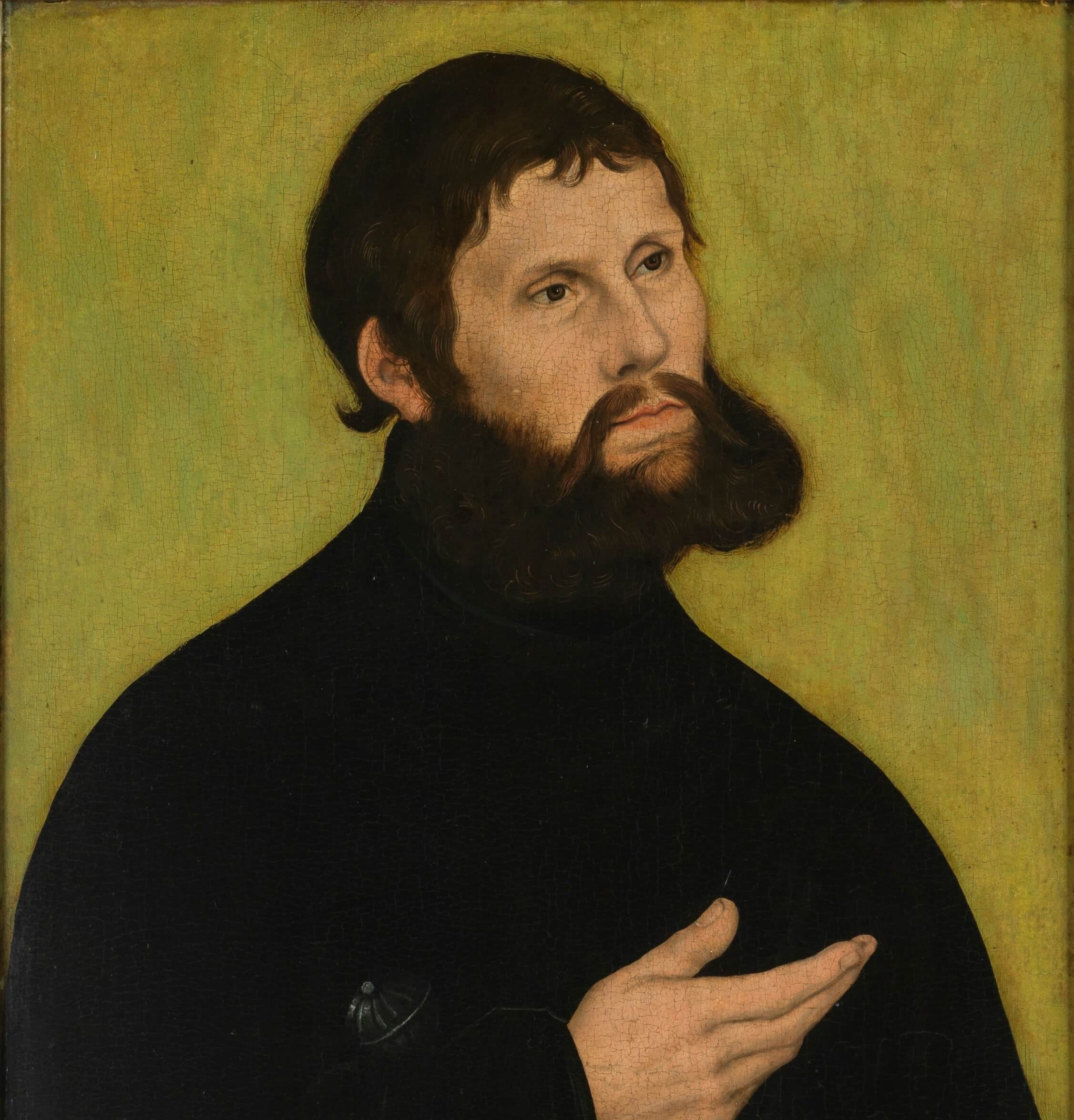
Volume Contents
Open a section from this volume
Reformation writings.
Disputes with the Sacramentarians and other Enthusiasts. St. Louls, Mo.
Dogmatic-polemical writings.
B. Against the Sacramentarians and other fanatics, as well as against the Jews and the Turks. of Missouri, Ohio and other States.
Foreword.
This twentieth volume, now completed with God's help, forms the conclusion of Luther's dogmatic-polemical writings and offers the controversial writings against the deniers of the
Introduction
Open this section of Luther's works.
Luther's writings against the Sacramentarians and other Enthusiasts, as well as against the Jews and Turks.
First section.
Luther's writings against the Sacramentarians, or those who denied the true presence of the body and blood of Christ in Holy Communion.
In the two previous volumes, the most important of Luther's writings against the papists have been included. But unfortunately, the papists were not the only opponents of Luther an
Luther's Writings Against Other Fanatics.
The beginner of the antinomian disputes was M. Johann Agricola from Eisleben. After his birthplace he is often called M. Eisleben, also we often meet the abbreviation of Agricola:
Luther's writings against the errors etc. of the Jews and Turks.
In the first years of the Reformation, Luther believed that many Jews would be converted to the Gospel if it were brought to them with true Christian love and gentleness. Just as t
Contents of the twentieth part
Luther's complete writings, which include Luther's controversial writings against the Sacramentarians and other zealots, as well as against the Jews and the Turks. Luther's Writing
The writings contained in this twentieth volume
ordered according to the time sequence.
10 Martin Bucer's Reason and Cause, from Divine Scripture, of the Innovations to the Lord's Supper Called the Mass 2c,
at Strasbourg, written in his and his colleagues' name, together with a letter to Count Palatine Friedrich. *) December 26, 1524.
II. writings against Zwingli and his followers,
a. Zwingli's dispute with Joh. Bugenhagen.
11. Ulrich Zwingli's opinion of the night meal of Christ, remembrance or thanksgiving,
translated into German by three unnamed persons. *) To the reader grace and peace from God.
12. John Bugenhagen's "Letter against the New Error in the Sacrament of the Body and Blood of our Lord Jesus Christ. *)
About September 1525. Johann Bugenhagen Pomeranus wishes the grace of God through Christ to the highly learned Doctori Johanni Hesso, pastor of the congregation of Christ in Bresla
13 Mch Zwingli's answer to Johann Bngenhagen's letter. *)
23. oil. 1525. Translated from Latin by M. Aug. Tittel.
The Syngramma Suevicum; Or of the preachers assembled at Schwäbisch-Hall Scripture against Oecolampadius,
with D. Mart. Luther's preface. *) October 21, 1525.
15. D. Mari. Luther's preface to the first German edition of the Syngramma. *)
Before August 1526.**) Martinus Luther to all dear friends in Christo.
16. Johann Oecolampad's response to Luther's preface [to the Syngramma],
sammt einer kurzen Antwort auf das Syngramma der Prediger in Schwaben. *) About August 1526.
Theobald Billican's letter to Urban Rhegius, of the words of the Lord's Supper and the different opinions about it. 1525.
Walch, old edition, vol. XVII, 1922.
Urban Rhegius' reply to Theobald Billicanus. December 18, 1525.
Ibid. Col. 1945.
17. Johann Oecolampad's responsibility against Theobald Billicanus. *)
Feb. 1, 1526. Johannes Oecolampadius wishes Diebolten Billicano, Predicanten zu Nördlingen, peace and grace from Christ.
18. Johann Oecolampad's two sermons on the worthiness of the Lord's Supper. *)
Held on 21 and 24 December 1525. Of the Worthiness of the Sacrament, done by John Oecolampadium from St. Thomas Day [21 Dec. 1525] on the Gospel, read according to the time, John 2
19. D. Martin Luther's Sermon on the Sacrament of the Body and Blood of Christ against the Fanatical Spirits. *)
In this sacrament there are two things to know and to preach. First, what one should believe, which in Latin is called objectum fidei, that is, the work or thing that one believes
20 D. Martin Luther's writing: That these words of Christ: "this is my body" etc., still stand firm against the swarming spirits. *)
About April 1527. (1) How true the proverb is that it is said: The devil is a thousandfold. Which he proves mightily in all other things, so that he rules his world, as in bodily o
Appendix.*)
What is understood between the two little crosses above, is all omitted (few lines excepted) in the other Tomo of the Streitschriften D. M. L. seliger Gedächtniß, issued at Wittenb
21. D. Martin Luther's Confession of the Lord's Supper. *)
Bad and right keep me. Psalm 25. 1) Praise and thanks be to God through Jesus Christ, our Lord, forever, that my book, which I have sent out this year against the enthusiasts and e
22. Ulrich Zwingli's writing, set against Luther's sermon against the enthusiasts. *)
Completed March 30, 1527. To the pious noble Wilhelm von Zell, his godfather, Huldrich Zwingli conveys grace and peace from God.
23. Ulrich Zwingli's answer that these words: This is my corpse, will eternally have the old unified meaning.*)
The letter of June 20, 1527. Huldrich Zwingli wishes the most noble Prince John, Duke of Saxony, his gracious lord, grace and peace from God through Jesus Christ, his only begotten
24 Ulrich Zwingli's response to Luther's confession of the Lord's Supper. *)
Started July 1, completed end of August 1528. Before the pious Christian princes Johansen, Duke of Saxony, and Philippe, Landgrave of Hesse, Huldrich Zwingli, a simple preacher of
25 D. Jakob Streichen's writing Against Zwingli's Error Concerning the Real Presence of the Body and Blood of Christ in the Sacrament.*)
1) Whereas Solomon, to whom God had given the highest knowledge before all 3) men before his time of divine wisdom, did not fall into the doctrine and worship of idols afterwards;
26 Ulrich Zwingli's answer about D. Stranssen's book, written against him, concerning the Supper of Christ.*)
To all believers in Christ, Huldrich Zwingli begs grace and peace from God through Jesus Christ, His only begotten Son, our Lord! 1. hath God, dearest brethren, the number of our l
27 Ulrich Zwingli's Confession of Faith, which he had presented to the Roman Emperor at the Imperial Diet held in Augsburg in 1530. *)
July 3, 1530. Translated into German by M Aug Tittel.
28. confession of the four cities, Strasbourg, Costnitz, Memmingen and Lindau, in which they declared their faith to imperial majesty at the imperial diet in Augsburg.*)
July 11, 1530. Translated from Latin by M. Aug. Tittel.
29. D. Martin Luther's two letters to M. Simon Wolferinus, pastor at St. Andreä in Eisleben, concerning the leftover bread and wine in Holy Communion.*)
Translated from Latin. First letter.
I. Luther's Writings Against the Antinomians.
To the worthy and highly learned Mr. Caspar Güttel, doctor and preacher at Eisleben, my special good friend in Christ. 1. grace and peace in Christ. Dear Doctor! I am well aware th
31 D. Martin Luther's refutation of the "false and seductive" teaching of the antinomians against the law,
written in 6 disputations.*) The first disputation December 1537; the following January 12, 1538; the third and fourth (without date) 1538; the fifth September 13, 1538; the sixth
32 D. Matt. Luther's report [to D. Brück] of M. Joh. Elsleben's false teaching and shameful deed; in addition, answer to his void and unfounded complaint against Luther. *)
In response to M. Eisleben's complaint, I hereby submit his proposition and a piece of his postill (which I have beaten down for him), 2) in addition to the 2) This breaks down to
II. Wider Caspar Schwenkfeld, Wiedertäufer und andere Schwärmer.
April 14, 1526. Grace and peace in Christ. My dear lord and friend, we have been a long time in replying, so that you should notice how we have not read your thing beyond rips raps
34. D. Martin Luther's judgment and answer to Caspar Schwenkfeld's letter and booklet, sent to him. *)
November 8, 1543. Luther's verdict on Schwenkfeld. 1)
35. D. Martin Luther's Letter to Eberhard von der Tannen, about the lurkers and corner preachers. *)
At the beginning of the year 1532. To the strict and firm Eberhard von der Tannen, Amtmann zu Wartburg, my favorable lord and friend. Grace and peace in Christ, our Lord and Savior
36 D. Martin Luther's letter to Margrave Albrecht of Brandenburg, Duke of Prussia. *)
Perhaps April 1532. Grace and peace in Christ our Lord and Savior.
37. D. Martin Luther's letter to the Counts of Schlick to keep Joachimsthal clean of enthusiasts. *)
s. October 1532. Grace and peace in Christ. Gracious, gracious gentlemen! Even though my letter to the G. is presumptuous, I have been moved by M. Christoph Ering, and I have dared
38: Several Propositions Against the Doctrine of the Anabaptists, by Phil. Melanchthon.
First half 1535. This writing is, as Walch notes in his introduction to the 20th volume, p. 80, "among others printed at Wittenberg in 1538 in quarto". Furthermore, a reprint appea
39 New Newspaper of the Anabaptists at Münster. *)
(1) In eight days after the storm had passed, the shitty prophet at Münster, called John of Leiden, a tailor's servant, held out to the congregation there: He had a command from Go
40 Against the blasphemous and shameful book, which recently went out in print in Münster, some propositions put forward by Phil. Melanchthon's
First halste 1535. (1) So many strange and wondrous things have been said about the Anabaptists, that many have thought that the poor people were being used by their adversaries wi
41 Phil. Melanchthon's displacement of some unchristian articles, which the Anabaptists pretend. *)
1535 (?). 1536 (?). 1. this short scripture is given for the instruction and remembrance of the simple, that they may be the more diligentlyware and know the better how to guard th
42 Philipp Melanchthon's Lessons Against the Doctrine of the Anabaptists etc. *)
Second half of the year 1535 or later. (1) I have often taught before what are the main things that every Christian needs to know, as the Lord Christ himself indicates when he comm
43 Nicolaus Amsdorf's final speeches against the Anabaptists and Sacramentarians. *)
First half 1535. Nicolaus Amsdorf to the reader.
44 Phil. Melanchthon's concern that secular authorities were guilty of resisting the Anabaptists with corporal punishment.)
First of all, it should be noted that this question does not refer to the office of preachers, for preachers and ministers of the gospel do not wield the sword. Therefore they are
45 Martin Luther's warning to Lorenz Castner and his companions at Freiberg to beware of corner preachers*).
February 11, 1536. 1. grace and peace in Christ. Honorable, wise, dear friends! I must answer your writing briefly this time, because I am overwhelmed with business, and also weak
46 D. Martin Luther's preface from Justus Menius' book "On the Spirit of the Anabaptists". *)
It is a proverb: The world wants to be deceived. Such a saying is heard every day, especially in the church regime. So here it is: Even if the truth is not true so pure and bright
47 D. Matt. Luther's short confession of the delicate Sacrament Against the Enthusiasts. *)
End of September 1544. Grace and peace in the Lord.
I. Luther's writings against the Jews, and what ways he proposed to deal with the Jews to convert them.
But a new lie has 1) gone out about me: I am said to have preached and written that Mary, the mother of God, was not a virgin before and after childbirth but 1) but - again.
48b. Letter of Jonas to Andreas Rem. *)
Translated from Latin. Justus Jonas wishes Andreas Rem, citizen of Augsburg, God's grace and peace!
48c. D. Martin Luther's letter to Bernhard, a converted Jew. **)
Translated from Latin. 1. grace and peace from the Lord. The conversion of the Jews is almost everywhere in the whole world very infamous (infamus), not only among the Christians,
49. D. Martin Luther's letter to Jesel, Jew at Roßheim, why he denied him written intercession. *)
December 10, 1537. To the careful Jesel, Jew of Roßheim, my good friend.
50. D. Martin Luther's letter against the Sabbathers to a good friend. *)
Grace and peace in Christ. I have received your writing and the verbal advertisement of your skill, but I have not been able to answer as hastily as I would have liked, because of
51 D. Mart. Luther's writing about the Jews and their lies. *)
Written in 1542; issued in early 1543. I had resolved to write nothing more either about the Jews or against them; but because I have learned that the wretched, hopeless people do
52. D. Martin Luther's writing of the Shem Hamphoras and of the lineage of Christ,Matth. 1. *)
(1) In the next booklet I promised that I would run down what the frenzied, wretched Jews lie and blaspheme about their Shem Hamphorah, as it writes Purchetus in his book, called V
II Luther's Writings against the Turks, and of the Inextinguishable Hatred against the Christians.
The letter of 9 October 1528. Issued in April 1529. To the Serene Highborn Prince and Lord, Lord Philip, Landgrave of Hesse, Count of Katzenelnbogen, Ziegenhain and Nidda, my graci
54. Luther's Army Sermon against the Turk. *)
28 October 1529. Although I have given almost sufficient instruction in my booklet on the Turkish War as to the conscience and manner in which the war against the Turks should be c
55. M. Luther's exhortation to prayer against the Turk.)
About the end of August 1541. One says: He who cannot be advised cannot be helped. We Germans have heard the dear word of God many years ago, through which God, the Father of all m
56. brother Richard's publishing of the Koran,
Written Anno 1300, Germanized by Luther, with his preface and attached warning. *) Martin Luth, D.
57: Luther's admonition to the pastors in the superintendency of Wittenberg to exhort the people to repentance and prayer against the Turk. *)
February 1543. To all pastors, our dear lords and brothers in Christ, grace and peace in the Lord. D. Martin Luther and D. John Pomer.
Appendix of some writings,
which still belong to the present part.
1. Carlstadt's writing full of the recipients, signs and promises of the holy sacrament of the flesh and blood of Christ.
June 24, 1521. To the venerable and respectable Mr. Nicolao Demuth, provost and archidiacon of the New Work at Hall, my beloved master and patron, I, Andreas Carolstat D. wish heal
2. Carlstadt's writing against the old and new papist masses.
About September 1524. Dear Brother N.! Since you have asked me to write you something about the German masses, especially about the new findings and additions etc., I am willing to
3. Carlstadt's Dialogus, or Conversation Book, of the Abominable Idolic Abuse of the Reverend Sacrament of Jesus Christ.
I wish all believers in Christ God's grace and knowledge. 1) Let no one think, dear brothers, that I am writing of the anti-Christian custom of the most reverend Sacrament in an un
4. John Oecolampad's Sermon on the Holy Sacrament of the Altar. *)
Translated from Latin by M. Aug. Tittel. Joh. Oecolampadius [wishes] Bernhard Adelmann von Adelmannsfelden, canon in Augsburg, his patron and friend in Christo, Heil!
5. Joh. Oecolampad's letter to the Swabian preachers.*)
Before October 1525. Translated from Latin.
End of the twentieth part.
The numbers indicate (unless otherwise noted) the volume and columne of our edition. Many of these words have been replaced in the text by those now in use. In order not to make th
Supplements and corrections.
Introduction, p. 10, Z. 20 v. o., read: 2 Thess. Introduction, p. 20 d, line 4 v. o., read: Pabstes.